Not all vehicles are subject to the same rate on the highway. And a simple mistake can quickly increase the toll bill, without motorists realizing it.
Hitting the road for summer vacation often requires quite an organization. More practical than taking the whole family by train for example, it still remains complicated logistics: loading the suitcases without forgetting anything, planning activities to occupy the children during this long journey, planning the best route to avoid traffic jams, and above all taking into account the budget, between meal stops, the price of gasoline and of course, the cost of tolls.
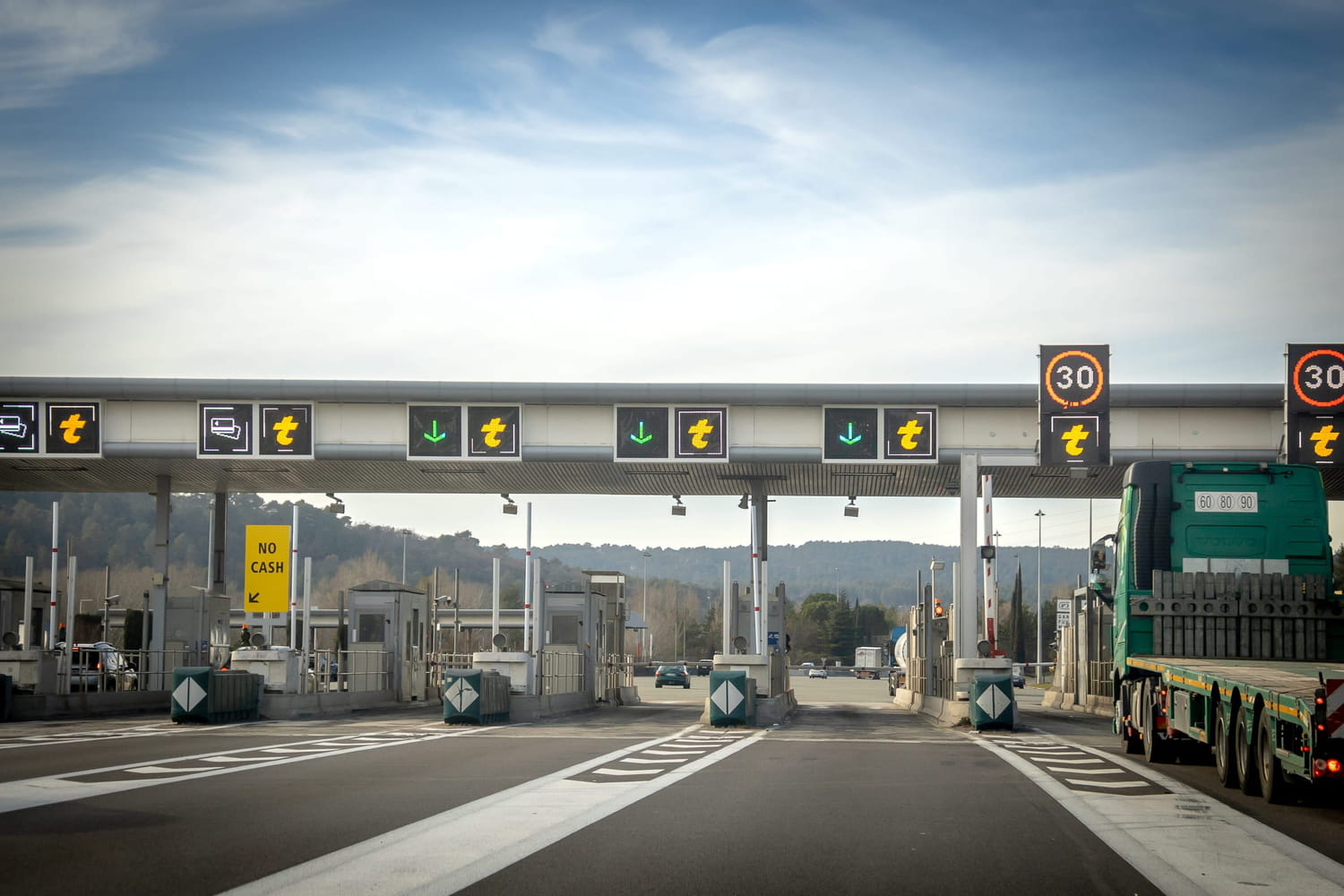
Because many motorists don’t know it, but we are not all equal when it comes to tolls. The price obviously depends on the length of the section taken, but also… on the size of your car. Yes, the price is not fixed for everyone: there are five categories of vehicles in France, all associated with a specific price on the motorway. “You do not pay the same price depending on whether you drive a motorcycle, a car, a camper van or a heavy goods vehicle”explains the Vinci Autoroutes website. And each toll gantry (including electronic tolls where you can pass without stopping) is equipped with a laser sensor to assess the size of a car.
Individuals are mainly concerned by class 1 (“light vehicles” whose height is less than 2m, such as city cars, sedans or even 4x4s), class 2 (“intermediate vehicles” whose height is between 2 and 3 meters and whose weight is less than 3.5 tonnes, such as converted vans, campers or caravans), and class 5 (two-wheelers, sidecars and trikes). Classes 3 and 4 concern transport professionals more, such as heavy goods vehicles and coaches for example. Each of these vehicles has a different impact on road wear, which explains the price differences.
But even if your vehicle falls into the first category, a simple calculation error may cause you to pay more at the toll… without you realizing it. Indeed, lasers can make mistakes, for example if you have bicycles or boxes added to your roof for the holidays. These accessories do not count in the height of the vehicle, because only the “hard” bodywork must be taken into account according to the law. But it is possible that the toll sensor does not always know the difference.
If it is difficult to precisely assess the price difference between two categories, because it depends on the length of the journey and the infrastructure present on the section (such as a tunnel which requires more maintenance for example), there is a simulator on the Vinci Autoroutes website which already gives us an idea. Let’s take a Paris-Nice journey: in this summer of 2026, a class 1 vehicle should pay around 90 euros. With a class 2 vehicle, we already spend… more than 140 euros! For a round trip, that’s 100 euros more on the vacation budget. A significant difference, especially if it comes from a simple calculation error. All the more reason to know your category well, to spot the fault and report it to be sure to pay the right price.
If you pass through the toll lanes with payment at the terminal, check on the screen that the class of your vehicle is correct. Otherwise, you must press the call button and report the error to have it corrected instantly. Moreover, you should also know that “class 2 vehicles adapted for the transport of disabled people benefit from class 1”and it is up to you to specify this declassification, which the laser sensor cannot evaluate on its own. As for drivers who use the electronic toll lanes non-stop, the problem will have to be resolved later, once the bill is received. Here too, check that the class of your car is taken into account, and file a claim if this is not the case.