Every summer, with the arrival of the exodus, Italian motorways become a testing ground for millions of motorists: queues, stress, heat, tiredness and distractions add up, raising the level of risk on the roads. To raise awareness among drivers about safer and more responsible behavior, Autostrade per l’Italia and the State Police have also launched the “Safety makes us all champions” campaign this year, an initiative that is not limited to toll booths and service areas, but goes directly into schools: over 240 institutions involved, more than 34 thousand students reached, because the message on road safety only really works if it starts from young people.
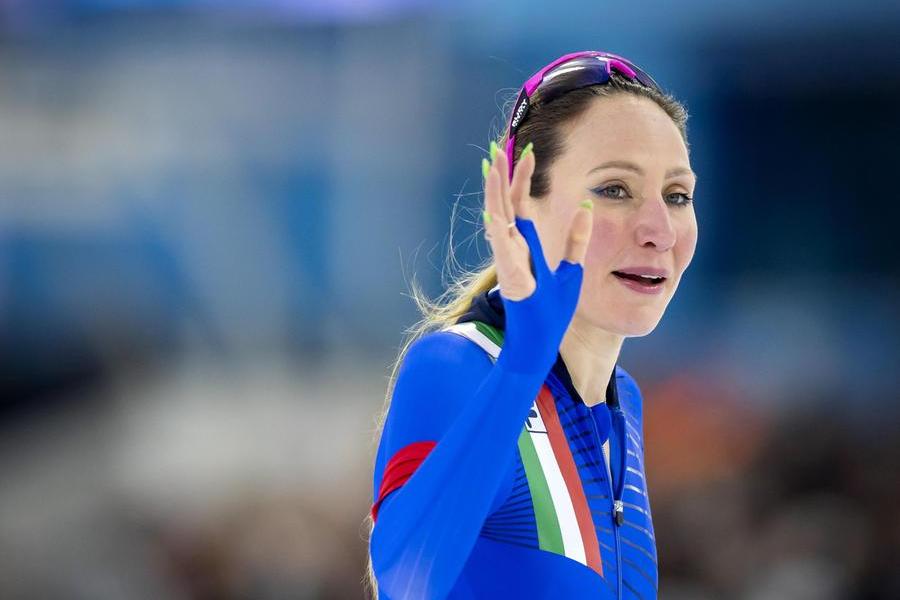
The face of the campaign are two Paralympic and Olympic athletes: Ambra Sabatini, multi-medallist Paralympic sprinter, and Francesca Lollobrigida, long track skater who wrote a page in the history of Italian sport at Milan Cortina 2026, winning gold in the 3000 meters – with an Olympic record – and in the 5000 metres. The choice is not random: elite sport and safe driving share the same fundamental values, discipline, concentration, respect for the rules, management of pressure, and who better than an athlete can describe them in a credible way?
We interviewed Francesca Lollobrigida to understand what really links the ice rink to everyday asphalt.
The message of the campaign is that discipline and respect for the rules apply both on the track and on the road. You achieved this double Olympic gold, which thrilled all of Italy, after a season marked by a viral infection that put you to the test. How much can the ability to stay focused, not to lose clarity in difficult moments, also be a stimulus for those who get behind the wheel who are perhaps tired, distracted, under pressure?
«It’s fundamental, because the results don’t just come during the match, but they are built. Respect, the rules, are part of the entire path of an athlete. I am always convinced that the values that sport teaches are those values that one faces in daily life.
It’s normal that, coming from a speed sport, the first thing you think about is that the fastest wins. It is not true. The winner is the one who maintains clarity in the race, the one who works above all on managing speed. This is why I say that this collaboration with Autostrade per l’Italia makes us understand the meaning that the fastest does not necessarily win, but those who know how to manage the speed, those who control it, win. You always need a head — the head is fundamental. And it is also the head that one must use as I use it in the race: we are the ones who control the speed, we are the ones who decide, we are the ones who must remain clear.
These are the topics that I deal with practically every day, especially when I teach younger people not to rush. They think it’s enough to train and do what the coach says. That’s not true, it takes time. I won my Olympic golds after four Olympics, and each Olympic cycle is four years. Being in too much of a hurry doesn’t pay: rather you arrive late, but you don’t put your life and especially that of others at risk.
There is also the use of the mobile phone: on the one hand there are many benefits, but sometimes you have to stop. You have time to dedicate to training, time to dedicate to studying, and there is time to dedicate to driving — as if it were a daily activity that one must be aware of. I’ve always said it: if you don’t have that organisation, there’s no more time.”
The campaign also involves institutes and schools. As an athlete who young people look up to as a role model – and with these Olympics your popularity has further grown even among those who don’t follow winter sports – what message do you feel like giving to young people who are about to get behind the wheel for the first time, perhaps more sensitive to a notification on their smartphone than to the rules of the road?
«It takes years and years to build a result. They must understand that they must not rush. I see that life is too hectic – I’m also always travelling, always in the car – and in my opinion this frenzy doesn’t make you clear. One must, from the moment he wakes up in the morning, plan the objectives and take the right times. When I went to school, I knew that during those hours I had to study, then I had to train. You organize yourself and enter everything.
If you do a lot of things but you do them in a hurry, they don’t come out well. Rather do one or two, with dedication and passion, but do them well. I understand that there are social media, companions – but kids have to think about their lives, about the whole life they have ahead of them. For a lack, for not following the rules… you can’t drive with your phone. You have to learn to scan time in the right way: this leads you not to rush, to give the right priorities.
I have done four Olympics, I won gold in the fourth: time is precious, but it is precious for doing many beautiful things, not for shortening it. Here we say “the hasty cat made her children blind” – my mother always told me this, even as a child: “Keep your head on your shoulders when you get in the car, pay attention above all to others.” Passing on this culture is fundamental, because today’s young people will have to do it with their children.”
In sport, a distraction, an error in judgment, can cost you the entire race after years of preparation. On the road, a moment of distraction can cost much more. Is there an episode in your career — a choice, a moment when you had to slow down — that comes to mind as a metaphor for those who lead?
«Keep in mind that I have had a very long career, and this shows that if someone uses their head they don’t shorten the time, they don’t look for shortcuts. It’s like when an athlete has an injury: what comes to mind is the virosis I had this winter, right around the Olympics. There one must summon all the courage to say: “Wait, I have to slow down for a moment, because running brings me nothing.” Slow down to take stock of the situation — it’s all connected in the end.
Respecting deadlines has been fundamental in my career: not taking shortcuts, not shortening times. It’s the same thing as when you get in the car: if you have to travel seven hours, that’s the journey, those are the hours. There is no shortcut. Also the fact of asking for help, asking for advice from those who are more experienced: in my opinion young people should do this more. There are people who have been driving for thirty years — asking for advice is not ignorance, rather it is intelligence, because you recognize a limit and ask for help from those who have more experience. In sport it happens very often, if one wants to obtain results.”