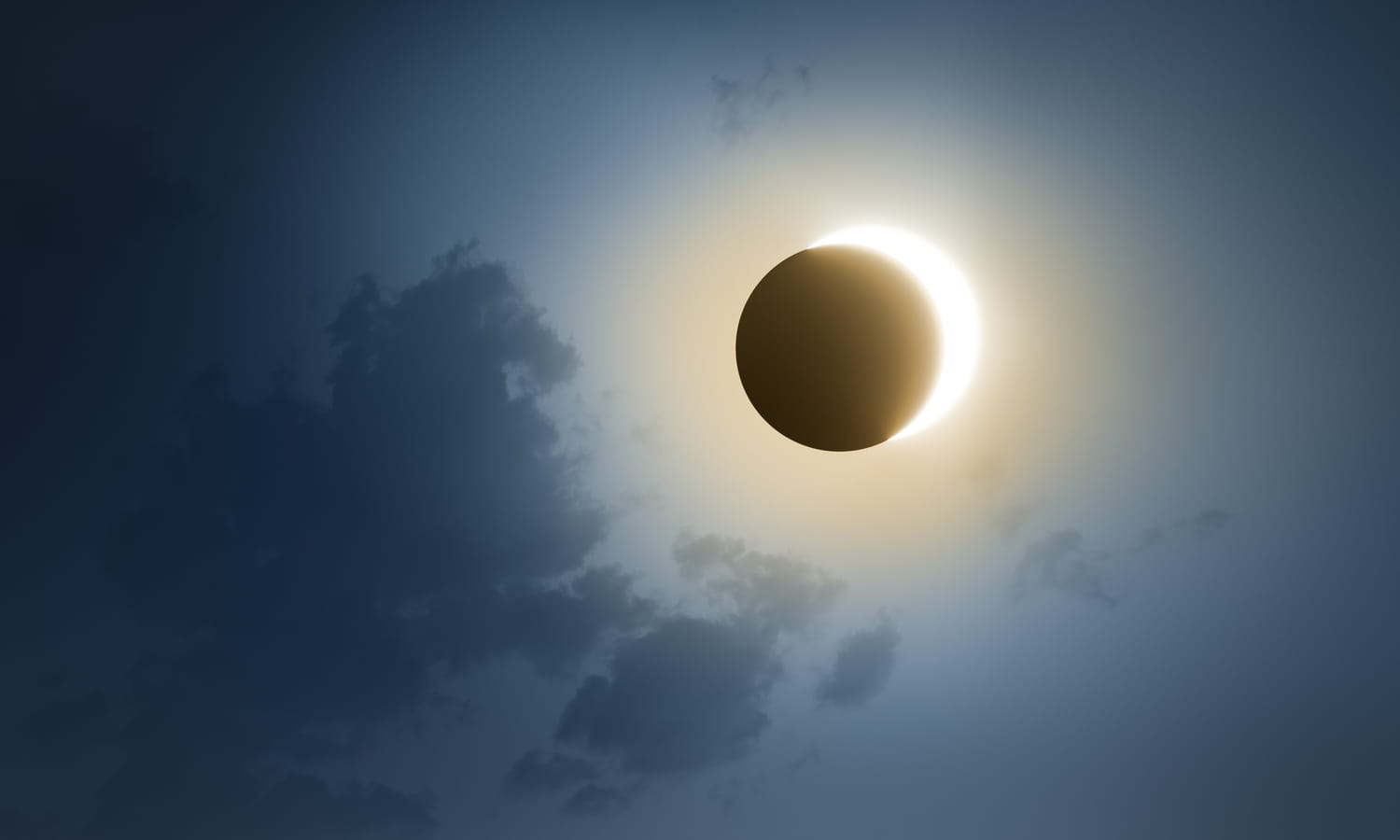
On August 12, 2026, France will vibrate in front of its largest solar eclipse since 1999: the Sun will be obscured by more than 90% over almost the entire country. This phenomenon must be observed with special glasses.
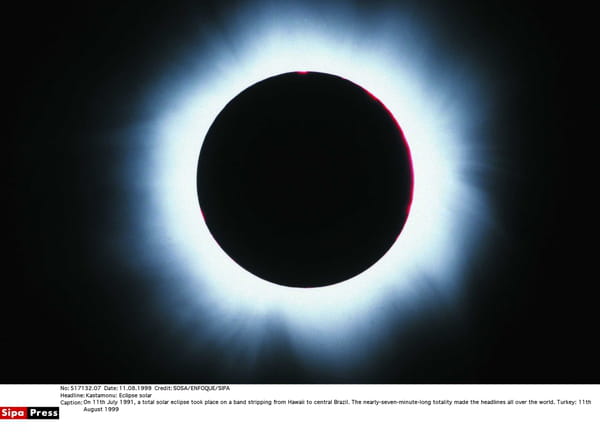
On August 12, 2026, there will be a total eclipse. It has been 27 years since we last experienced a phenomenon of this magnitude in France. The last time the Sun was obscured so significantly was August 11, 1999. At the time, the eclipse crossed the entire north of the country (from Normandy to Alsace), plunging millions of French people into a dark night in the middle of the day. According to data from the French Astronomy Association (AFA), a total solar eclipse offers a striking spectacle: the Moon slips precisely between the Earth and our star, sweeping the earth’s surface with a very narrow band of shadow. This phenomenon is due to a fascinating natural coincidence: although the Sun is 400 times larger than the Moon, it is also 400 times further away, which gives the two stars an almost identical size in the sky.
Will the eclipse of August 12 be visible in France?
In mainland France, it will be visible in the form of an almost total eclipse. The spectacle promises to be exceptional: the Sun will be obscured by more than 90% over almost the entire country, which will cause a very noticeable drop in brightness at the end of the day. It will not be completely “dark night” in France but there will be a clearly visible drop in light which will last around twenty minutes (10 minutes before the peak and 10 minutes after).
Map: where to see it most in France?
As shown on the map of the French Astronomical Association (AFA) below, the obscuration increases as we descend towards the South-West, closer to the Spanish trajectory:
- The maximum in France: the Basque coast near Bayonne and Biarritz with 99.5% of the Sun hidden.
- In the South: 97.9% in Toulouse and 96.4% in Marseille.
- In the West and Center: 95.7% in Nantes and 94.7% in Clermont-Ferrand.
- In Paris: an impressive level of 92.2%.
- In the North and East: Around 90.4% in Lille and 89.9% in Strasbourg.
The Sun will be very low on the western horizon (between 5° and 10° in height at the time of maximum). To take full advantage of it, you absolutely must place yourself in an open location to the west/northwest (at the top of a hill, facing the sea, or without buildings in front of you).
What time to observe it?
The eclipse will occur late Wednesday afternoon, August 12, and end just as the sun sets. Times will vary by a few minutes depending on the region. The start of the eclipse will be around 7:20 p.m. – 7:30 p.m. (when the Moon’s disk begins to nibble away at the Sun). The Maximum (the peak not to be missed) will be between 8:15 p.m. and 8:25 p.m. depending on your position. It is at this precise moment that the Sun will be the darkest. The end of the eclipse will be around 9:10 p.m., as the Sun sets over the horizon.
Do you need glasses? Which ones?
Yes, protective glasses are absolutely mandatory from start to finish of the observation. Even though the Sun is 99% obscured, the remaining rays are ultra-bright and can burn your retina irreversibly and painlessly in seconds. What to buy: special eclipse cardboard glasses that must be marked as conforming to the international standard ISO 12312-2. They can be found at opticians, in astronomy stores (such as Nature & Découvertes or specialized sites), or sold with scientific magazines in the run-up to the event. The prices of glasses vary depending on the merchant from €1.50 to €4. What is strictly prohibited (because it is ineffective) are classic sunglasses (even category 4), x-rays, CDs, or smoked glass.
Visible in Spain?
If you want the ultimate experience of “totality”, you will have to cross the border: Spain will be the beating heart of this event in Europe. The Moon’s shadow band will cross the north and center of the country at the end of the day, plunging cities like Gijón, Burgos, Santander, Valladolid and Zaragoza into absolute darkness in the middle of August. This will be a unique opportunity to observe the solar corona with the naked eye.
What will be the next eclipses near us?
The eclipse of August 12, 2026 opens the ball of an exceptional astronomical trilogy for Europe and France. Two other major meetings will quickly follow:
► August 2, 2027: A total eclipse which will cross southern Spain and North Africa. In mainland France, it will be visible in partial form (the Sun will be 51% hidden in Paris and up to 76% in Perpignan).
► January 26, 2028: An annular eclipse (where the Moon reveals a “ring of fire”). If French Guiana will be lucky enough to be on its full trajectory, the metropolis will benefit from a beautiful partial version (57% obscuration in Paris and 81% in Perpignan).