Nutritionists have just identified one of the most digestible and beneficial fresh cheeses for the body, straight from Italy.
Cheeses like mozzarella and burrata are particularly popular in summer. However, they are sometimes heavy to digest and richer in fat than you might think. Good news, an Italian alternative that is still too little known in France is worth inviting itself to our table. Ultra-creamy, extremely fresh and very soft, this PDO cheese from Emilia-Romagna combines good nutritional points without compromising on pleasure.
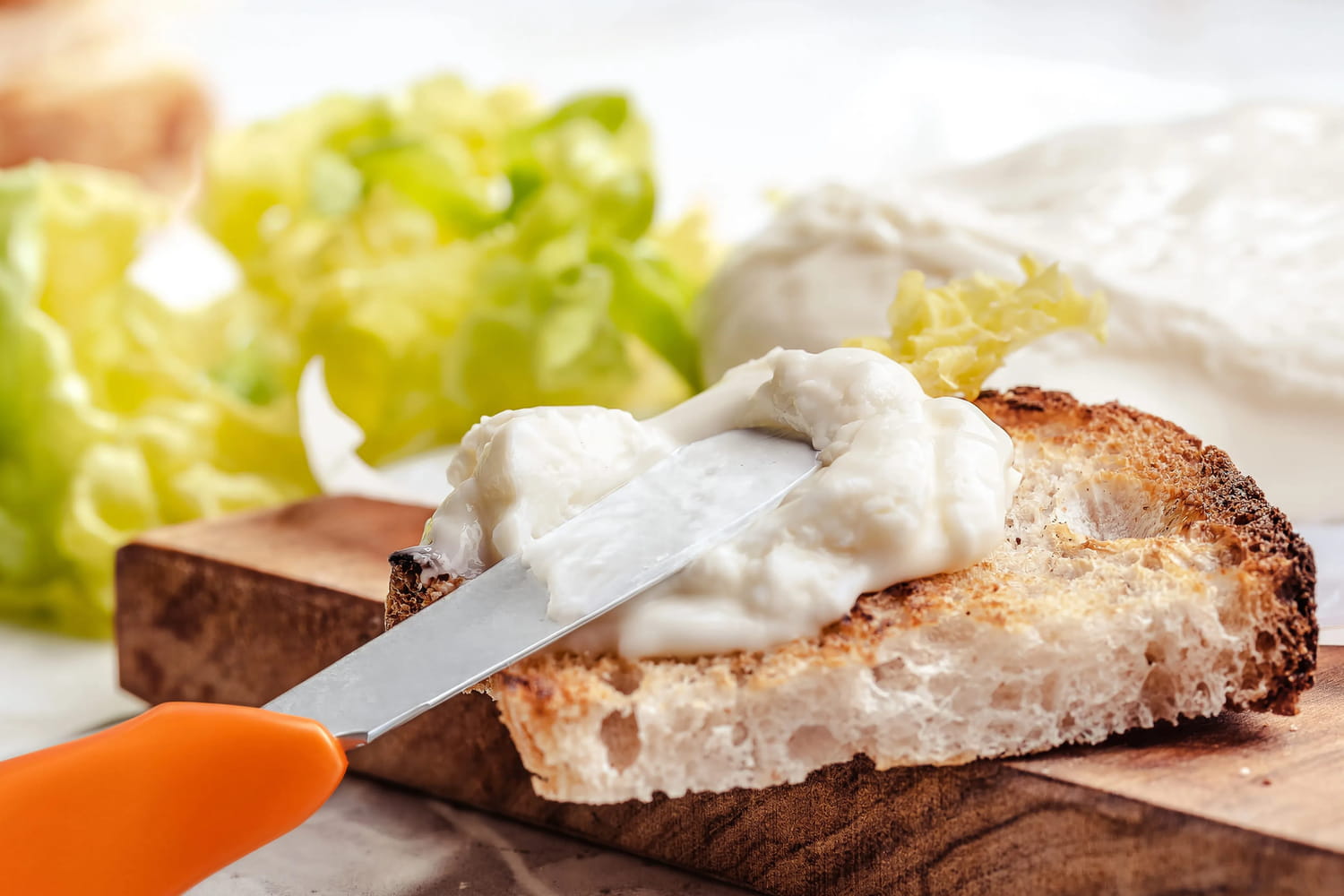
One of its characteristics is its texture. Its name comes from the Romagna dialect “squacquerare” which literally means “to spread” or “to melt”. And for good reason: under its white color, this cheese has no rind and spreads almost like cream. However, this unique fluidity is the secret of its great lightness. The official specifications of the Italian Ministry of Agriculture (Masaf) for the PDO guarantee milk from cows fed with specific local fodder low in fat and rich in digestible fiber, producing milk naturally less concentrated in lipids.
Squacquerone PDO – the famous cheese – thus displays a fat content on the finished product ranging between 19 g and 20 g per 100 g (compared to 22 g to 25 g for a mozzarella di Bufala or a Burrata). But its benefits don’t stop there. Made from pasteurized whole milk, Squacquerone only undergoes a very short fermentation of one to four days. This short passage through the lactic ferments begins the work of breaking down the milk proteins, making them much more assimilable by the stomach. Result: zero feeling of heaviness after the meal.
In addition to being particularly digestible, it turns out to be a real ally for bone health. According to the work of the International Osteoporosis Foundation (IOF), the highly hydrated milk matrix of fresh cheese promotes maximum absorption of calcium and phosphorus by the body, two minerals essential for maintaining strong bones and combating bone loss over the years. Although Squacquerone provides around 14g of easily digestible protein per 100g, Parmesan remains more than twice as concentrated (more than 30g/100g) due to its low moisture content.
Nutritionists point out, however, that it is a fresh product to be enjoyed with balance. To make the most of its virtues, combine it with fiber: spread on a slice of toasted wholemeal bread, accompanied by a handful of fresh rocket, a few cherry tomatoes and a drizzle of olive oil. This is also how it is traditionally consumed in Italy, in the famous “piadinas”. In France, it can be found in Italian grocery stores or in the cheese section of large supermarkets such as Grand Frais, Hyper U or Carrefour during Italy week.