The burning sensation is immediate.
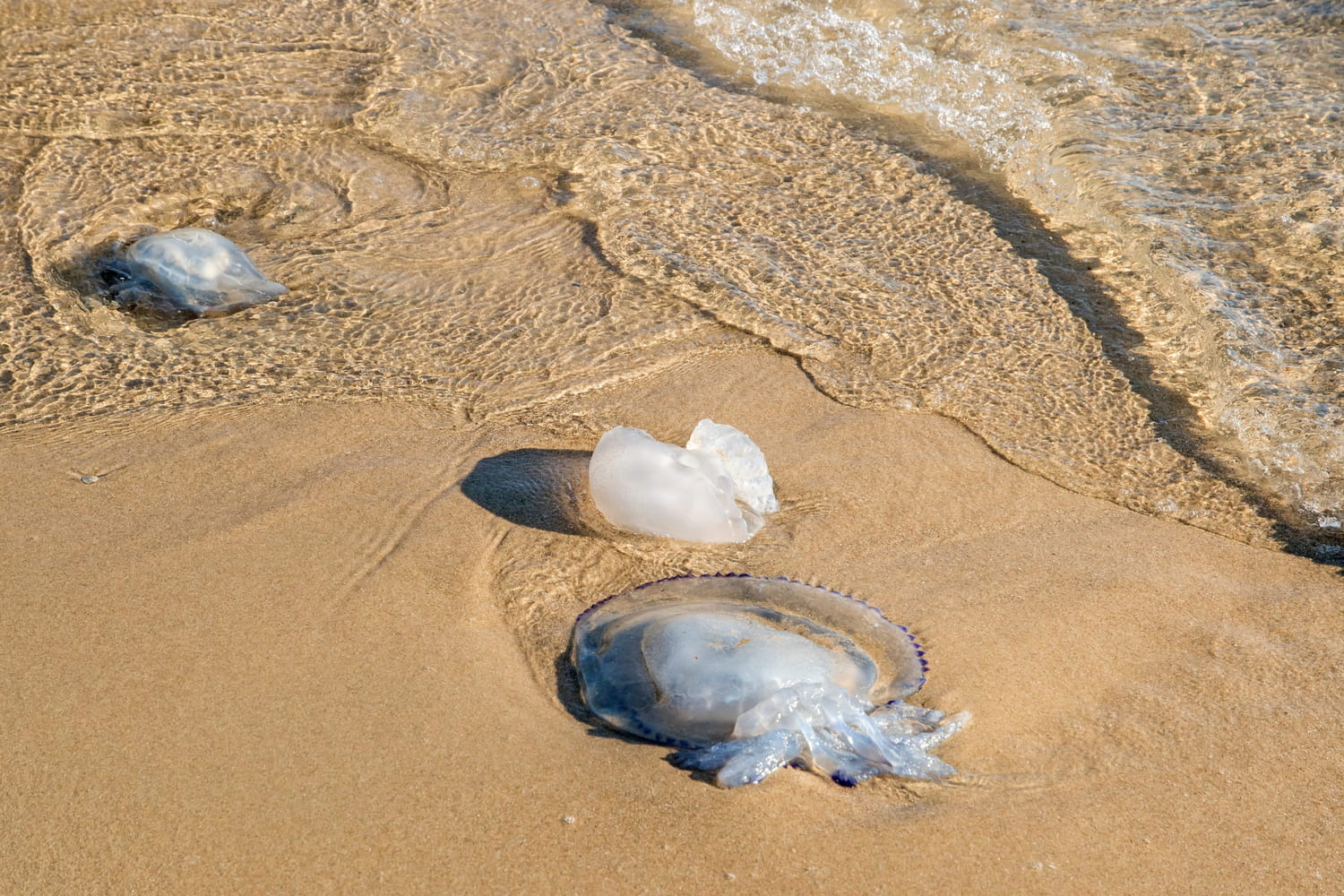
In France, jellyfish are particularly present in the Mediterranean during the summer but they can also be found on the northern beaches and on the Atlantic coast. “Jellyfish do not cause a “sting” strictly speaking, but a contact envenomation, informs us Stéphane Gayet, infectious disease specialist. We quickly recognize jellyfish stings by feeling the discharge, but also a particular contact just before, a little sticky. In addition, they are easy to see: they generally swim on the surface of the water and in colonies. The jellyfish sting causes red lesions, similar to nettle patches. After a few days, “vesicles appear, like small bubbles with fluid inside”. It is especially important not to puncture them to limit the risk of infection. This may persist for a few weeks.
The first thing to do
The first thing to do is to get out of the water and get into the shade to rest. Then :
► Rinse the lesion abundantly with sea water (not fresh water as it would burst the filaments). Rinsing helps to remove the filaments: “After a jellyfish burn, there remain small invisible cells on the skin, which continue to deliver venom. You must therefore rinse to remove them. You should not disinfect with medical alcohol, because there are too many lesions”explains Stéphane Gayet, infectious disease specialist.
► Remove the remaining filaments stuck to the skin with a glove or forceps.
► Apply cold to calm the pain (ice pack)
► If possible, “you can possibly add vinegar water or lemon water, well diluted”advises the specialist. “Both are acids, which improve the condition of the bite a little, but apart from that, there is nothing that can be done.”he adds.
► You can also use a Biafine® type cream to soothe the burn, or a cortisone cream to relieve larger plaques. The most important thing is to stay at rest and touch as little as possible.
►If you experience discomfort or continued swelling, do not hesitate to contact a doctor. If the sting occurred on the face, immediately rinse the eyes with physiological serum and seek emergency medical attention.
What remedies can be used in case of a jellyfish sting?
After rinsing the sting well with sea water and removing the filaments with tweezers, you can try of your choice :
- Well-diluted vinegar water
- Well-diluted lemon water
- Lavender aspic essential oil: tap the burning area with a few drops and repeat every 10 minutes 3 to 5 times in a row.
Should you urinate on a jellyfish sting?
Forget grandmother’s remedy of urinating on the area burned by a jellyfish sting, it is of no use, and can even worsen the situation.
Photo of a jellyfish sting
The biggest risk from a jellyfish sting is projection of venom into the eye: “It can burn the conjunctiva of the eye”, explains the specialist. “So you shouldn’t have fun poking them with a stick, because that will project venom. You just have to move away from them when you see them.” The other risk is confuse the jellyfish with its cousin: the physalia. Its nickname is the “Portuguese galley”. It is mainly present in warm seas like the Mediterranean. “It’s not a jellyfish, but it looks like one: it’s a sort of large transparent pocket, floating on the surface of the water, inflated with air, with filaments, like the jellyfish”describes Stéphane Gayet. But this one is much more dangerous: “A discharge of venom can lead to loss of consciousness leading to drowning, whereas this is not the case with a jellyfish,” he explains. The jellyfish is really only dangerous in groups, when you are stung several times.
What to do if you are allergic to a jellyfish sting?
If you experience headaches, vomiting or respiratory discomfort (difficulty breathing), it may be an allergy to the “venom” of the jellyfish. You should consult a doctor without delay.
What is the risk of scarring in the event of a jellyfish sting?
In the best case, the lesions disappear in 10 days. A scar may persist, but disappear within a few months. It all depends on the depth of the burn, which is why taking the right actions after a sting (removing the filaments, rinsing for several minutes, etc.) is important to stop the arrival of venom quickly.
Thanks to Stéphane Gayet, infectious disease specialist.
- Essential oils work! Danièle Festy, editions Leduc, 2015.