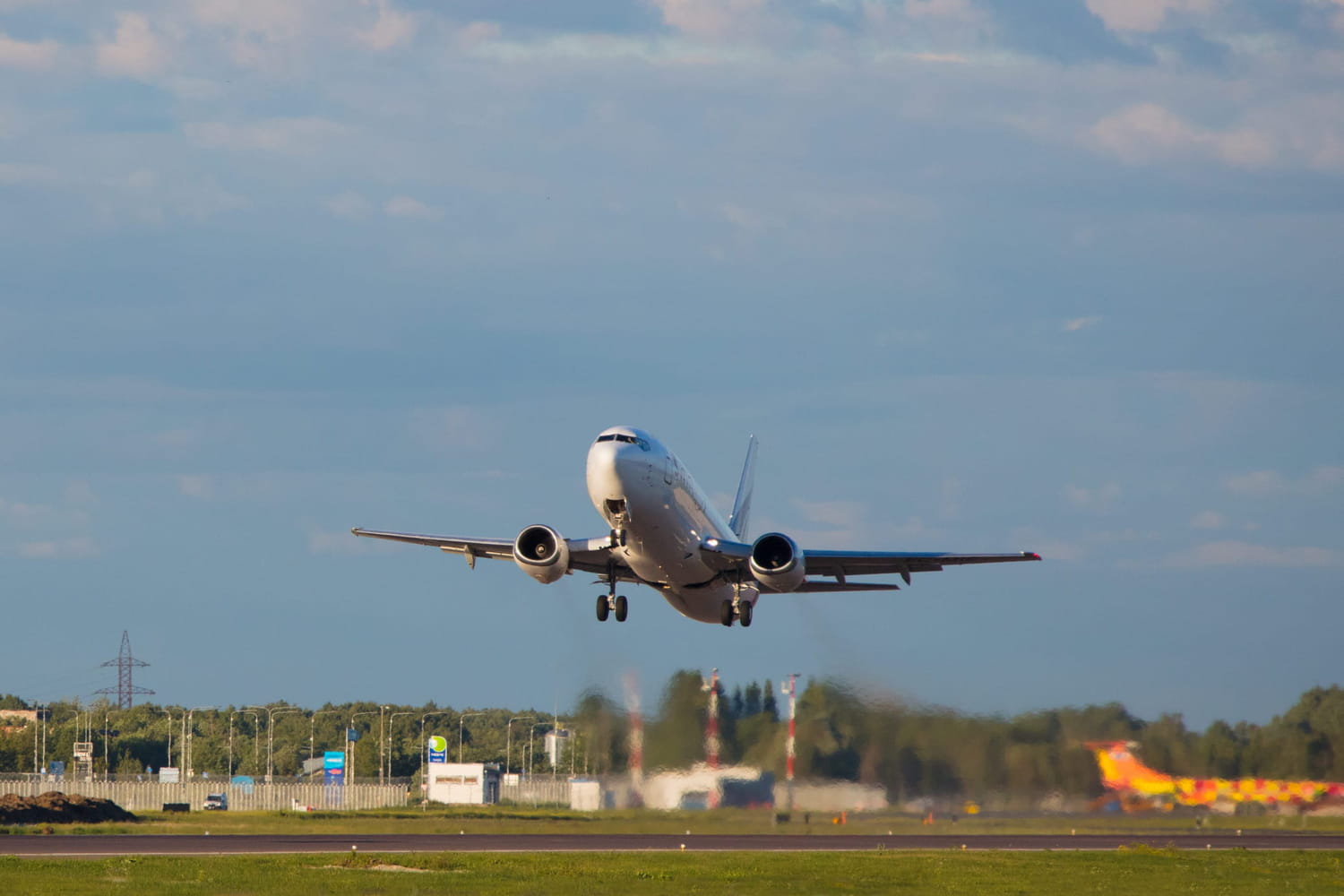
During takeoff and landing, airports are increasing their ingenuity to deal with a risk that is often unknown to travelers.
This is one of the most critical phases of a flight, and yet travelers are completely unaware of what is at stake. To protect planes during takeoff and landing, airports must face a constant threat. And if we know the great dangers that hover over aviation security, at the origin of the multiplication of boarding checks, there is one that we never worry about as a passenger: birds. Yes, we imagine that a small bird does not represent a big risk for a colossus weighing 70 tonnes of metal… And yet.
At a speed of around 450 km/h, hitting a bird weighing barely two kilos is equivalent to receiving a projectile weighing several tonnes on the engine or nose of the aircraft. The consequences, material and human, are therefore multiplied. Of course, at its cruising altitude, a plane has little chance of encountering birds, but on takeoff and landing, the risk is very present: in France alone, there are more than 600 collisions each year during commercial flights, according to figures from the Directorate General of Civil Aviation, 90% of which occur at precisely these times. This is why airports are increasing their ingenuity to prevent these collisions, and at the same time protect the surrounding biodiversity.
Nantes airport has set up a unique system in France: it has its own falconry. Four hawks and a hawk patrol every day to fend off other birds before planes take off or land. Other international airports, such as Madrid, London, Singapore, Mexico City, or even Vancouver for example, also work with birds of prey. In the city of Edmonton, also in Canada, there is even a mechanical hawk that surveys the sky to keep its “fellows” away from the path of planes.
For its part, the Aéroports de Paris group employs “scarers”, also called animal risk prevention agents, who use various techniques: on the one hand “pre-recorded bird distress calls” broadcast around the tracks, as well as “detonating, crackling or whistling rockets fired from a propellant gun”. The environment itself is thought out down to the smallest detail “so as not to favor the installation” of the approximately 90 species of birds recorded in the surrounding area: no trees are present, the water points are “secure” and the grass is cut”more or less high depending on the areas and the seasons.
Other airports around the world have developed their own unusual methods, as is the case in Charleston, West Virginia, United States. As reported by Washington Posttwo employees of another type work there: they are Ned and Hercules, “wildlife protection dogs” who live in the airport and run around the runways to disperse the birds. And conversely, they must remain motionless during takeoffs and landings, to prevent frightened birds from charging at the planes. Thanks to them, the number of collisions has fallen by 70%! The work of these two Border collies is also very appreciated on TikTok and Instagram, where they have nearly 78,000 subscribers.
Just as improbable: to manage possible damage caused by birds, planes undergo crash tests before being put on the market… using “chicken cannons”. As TF1 explains, “dead birds are thrown onto the device at more than 700 km/h” to check crashworthiness. “The engine must be able to absorb up to three birds weighing one and a half kilos”and pilots are trained for this specific type of incident, indicates aviation expert Michel Polacco to our colleagues. When we know that collisions with birds have already caused human tragedies, these unusual methods appear more than vital for the safety of passengers and airline personnel.