
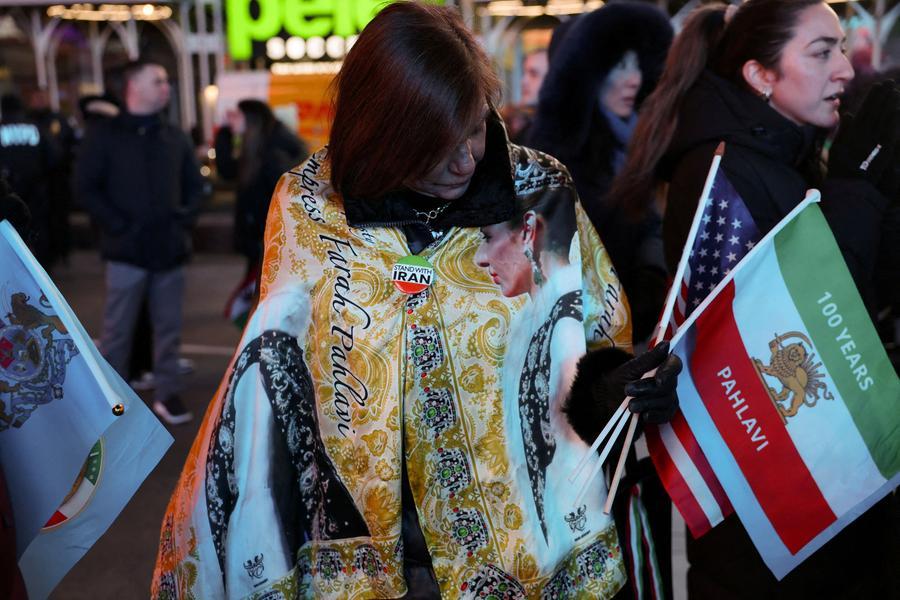



On the evening of February 28, the day the United States and Israel began the “Lion’s Roar” military operation against Iran, Ashkan28 years old, was in Piazza Duomo, Milan, celebrating with flags and slogans among a sea of young Iranians. “We felt like slaves freed from chains,” says Ashkan – who prefers not to give his surname for security reasons and to protect his family in Iran – who arrived in Italy from Tehran almost two years ago to undertake law studies.
After the attack by the US and Israel, did you have the opportunity to contact your family in Tehran?
«No, because the authorities have cut the Internet connection again. But I know they’re fine. I had spoken to my parents two days before and they too were expecting an external intervention shortly and hoped that it would happen.”
What do you think of this war?
«We absolutely needed outside help. In the last major wave of protests in Iran, which erupted at the end of December 2025, Iranians were left alone, they were killed, they were massacred without anyone doing anything for them. Within a few days, in mid-January, there was carnage, people were being killed and no one cared. And when the internet connection was restored I discovered that some of my friends had also been killed. In the videos that circulated I saw huge mountains of piled up bodies. It was horrible. Many videos have not been translated and distributed, but you can see the militiamen shooting at civilians, in the streets, even inside shops. Not to mention the many protesters arrested, locked up in prison, of whom there is no further news. During the “Woman, Life, Freedom” protests, many Iranians were left blind due to plastic bullets fired into their eyes. When I was in Iran, during the protest that broke out after the death of Mahsa Amini, I didn’t take to the streets to demonstrate because I was afraid, the repression was really violent. The regime recruits and uses many militiamen from neighboring countries such as Pakistan and Iraq to attack and repress the Iranian population. Today I am happy that Ali Khamenei is dead. When I was born he was already in power and throughout my life I have not known another Iran. And alone, with our own strength, with our bare hands and without weapons, we would not have been able to free ourselves. Obviously there is a part of the Iranian population that supports the regime and feels pain over Khamenei’s death. But the vast majority, when the news was confirmed, celebrated. And I am convinced that my family will also have celebrated.”
The fear now is that the post-Khamenei situation will open up an even worse scenario and lead to even harsher repression. What do you hope for Iran’s near future?
«In the long term, it is clear that the regime cannot fall tomorrow, but what I and many people like me hope is that the attacks will continue until the intelligence and entire military force of the Tehran regime has collapsed and has lost the ability to target and kill citizens again. So, maybe in the next few weeks or months the Iranians will be able to take to the streets again and carry out the revolution. The last time they were very close to achieving the overthrow of the regime, and if they didn’t succeed it was because they were unarmed and were massacred by the forces of the authorities.”
Do you think the Iranian people are ready for regime change leading to a democratic process?
“Certainly. Iran right now is the only country in the Middle East that does not have a majority Muslim population. Historically we are Muslims, my family always has been. I was Muslim until I was 16. But due to the repression, brutality and cruelty of the Islamic Republic, many Iranians have abandoned and are abandoning Islam. I did it many years ago, my mother distanced herself from Islam during the protests over the death of Mahsa Amini, my father left him three years ago. We Iranians are very different from other Middle Eastern countries, we no longer use Arabic names for our children. Iran is very different from countries like Syria, Libya, Yemen. Radical Islamism will not prevail among us. The Iranian people are largely secular, very secularized, open, modern, educated, close to the Western and European mentality. For example, in Iran polygamy is legally permitted, but no Iranian today has four wives; Here there are no forced and early marriages, nor female genital mutilation. Iranians reject the connection between politics and religion. And I am sure that when we are finally free we will choose a liberal democracy for the future of our country.”