





MumyMumy
  • News
  • Female Empowerment
  • Business
  • Politics
  • Career
  • Culture
  • Parenting
  • More
    • Web Stories
    • Popular
    • Pregnancy

Subscribe to Updates

Get the latest women's news and updates directly to your inbox.

Trending Now
Why Growth May Not Be Sustainable

Why Growth May Not Be Sustainable

30 April 2026
Who was Sergio Ramelli, the Youth Front student killed 51 years ago and who still inflames clashes between extremists of the right and left

Who was Sergio Ramelli, the Youth Front student killed 51 years ago and who still inflames clashes between extremists of the right and left

30 April 2026
for whom, price, 1 in 2 French people?

for whom, price, 1 in 2 French people?

30 April 2026
The house is never clean if you forget to vacuum these 7 hidden corners

The house is never clean if you forget to vacuum these 7 hidden corners

30 April 2026
Joseph, model of a possible Christianity – 1 May

Joseph, model of a possible Christianity – 1 May

30 April 2026
Facebook X (Twitter) Instagram
  • Privacy
  • Terms
  • Advertise
  • Contact
Facebook X (Twitter) Instagram Pinterest Vimeo
MumyMumy
  • News
  • Female Empowerment
  • Business
  • Politics
  • Career
  • Culture
  • Parenting
  • More
    • Web Stories
    • Popular
    • Pregnancy
Subscribe
MumyMumy
Home » Is this Why This Cardiovascular Disease Is Overlooked? – Women’s eNews
News

Is this Why This Cardiovascular Disease Is Overlooked? – Women’s eNews

By News Room3 March 20264 Mins Read
Share Facebook Twitter Pinterest LinkedIn Tumblr Reddit Telegram Email
Is this Why This Cardiovascular Disease Is Overlooked? – Women’s eNews
Share
Facebook Twitter LinkedIn Pinterest Email

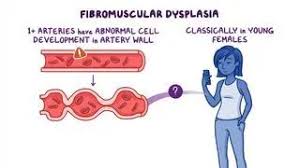
March is Women’s History Month, a time to honor women but also to confront the inequities that continue to shape women’s lives, including the persistent neglect of women’s cardiovascular health. Few conditions illustrate this more clearly than Fibromuscular dysplasia (FMD), an underrecognized condition of the body’s arteries that puts people at risk for developing high blood pressure, having a heart attack or stroke, and other potentially life‑threatening events in the absence of the traditional risk factors for heart disease, such as high cholesterol, lack of exercise or smoking.

While FMD can affect people of any sex and age, more than 90 percent of those diagnosed are women, often young, otherwise healthy women. Heart disease remains the No. 1 killer of both women and men in the United States, yet decades of neglect have left clinicians and researchers with an incomplete understanding of the unique characteristics and risk factors that drive cardiovascular disease in women, including FMD.

For women like us who live with FMD the inequities in women’s cardiovascular care are not abstractions. They shape daily life. Finding clinicians who understand FMD and getting timely answers can be immensely frustrating. Delays can be dangerous.

“Most people have never heard of FMD, and there will be people in the community, primarily women, who will be suffering from this disease and possibly being misdiagnosed,” stated in an interview Dr. Jason Kovacic, one of a handful of researchers in the world who is actively searching for the causes, and potential treatments, of FMD. “This can be a devastating disease, but if caught early, it can be managed. Hopefully, in the future, we will also be able to treat it far more successfully,” he continued.

Conditions like FMD remain underrecognized even though they significantly contribute to heart disease, which overall kills more women than all forms of cancer combined. While FMD is officially classified as a rare disease, evidence suggests it is far more common than current estimates indicate and may affect up to one in 20 women.

Clearly, more needs to be done to improve understanding of FMD and care of those affected by it. Here we offer some practical solutions.

First, medical schools must integrate FMD into curricula and continuing education efforts in a meaningful way. Clinicians need to be aware of FMD in order to diagnose it in a timely manner, which is essential to try to prevent potentially devastating consequences.

Second, federal research funding must reflect disease burden, not historical bias. The National Institutes of Health has no dedicated funding line for FMD. As of this writing, the NIH reports only six grants related to FMD for a total amount just over $1.5 million for fiscal year 2025. Basic scientific questions about FMD remain unanswered not because they are unanswerable, but because they are not appropriately funded.

While foundation funding has recently stepped in and provided monetary support to a network of FMD researchers, the significant underfunding at the federal level of a condition that can kill women who do not fit the usual profile for cardiovascular disease needs to be remedied.

The US has the largest FMD patient registry in the world. This registry provides the backbone of scientific progress in FMD, as it enables discoveries about who gets this disease, how it presents, how it progresses, and how it intersects with other conditions. As important as it is, the US FMD registry has never received federal support. A national research asset of this magnitude should not depend on volunteer labor and charitable donations.

Finally, health systems must partner with patient organizations, not rely on them to fill structural gaps. Organizations like the Fibromuscular Dysplasia Society of America have built educational materials, hosted webinars, and supported research collaborations. However, these initiatives should be supported, expanded, and integrated into broader efforts that are appropriately staffed and funded.

Women’s History Month reminds us that progress is never guaranteed. Addressing conditions like FMD requires institutions and policymakers to correct decades of inequity in women’s health. We need investment in science to save lives. And we need a healthcare system that listens to women and studies the diseases that affect them.

About the Authors: Giamila Fantuzzi, Ph.D., is a professor and associate department head of kinesiology and nutrition at the University of Illinois Chicago. She is a member of the Board of Directors of the Fibromuscular Dysplasia Society of America and a Public Voices Fellow with The OpEd Project. Pamela Mace, RN, is the Executive Director of the Fibromuscular Dysplasia Society of America

Share. Facebook Twitter Pinterest LinkedIn Tumblr Email

Related Articles

Why Growth May Not Be Sustainable
News

Why Growth May Not Be Sustainable

30 April 2026
Why Paramount Paid Its Legal Chief Like a CEO
News

Why Paramount Paid Its Legal Chief Like a CEO

30 April 2026
Is an MBA Worth it for a Career Switcher? – The Smart Read for the Business Smart
News

Is an MBA Worth it for a Career Switcher? – The Smart Read for the Business Smart

30 April 2026
Preventing Damage to ‘The Cause’ – Women’s eNews
News

Preventing Damage to ‘The Cause’ – Women’s eNews

30 April 2026
Condom Prices Could Rise 30% – Inflation Warning
News

Condom Prices Could Rise 30% – Inflation Warning

29 April 2026
Why Wealth Doesn’t Always Lead to Happiness
News

Why Wealth Doesn’t Always Lead to Happiness

29 April 2026
Latest News
Who was Sergio Ramelli, the Youth Front student killed 51 years ago and who still inflames clashes between extremists of the right and left

Who was Sergio Ramelli, the Youth Front student killed 51 years ago and who still inflames clashes between extremists of the right and left

30 April 20261 Views
for whom, price, 1 in 2 French people?

for whom, price, 1 in 2 French people?

30 April 20263 Views
The house is never clean if you forget to vacuum these 7 hidden corners

The house is never clean if you forget to vacuum these 7 hidden corners

30 April 20262 Views

Subscribe to Updates

Get the latest women's news and updates directly to your inbox.

Popular Now
Estelle Lefébure tattooed with “everywhere”: “I have this phrase from…” Culture

Estelle Lefébure tattooed with “everywhere”: “I have this phrase from…”

News Room30 April 2026
SpaceX on the stock market: what do ETF holders think? Business

SpaceX on the stock market: what do ETF holders think?

News Room30 April 2026
half life, 1/4 to sleep, is it dangerous? Culture

half life, 1/4 to sleep, is it dangerous?

News Room30 April 2026
Most Popular
Why Growth May Not Be Sustainable

Why Growth May Not Be Sustainable

30 April 20263 Views
Who was Sergio Ramelli, the Youth Front student killed 51 years ago and who still inflames clashes between extremists of the right and left

Who was Sergio Ramelli, the Youth Front student killed 51 years ago and who still inflames clashes between extremists of the right and left

30 April 20261 Views
for whom, price, 1 in 2 French people?

for whom, price, 1 in 2 French people?

30 April 20263 Views
Our Picks
The house is never clean if you forget to vacuum these 7 hidden corners

The house is never clean if you forget to vacuum these 7 hidden corners

30 April 2026
Joseph, model of a possible Christianity – 1 May

Joseph, model of a possible Christianity – 1 May

30 April 2026
Estelle Lefébure tattooed with “everywhere”: “I have this phrase from…”

Estelle Lefébure tattooed with “everywhere”: “I have this phrase from…”

30 April 2026

Subscribe to Updates

Get the latest women's news and updates directly to your inbox.

Mumy
Facebook X (Twitter) Instagram Pinterest
  • Privacy Policy
  • Terms of use
  • Advertise
  • Contact
© 2026 Mumy. All Rights Reserved.

Type above and press Enter to search. Press Esc to cancel.