





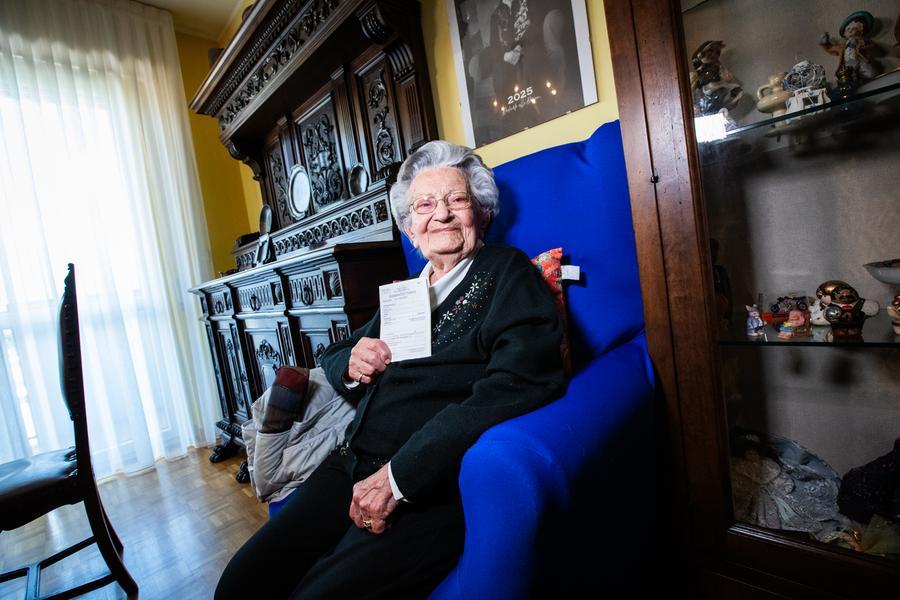
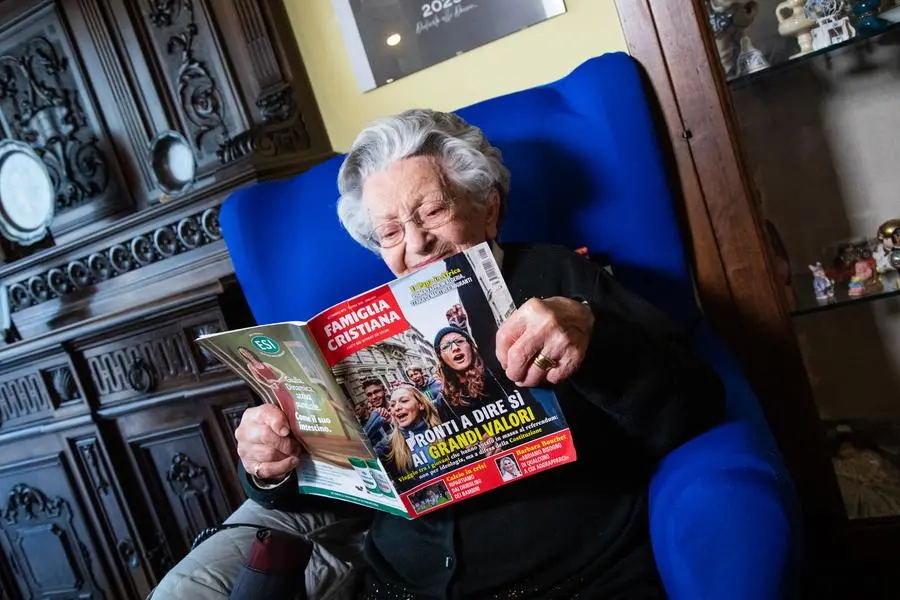
Alma Coda Cap, Borsotti’s widow, born in 1923, was a young primary school teacher when, on 2 June 1946, she went to the polling station for the referendum. We reach her in her home in Domodossola, a symbolic place of the Resistance, where for the occasion, in addition to two of her three children, Maurizio De Paoli, former deputy director of Christian familywho was also mayor of Domodossola, and who was a pupil of teacher Alma for the first three years of primary school. A faithful reader of our newspaper, she is still very lucid and, following her memories, we take a journey back in time starting from the tumultuous years that preceded the birth of the Republic.

«I was an only child, my father was a railway worker and, during my childhood, we moved several times before arriving in Domodossola. During the war I studied in Turin, I lived in a college and, after my master’s degree, I was attending the Magisterium. When Turin suffered a heavy bombing on 8 December 1942, the Porta Nuova station was also hit: our college was right in front of it. I remember the flames, the destruction. For days the train connections remained blocked and, when I was finally able to return home, my father told me: “Better a live donkey than a dead doctor.” So thereI left university and started teaching in the mountain schools around Domodossola. I went to work by bicycle and it was not uncommon to hear the shots of the firefights between partisans and Germans.” A fierce resistance that led to Republic of Ossola: forty days of freedom in which prominent figures such as Umberto Terracini and Alcide De Gasperi’s brother participated. «We were enthusiastic about the newfound freedom, but we knew that it would not last long and the surrender of 23 October 1944, thanks also to the mediation of the parish priest, did not entail any tragic consequences for the population». Then came the Liberation, the real one, on 25 April, and a year later the referendum. «That June 2nd, in the morning I reached the polling station by bicycle. The weather was beautiful and I was very excited. I had talked about it with my parents and friends but I wasn’t sure how the vote would take place. The emotion increased when I found myself in the voting booth. I felt like I was doing something important but I had that type of anxiety typical of tests at school. The card was large and I felt a little awkward about folding it the right way, like you did with road maps.” We know that the vote is secret, but after so many years we dare to ask her who she voted for. “Monarchy,” Alma confesses. «I had never told anyone. But it was a sort of vow made out of love. The man who became my husband a few days later, Ettore, had been an Air Force lieutenant and told me that he didn’t want to break the oath he made when he joined the Royal Army.” The people of Dome chose the Republic with a clear 64.8% of votes, in contrast to the rest of Piedmont which instead expressed itself with a monarchist majority. «I was moved when I saw Umberto II leaving for exile on the newsreel. I had the opportunity to meet him in Turin when he came to visit a friend of mine after being admitted to hospital. But no regrets for the monarchy. Since that day I have always gone to vote”, says Alma proudly showing her electoral card. “But there is one thing that still makes me angry: that after 80 years elections are still held in schools.”