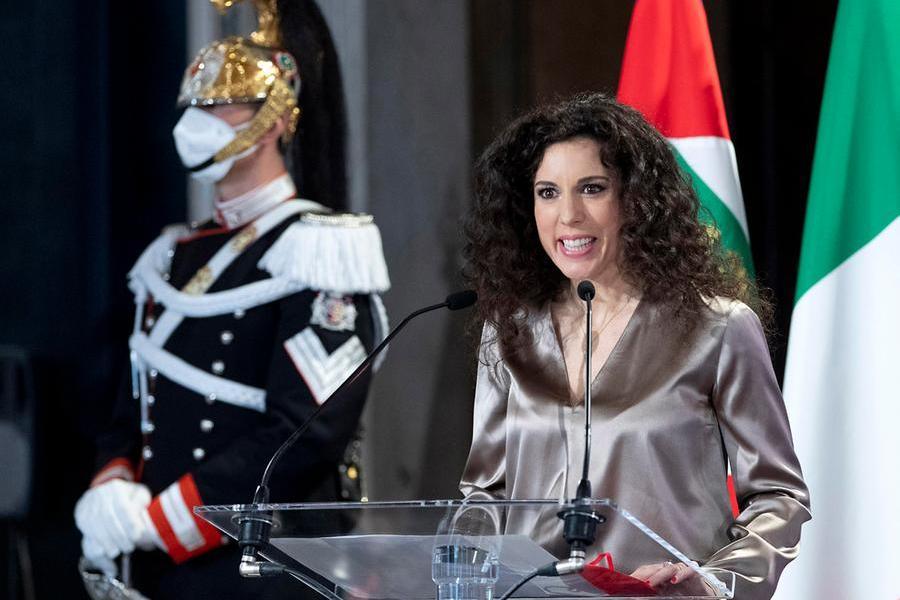
Teenagers and teenagers are my favorite people, which is also why I made them the protagonists of all my novels, including Black heart (Rizzoli). No age is as fragile and, at the same time, as powerful as this one. And perhaps it is this complex and tumultuous ambivalence that scares adults. When we become teenagers we are called to be born a second time by our desires and dreams, we need limits, but also trust and horizons. We must learn to no longer be just children, to separate ourselves from our parents and risk our own path in the world. But we still don’t know who we are, and this makes us insecure. We must learn autonomy and freedom, but we still need adults: present parents, good examples, passionate teachers, an entire society that educates us and accompanies us.
I believe that in this historical moment there is a lack of a positive and cohesive village in which to grow up: social ties are increasingly frayed, the physical places in which young people can create relationships are less and less, families are lonelier, schools are not flooded with investments as would be necessary, together with all the cultural and sports centres. Young people too often find themselves alone, fueled by the anger and violence that spreads onlineby algorithms that frequently isolate, put in competition, expose us to a void of meaning and empathy. At the same time, the adult world seems hostage to the same fragility, disoriented, scared of the future and closed in on itself.
I see a great educational void, I hear a language that often lacks respect and curiosity towards others in the big media as well as on social media and on the street. I believe we should start from here: from a profound analysis of the shortcomings and inequalities of our society, of the educational shortcomings of us adults, and, at the same time, look at and listen to them, our children. By attending the juvenile prison in Bologna I discovered how much need these kids have to be looked at and listened to. If you feel invisible, useless, a waste, it becomes very difficult to believe in yourself, in others, in life, and to commit yourself to good, which, unlike evil, always requires commitment, effort, project, community, hope. Nihilism is the most obvious response in those who feel nothing, in those who are exposed to nothing. Violence in those who have received neither kind words nor affection. Adolescents are not adults: when they make mistakes, the responsibility lies with them, of course, but also with an entire society that has not educated, accompanied, created the conditions for peaceful growth.

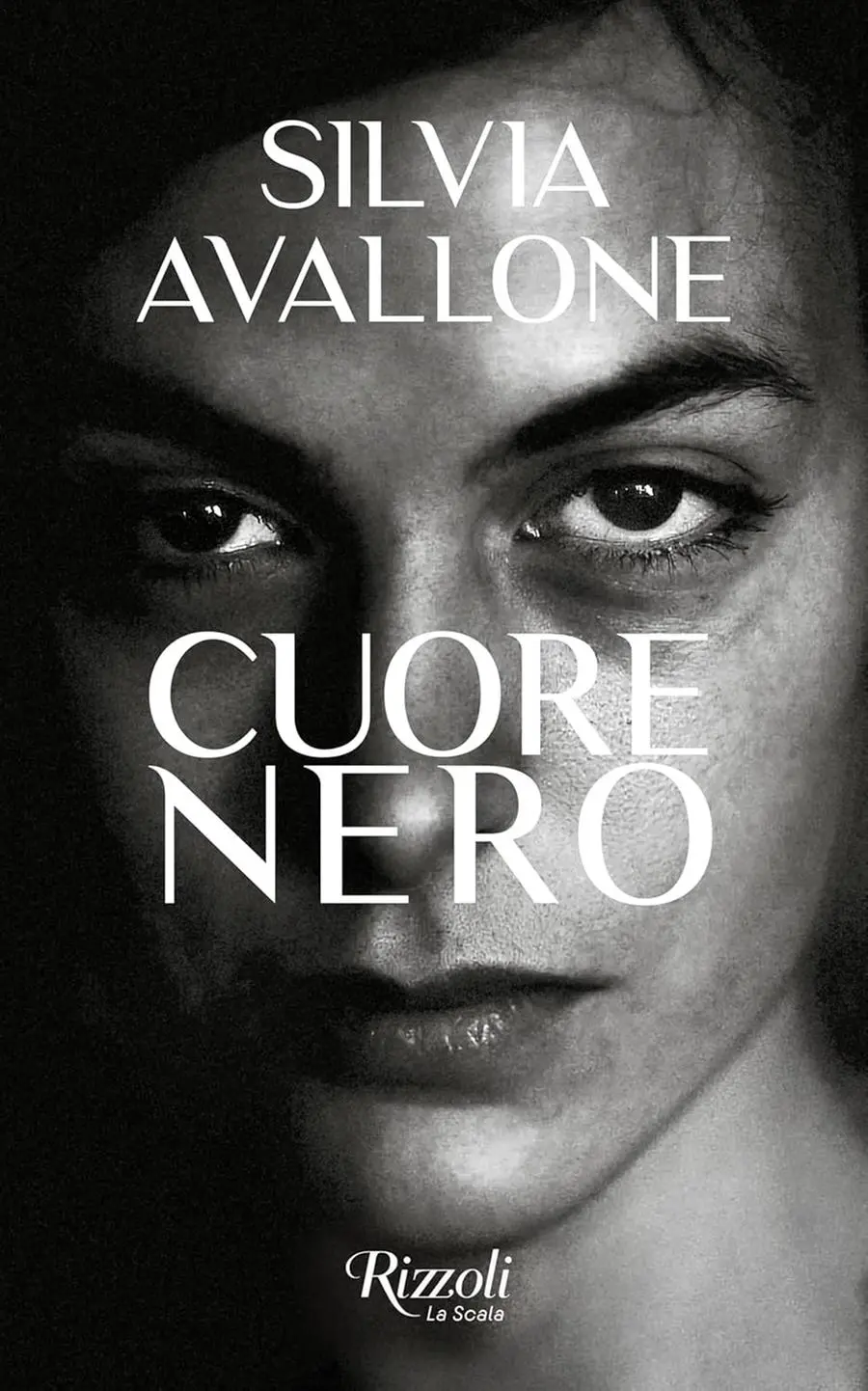
In Black heart I described an invented female juvenile prison in which, as in the reality that I was able to know directly, the vast majority of inmates come from contexts of social abandonment, marginality, educational, emotional and cultural poverty. Delinquency is a direct consequence of the harm suffered. These are mostly crimes against property. I will always remember a boy who told me that he had been teased for months by his classmates because he was wearing a pair of broken shoes: his parents couldn’t buy a new pair. This boy felt humiliated by teasing for a long time, until he exploded and went to steal his new shoes. This is how he began to commit crimes, and the prison school provided him with the words and tools to reflect on it and tell me about it. I immediately thought about how important and simple it would be, instead of making fun of him, to organize a small collection to give him new shoes and help his family. Would this small gesture have changed the course of his life? I do not know. But I know that we must educate our children in empathy and solidarity, because the social fabric is nourished by these feelings.
Evil only produces more evil, if the chain is not broken with a gap of solidarity, culture, friendship. This is what the encounter with the reality of juvenile prison taught me. Evil is not only social, of course, although we must remember that most of it is, and therefore it would be easily preventable by acting on social justice, on the suburbs, on too much poverty. Evil is also a more mysterious scandal, which freezes and paralyzes us. Emilia, the protagonist of my latest novel, embodies this terrible question. She doesn’t come from the margins like the other inmates, but from a wealthy family. He studied music and dance. He lost his mother early, he suffered episodes of bullying, he harbored enormous anger, but none of this explains and obviously justifies the irreparable harm he committed at 16, which will never be resized, never forgettable, never, in fact, fixable.
I chose a little girl as the author of this evil precisely to face it with more clarity: when a character dear to you is guilty of dizzying guilt it is more difficult to turn the other way. We must ask ourselves about complexity: the irreparable evil, and, at the same time, the humanity that resists. The question of my novel is all here: is it possible to build a future, a piece of good, next to and around a crater that can never be filled? Emilia paid with her youth, and to some extent she will never stop paying. And even the father, innocent, will always feel the responsibility of not having done enough to prevent the violence resulting from that deaf anger. Writing this book helped me understand that evil must be faced with eyes wide open, with a clear mind, taking all the time necessary to understand and analyze. But without closing the door to hope, and to community.
Dating for a few years At the male juvenile penal institute in Bologna I received a surprising lesson in humanity that I will carry in my heart forever. I discovered what really, concretely can save a teenager: an adult who believes in him, looks at him, holds out his hand, offers him tools and values to believe in; a healthy friendship between peers who do not judge each other, but encourage each other to get out of bed and react, even when closing your eyes and not thinking would be infinitely easier; and, last but not least, school. I have seen with my own eyes kids graduate and even graduate. The transformation was so powerful, like a second birth. Those kids moved from a desperate life to a full and positive life, for themselves and for society. This happened thanks to their own strength, certainly, but also thanks to a chain of adults who worked hard to change feelings, thoughts, language, dreams in the heads of these kids: educators, teachers, agents, directors. An entire system that was set in motion offering relationships, trust, education, culture, sport, limits and horizons. The difference between good and evil. This is what we must all do, in my opinion: be examples, guides, sources of trust, ideals, hope. I believe it is very difficult for a well-mannered, educated, educated and encouraged boy to fall into the precipice of evil. Which is always a minus, a desperation, a void.