



Peeling skin on the hands, face, back… Why does it fall into shreds? An update on the causes and solutions to peeling skin with Dr Jean-Luc Rigon, dermatologist-venerologist in Nancy.
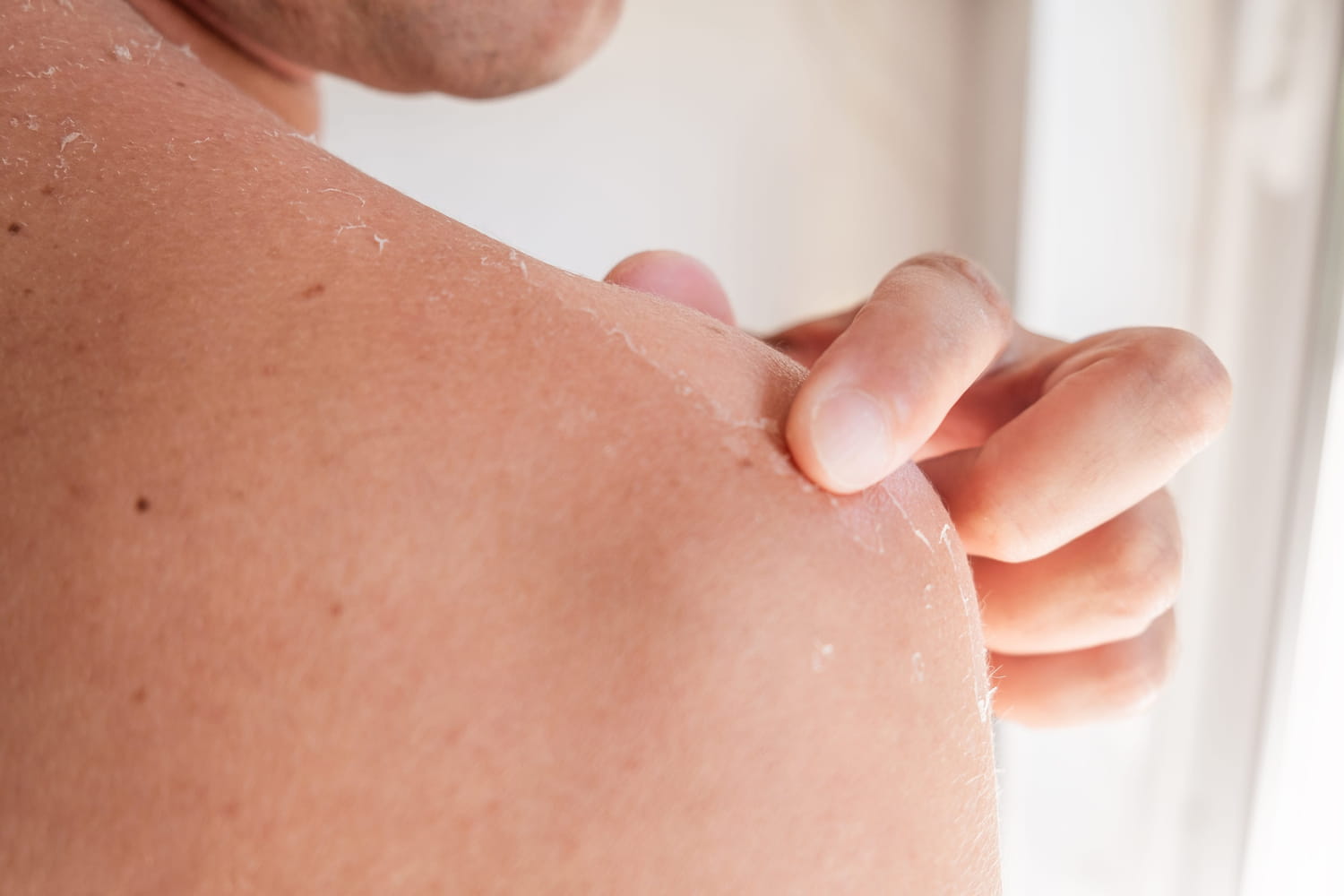
Having peeling skin is not uncommon. When the skin peels, it means that the upper layer of the epidermis is peeling off because the cells are regenerating. “It is a way for the skin to heal after having suffered an external attack (overexposure to the sun, very often) or an internal attack (drug poisoning, for example). Peeling skin is a good sign“, immediately explains Dr Jean-Luc Rigon, dermatologist-venerologist in Nancy. Here is his advice.
Causes: why does the skin peel?
► Very often, the skin peels following a burn such as a sunburn. It’s irreversible: the parts of the skin that start to peel off will eventually come off.
► Improper washing can be the cause of peeling skin. “Taking showers that are too long or too hot, applying harsh soaps, rubbing too vigorously (it’s better to dab yourself dry!), all of this can damage the skin and cause it to peel.“, specifies Dr. Rigon.
► An allergy to a substance applied to the skin, contained in a beauty product or perfume. In this case, there is usually a strong itching.
► Skin damaged by the cold, particularly in winter, can peel, as can dehydrated skin, or even when it has just had a tattoo.
► More rarely, drug poisoning (for example anti-inflammatories or antibiotics) can cause the skin to peel.
► Finally, dermatological diseases such as psoriasis, a local infection of the skin by a fungus or another germ can cause peeling.
Peeling skin due to seborrheic dermatitis or eczema
The skin may peel due to seborrheic dermatitis, a common condition in adults, which causes red patches and scaling, in oily areas of the face (namely the sides of the nose, between the eyebrows, the scalp, the folds of the ears, etc.). Seborrheic dermatitis may go unnoticed. “Most patients come to the hospital thinking they have peeling and dry skin.“, explains Jean-Luc Rigon. Furthermore, “it is not always easy to distinguish significant seborrheic dermatitis from minor psoriasis“, he adds.
Location: peeling skin on the face, hands, back, etc.
All regions of the body can be affected, depending on the area attacked. We frequently find scales on the hands, on the back, on the feet, on the face. Desquamation can also affect the scalp: it is then the cause of dandruff and is linked to tissue renewal. “This is a normal process; simply, the hair holds these skins“, underlines Dr Jean-Luc Rigon. Factors such as stress and fatigue, overly aggressive shampoos, an allergy to hairdressing products (dyes, perms) or too hot drying can reinforce this phenomenon.
People at risk: what about babies with peeling skin?
“Everyone can have peeling skin, but those who naturally have dry skin (elderly people, eczematous children are more at risk.“, specifies Dr. Rigon. Attention must be paid to infants, whose skin is in prolonged contact with products and diapers. “Specific products must be used to avoid damaging babies’ skin.“.
To treat, but also prevent, peeling, you must hydrate, this is the only way to accelerate the healing of the skin: “apply cream twice a day, drink plenty of water (we are all 2/3 water)“, advises the dermatologist. After exposure to the sun, it is recommended to apply an after-sun lotion, which soothes and nourishes the skin. Finally, you should avoid tearing off the scraps of dead skin by pulling on them: they will come off naturally when you take a shower, for example. Likewise, it is not recommended to exfoliate the skin as this risks irritating it further. In fact, “any product that could further attack the epidermis should be avoided, in particular excessively repeated scrubs.“, concludes the dermatologist.
Thanks to Dr Jean-Luc Rigon, venereologist dermatologist in Nancy (Meurthe-et-Moselle), for his details.