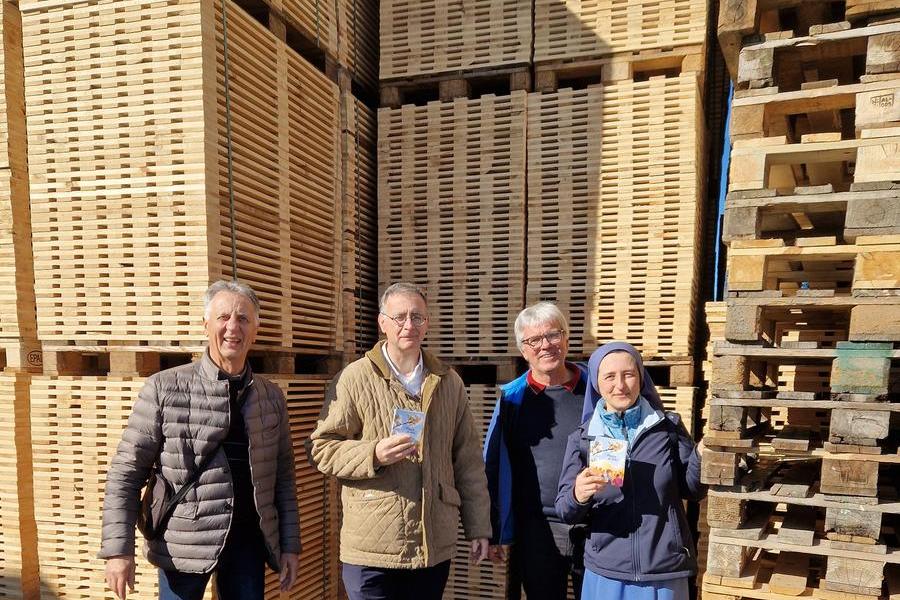




They made over 60 stops, including schools, factories, construction sites, cooperatives, universities and hospitals. A Caravan of Peace to bring the themes of democratic life, work and dignity to everyday places. «It was not a symbolic act, but a cultural and political choice. Because there is no peace without work, nor work without peace.” Emiliano Manfredonia, national president of the Acli since 2021recounts one of the initiatives on which the Christian Italian workers’ associations have strongly committed themselves in recent years. Peace, democracy and dignity, he says, are the directives on which the life and proposals of the ACLI run, which involve around 300 thousand members, in the 2,500 clubs distributed across the national territory.

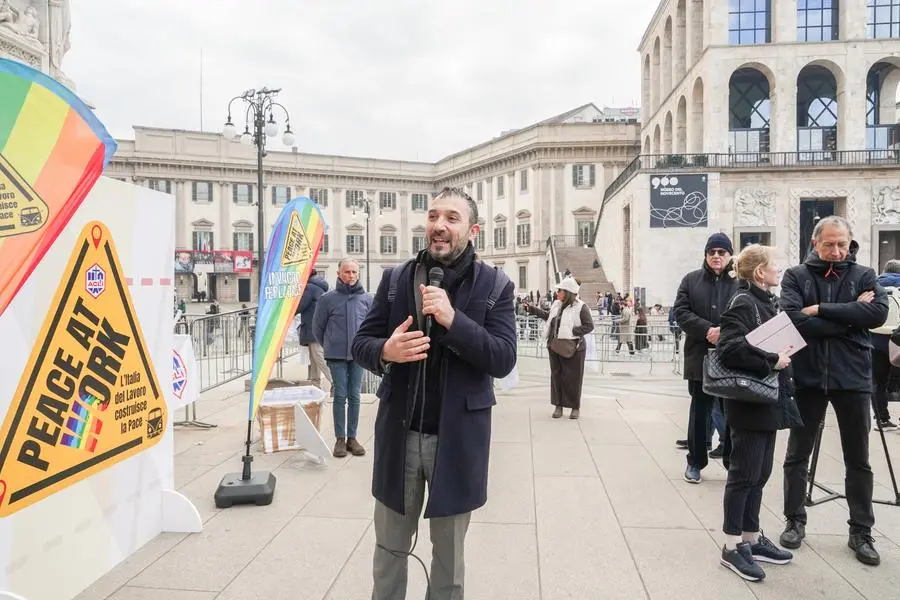
Pisano, born in 1975, married to Francesca, father of Luca, 18 years old, Manfredonia was a parish animator and educator for years, trained in the Catholic Action Student Movement, then involved in social cooperation. An imprint that catches the eye when scrolling through the pages of The harmony of looks (Edizioni San Paolo), a volume from a couple of years ago, in which Manfredonia tells its story. Italo Mancini, Carlo Carretto, Giorgio La Pira are the masters who accompany him in his reflections where he talks about artificial intelligence and denied work, the news on the massacres of migrants in the Mediterranean and children in Gaza. But also of walking through the alleys of Rome and praying in front of Michelangelo’s Pietà in St. Peter’s.
«I live in continuous contact with the efforts and passions of the men and women of this time. Together with friends who are much more knowledgeable than me, I try to understand the political-social phenomena of our country, to open some openings of hope through service. We build projects, we propose lifestyles. And I pray, at least I try, for a more just, welcoming humanity, aware of its path and above all so that we can have the perception that we are all on the same Earth, which must be respected, we are all responsible for the same house.”
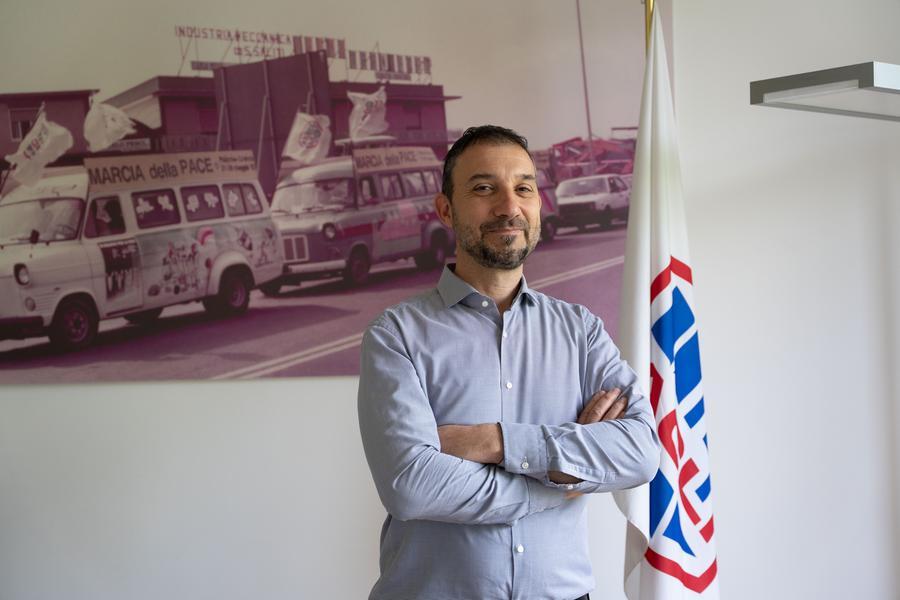
In the office in Trastevere, where the headquarters of the national ACLI are located, the wall behind the president’s desk reproduces a moment of the peace march against missiles in Comiso in 1983. «This is our story. Peace, respect for the Constitution, work”, says Manfredonia.
A May 1st in which work is increasingly combined with the adjective poor…
«We are not in a situation of serenity. With the ongoing war, the cost of energy weighs heavily on families, particularly those who work and have a low salary, but also on businesses. As Acli we produce an annual report starting from the anonymized tax returns processed in our CAFs (we produce almost 700,000 of them every year). Let’s compare the various years to understand whether the same people who take the 730 with us have lost their spending power or have gained. These are data that cover all of Italy. And what comes out is not beautiful: there is an Italy of poor work, where the most disadvantaged are young people and women.”
What is the most striking data from the new report The low-paid job trap that you presented recently?
«This research tells us something very clear: today in Italy it is not enough to work to have a house. Those who live in rent earn on average 23% less than those who own their own home and a quarter of them are precarious workers. It is a double trap from which it is very difficult to escape. The other striking fact is that even those who work, especially those who are forced to do multiple jobs, more often give up spending on school and sports for their children. Among the lowest incomes, two out of three families are forced not to invest in the new generations. This is the most worrying fact: it is not just economic hardship, it is inequality that is transmitted over time.”
It is the theme of poor, fragile work…
«About 15% of workers bring home an objectively insufficient income, below 700 euros per month. This thing, which especially affects young people, will weigh on their future and on our social security system. Lower incomes mean lower taxes and fewer services, less social security, poorer pensions. We need to roll up our sleeves and do something.”
What are you thinking about?
«We would need a strong alliance between businesses, unions, government and opposition. Why not get around a table on the country’s crucial issues that concern everyone, not just the majority, to try to find solutions?”.
How has work changed in recent years?
«There is an important pocket of more fragile work, that is, even the middle segment is thinning, which risks falling into poverty. A lack of self-sufficiency, an illness, a separation, a child who has to study, are factors that risk plunging families into poverty. Because unfortunately in our country having a child can lead you into poverty, as Istat data tells us. We then have the paradox of companies, even quality ones, that would like to hire, but cannot find the workers they need. Either you are too professionalized or you are not very professionalized, the middle band is missing. In this sense, something more could be done, investing in professional training. The world of work is more complicated than before, there are more possibilities, but it is poorer in terms of income, and it is more fragile because there are fewer protections. There is a downward decline in the quality of the world of work.”
Which also affects other sectors. Lower incomes, less health, less education…
«We recently did a report with Next on the topic of health, on healthcare rationing, and it turned out that people spend much less on health, they give up treatment because there is a fragility of the public healthcare system. Like Acli, then, we strongly say that in Italy we cannot continue to tax the world of work and not tax income from speculation. It’s immoral. He who has more, gives more: it is a principle of progressive taxation, a bit of social justice should be recovered.”
In these years as president of the ACLI, how have you seen the scenario of the world of work, of Italian and international society and also of the Church change?
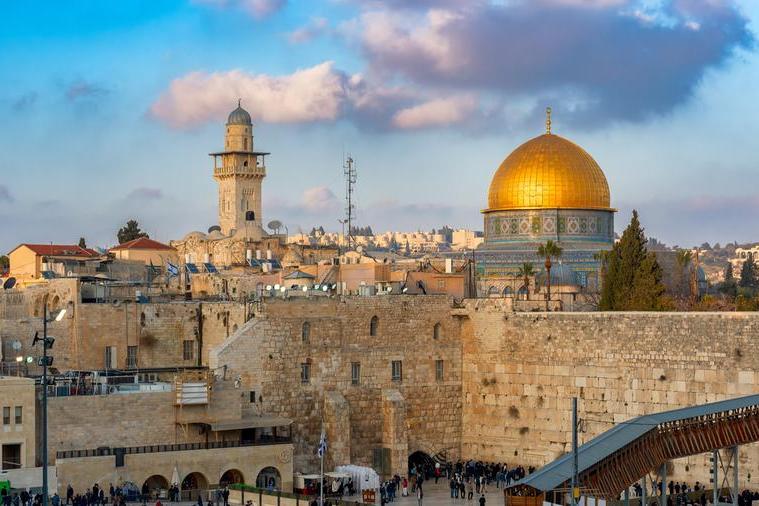
«Since 2022 the war issue has returned to our lives. We demonstrated for peace and also started Peace At Work, the peace caravan. We went to Ukraine, where we have had ACLI for some time, to Jerusalem, Palestine, Bethlehem… We went to understand what was needed. We went to Strasbourg, where we brought our proposals. Our card in 2026 is called “Peace in action”, to say that every service we offer is a sign of peace, of attention, of care, which is the only way that can build peace. We are an association of lay people of Christian inspiration, and we work a bit on the border, we have networked with many organizations on the topic of democracy, made legislative proposals, for example the one on the Ministry of Peace promoted with the Focolare Movement, Catholic Action and other associations of the Catholic world”.
Is there any document from the Magisterium that you feel particularly close to?
«Pope Francis was an important source of inspiration. But even with Benedict XVI’s Caritas in veritate, the Church was able to read the situation of the world, it warned that this selfishness that was reproduced in the hypercapitalist economy would lead to imbalances. We are waiting for Leone’s first encyclical to understand if it will be a social encyclical.”
Is there any passage of Scripture that accompanies it?
«A phrase from Saint Paul has always accompanied me: “I can do all things in him who gives me strength”. That is, knowing my limited abilities, if He weren’t there it would be a problem.”