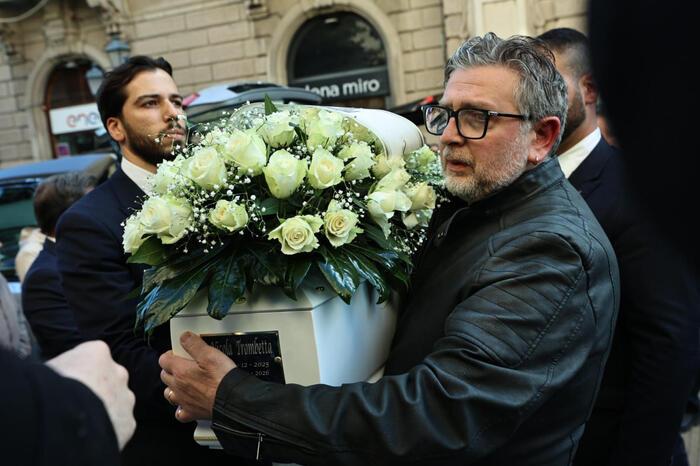





Maria Luce will be saved. The little girl who, together with her two little brothers, was involved in the murder-suicide committed by her mother a few days ago, seems to be recovering. The news from the clinical front is reassuring and they help take a breather in a story full of pain which kept us all in awe.
What will his life be like now? How do you survive such enormous trauma? Does time heal and cure these kinds of wounds? Many people ask themselves these questions when they think of the people that psychology defines as “survivors”. You are a “survivor” when life exposes you to an adverse event with a high impact on your psychological sphere and you have to face your daily life by learning to make sense of what happened to you and not to develop a post-traumatic condition that could affect your mental health and the balance with which you experience life.
You are a survivor if you survive a tragedy like this. Or if you survive a car or plane crash. You are a survivor if you remain alive after being involved in an event such as the Crans Montana fire. In such cases, the adverse event has caused an enormous threat to both your physical and psychological survival. But there are situations in which the body remains alive, without being threatened with death. Yet, the adverse events that have happened to you invade you with an experience of emotional overwhelm, which keeps you at a standstill if not in check. That is, you can be alive on the outside and dead on the inside. It happens, for example, to those who have suffered rape, or to those who have been victims of sexual abuse during developmental age. Psychotherapy in these cases is of fundamental help. But also the resilience of the subject and of the family and social system in which he is inserted.
What will Maria Luce’s life be like after the tragedy that struck her? Many wonder if you can stay alive and return to normalcy, despite what happened to you. Psychology, on the other hand, does not work on the “despite”, it does not ensure that what happened to you is cataloged as an adverse event to be treated like a foreign body, to be left out of your life. Many hope that such events can be forgotten. But our mind does not forget anything. It keeps nothing outside of itself. In short, it is impossible for our psyche to work on the process that makes an event that has left such a powerful mark on the subject’s emotional memory a “foreign body”. Psychology works on the ability that our mind has to integrate the events that have happened to us, to bring them into its psychic functioning, allowing us to learn to think about them, without experiencing them as if they were perpetually active in uswith the strength of a memory that never fades and holds us hostage.
The work to be done with Maria Luce will be slow, patient and profound. He will have to deal with the mourning of the loss of a mother and two brothers who were the solid basis of his affections. She will be able to do this by learning to love in absence and regenerating within herself the memory of a mother who loved her and who, in need of help, was not intercepted in her need. He will have to keep within himself a memory in which at the beginning the pain will be stronger than the lovebut which, with the support of the father and the community that has gathered tightly around this family today, will be able to return to being based much more on love than on pain.
The clinic teaches us that children have enormous resilience: their emotional resilience is truly infinite if nourished with affection and adequate care. The person who needs to be helped the most today is his father. If it manages to be a safe base for Maria Luce, if it is able to escape the cage of desperation and keep its gaze high on the dimension of hope, what will happen is that father and daughter will be able to rebuild their existence not so much about what remains of their family history, but about what still awaits them in the life they have ahead of them.