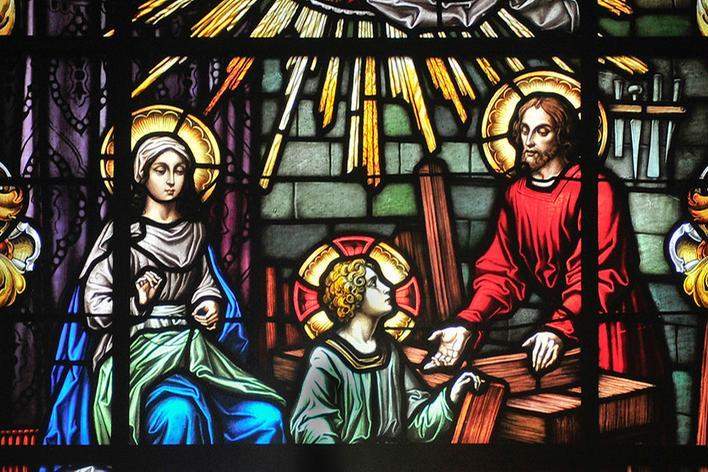


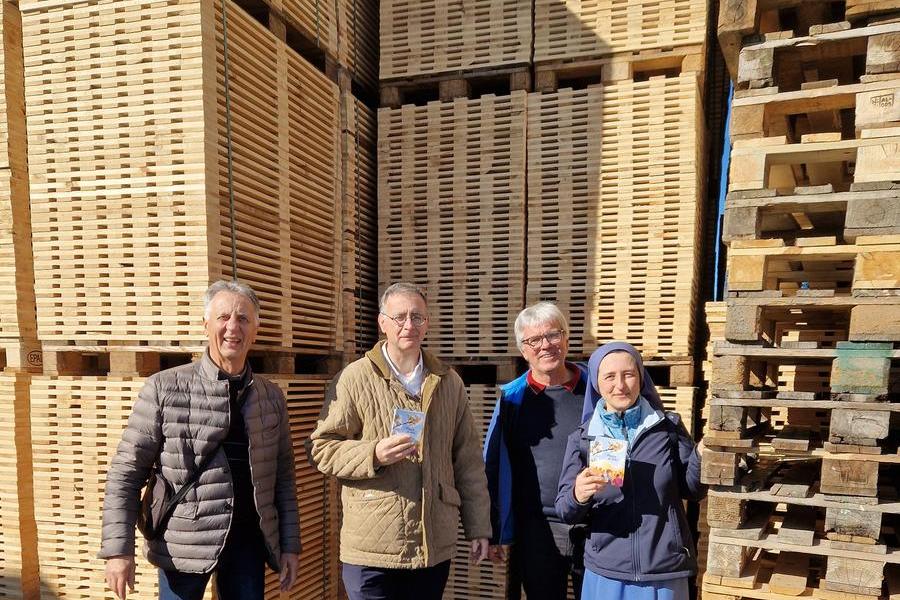


«Up to thirty years of age, Jesus’ life was that of a carpenter: he worked with human hands, he loved with a human heart, he acted with a human will.” Sister Elisabetta Bresciani quotes Gaudium et Spes to explain the charisma of the Worker Sisters of the Holy House of Nazareth.
At 42, after his scientific high school diploma, his degree in pedagogy and his theological studies, he chose to share one of the most authentically human dimensions: that of work. She made her profession in 2007 as a worker nun of the Holy House of Nazareth. The founder, Arcangelo Tadini (canonized by Benedict XVI on 26 April 2009), in 1900, in the aftermath of the social encyclical Rerum Novarumin Botticino Sera in the province of Brescia committed himself to improving the conditions of young workers, “squeezed lemons”, whose dignity had been violated.

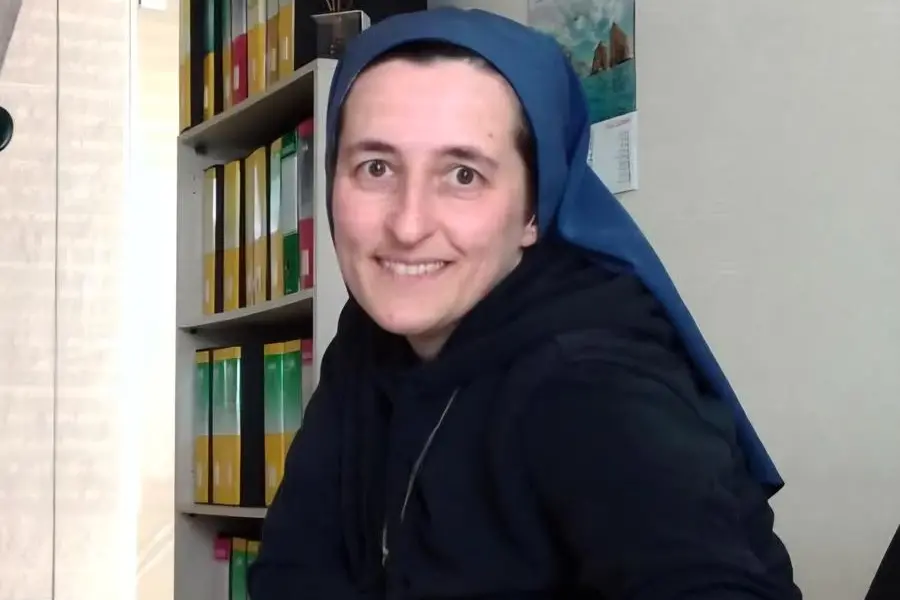
«Today the world of work suffers from other contradictions, but it is still a place of human promotion, growth and valorisation of talents. We experience it as workers from within in various sectors. We are around two hundred and twenty consecrated in the world, divided into three delegations: Europe, Brazil, the Great Lakes Region in Africa.”
All with the veil and the dress?
«This is how I started where I work in Bolzano Vicentino. In other work environments, we remain in plain clothes without any problems. It’s not even surprising at the listening center in the industrial area of Padua, where I work in the afternoon and we welcome people in difficulty at work for an initial interview.”
What type of work do you do in the company?
«I deal with drug safety, quality control and withdrawal of batches from the market for an Italian intermediate drug distribution company. I work well with colleagues: there is collaboration, dialogue, coordination and teamwork.”
Then the afternoon moves on.
«I go to the listening centre: an initial welcome for workers in difficulty. People who need to change their minds or find their first job. We create a listening space for orientation, we help in drafting the curriculum vitae, we direct people to the Employment Center and employment agencies.”
Who is addressing you?
«People of various genders, ages and nationalities. There are those who lost their jobs at fifty. The last one was disheartened: he was only two years away from retirement. Without energy, disappointed and unable to think of himself in a place and place other than his own. While talking, he took a breath, accepted a training update and then found space in logistics. Then there is the foreign lady who got lost in the labyrinth of documents to present: terrible anxiety about the residence permit. In the end she was so happy that she gave us a tea set as a gift.”
And the young people?
«They seem distant from the world of work. They have a very fragmented vision and struggle to understand how work contributes to defining their identity. They are focused on “free time”. Many have a degree but, in reality, they dust off their diploma to find a job.”
How did your vocation come about?
«A simple path: the oratory, in my town, the meetings organized by the worker nuns. After graduating from high school I realized that my vocation could be consecration and I was struck by the charisma of these nuns: the spirituality of the house of Nazareth, where we live in simplicity, in daily toil and in the joy of sharing. A simplicity that enhances life itself.”
What role did your training have?
«The degree in pedagogy helped me build paths for workers and plan interventions. I could mention the social pastoral projects in the industrial area of the Diocese of Padua. During the big holidays, at Christmas and Easter, we go around the companies: we meet workers and owners. It’s a beautiful moment of the Church coming out.”
What are your thoughts on the current world of work?
«There is a strong transformation from a technological point of view. The risk is to replace the speed of artificial intelligence with the quality and added value of the relationship. You may not know the latest software, but experience and comparison are living fabric. It is important to advance human and technological training linked to AI in parallel.”
Have you seen the climate in companies change in recent years?
«I sense uncertainty about the future: the climate of war weighs heavily. There is greater precariousness in orders, less permanent contracts, more seasonality. Relationships at work are not solid: there is difficulty in learning and having to say goodbye to those who leave.”
How will you experience May Day?
«We will be on a pilgrimage to Concesio, the birthplace of Paul VI. Then I will participate in the Chapter of our Congregation until May 14th. “Weavers of hope for the world of work” is the theme on which we will work: in all the territories and workplaces where we are present we want to bring hope, in the wake of Pope Francis’ Holy Year. Hope to workers and company owners. Everyone is worried about the future: they sleep little. We must welcome these difficulties and relaunch hope.”