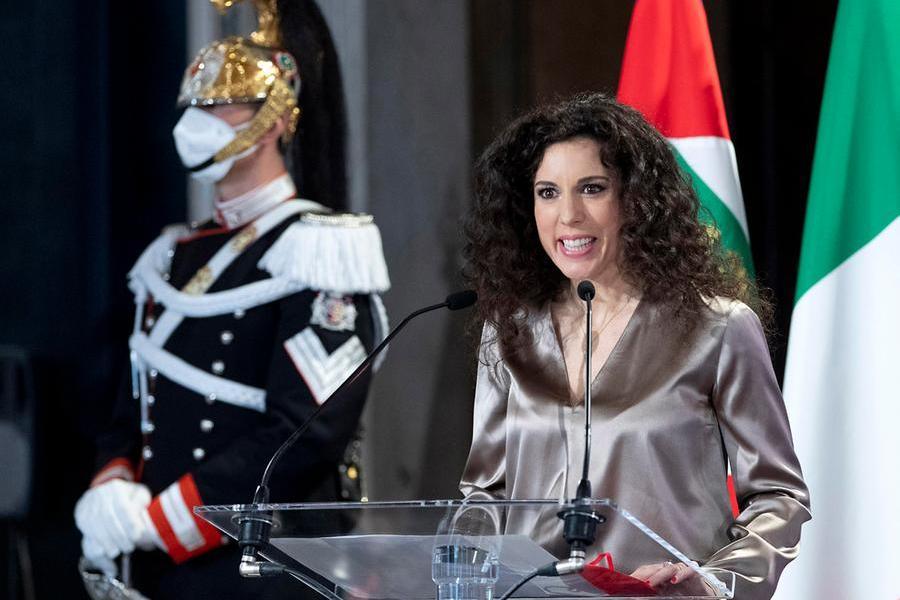





“We usually think of fragility as synonymous with weakness, in reality I have seen first-hand that our strengths are precisely those points of fragility to which we have tried to give a name. My children taught me this.” Powerful voice and deep, dark eyes, Maria Grazia Bacco directs the Minors Reception Center of the La Nostra Famiglia Association, present in Ostuni since 1990. She is an energetic outspoken woman and “her” children are victims of violence, sexual abuse or abandonment. For them he travels in a “stubborn and contrary” direction, in them he finds his reason for living and vocation every day.
Doctor Bacco, who are the children you welcome in Ostuni?
«They are very young children, from the first days of life up to 12, 13 years old. They are reported by local services, by the police, by teachers, by those who detect and report situations of family violence, serious neglect, abandonment, all situations which translate into the “mistreatment syndrome”, for which the Juvenile Courts activate investigations and protection paths. In thirty-five years we have welcomed more than twelve hundred. For each of them we make a diagnostic assessment, we note the possible damage suffered and then we proceed with therapeutic and rehabilitative interventions. In parallel and in collaboration with the various local services we evaluate the family relationships and the parents’ skills, to study the most suitable project to respond to the needs and interests of the minor, which is our priority: return to the natural family, “testing” process, foster care or adoption project, transfer to family or therapeutic communities”.
What contexts do they come from?
«From deprived social contexts, in which economic and cultural poverty, absence of family support resources, deviant social conduct, crime, addictions and mental illness frequently occur. It should be noted that local services try to activate support interventions and take charge of family systems at risk, but resources are lacking and it is not always possible to prevent them… Often these are situations that are handed down from generation to generation – we classify them as “transgenerationality of hardship” -, while with the necessary interventions we could intervene and write a new “anthropology of coexistence””.
Child abuse is on the increase and 87 percent of cases occur within the family: the Children’s Guarantor says so, but it seems that no one is listening.
“It is true. Unfortunately we are increasingly oriented towards a private and possessive management of relationships. There is also a general fear of having to report possible situations of risk and vulnerability of children, to avoid inappropriate and aggressive reactions on the part of adults. It is very delicate terrain, where everyone should converge on putting the child at the center and activating a support network, community welfare. We should be able to not wait for the other to ask and to formulate a social fabric in which the response is legitimate, immediate, even before the need is expressed. Otherwise it becomes just a disguised piety. My children taught me like this: it’s not them who have to adapt to the world but the world that has to adapt to them.”
She is a consecrated lay person. How do you reconcile your vocation with so much pain?
«Children with histories of abandonment or abuse were the first to make me understand that vulnerability gives rise to the possibility of asking questions and finding answers. We think that anyone who has a fragility, a disability, a family problem, is just a person asking for services, interventions, assistance; instead those who are fragile do not represent the question but an offer of meaning, of meaning, of hope. Many times my children, in a sort of mirroring, make me understand exactly that if they weren’t there with a request for help, sometimes silent, I wouldn’t be in a position to seek authentic answers, stimulate solidarity, activate the creation of networks and less tiring paths. What is initially a fragility can become an important stimulus for cultural and social growth and for giving different responses, which also give meaning to one’s life. Then there is a strong link between consecration and love of life. The founder of my Institute, Blessed Luigi Monza, clearly suggested that holiness does not consist in doing extraordinary things, but doing ordinary things extraordinarily well. He indicated a ferial sanctity, where charity towards his favorites was a main path… and I’m trying.”
The majority of children are welcomed by foster or adoptive couples. Who are these parents?
«They are generative families, because they take care of and create the conditions so that every child can have a second chance at a good life, despite the trauma. In forty years almost a thousand children have been welcomed into foster care or adoption, two hundred of them presented severe deficits caused by their experience of origin. For me it was a real cataclysm, in some respects a miracle, to see families choosing to welcome a child with a disability or accepting a high-risk diagnosis, without knowing the evolution of that risk. The real teachers for me are these parents, who welcome a little life sight unseen, even though they know that there will be difficulties. Beautiful women and men emerged from the mistreatment, thanks to these families and what could have been a tragedy on a human level, for them was a great gesture of love. But the greatest testimony to the generativity of these parents is that they tell me that, if they could go back, they would make the same choice again.
Cristina Trombetti