It is not a law that explicitly prohibits a religion. It does not prohibit belonging to an ethnicity. He does not order deportations. Yet, precisely for this reason, it risks being even more effective. Because it does not erase differences with the force of a sudden decree: it absorbs them slowly, makes them invisible, dissolves them within a single national identity.
The new law came into force in China on July 1st Law for the Promotion of Ethnic Unity and Progressapproved in March by the National People’s Congress. For Beijing it represents a tool to strengthen the country’s cohesion, fight separatism and extremism and build a more united national community. For numerous scholars, Western governments and human rights organizations, however, it constitutes the legal framework of a process of assimilation of minorities which has lasted for years and which now receives organic legitimation.
The law comes at the end of a process that began with the rise of Xi Jinping in 2012. Since then the watchword has become “sinicization”: not simply governing a country made up of 56 officially recognized ethnic groups, but building a single political and cultural identity based on the Mandarin language, loyalty to the Communist Party and the idea of a single Chinese nation.
The new text translates this project into concrete rules. In schools Mandarin becomes the main language of instruction; educational programs must strengthen the “sense of belonging to the community of the Chinese nation”; parents are entrusted with the task of educating their children to love the Party and their country; cultural institutions, media and local administrations are called to promote a common national narrative.

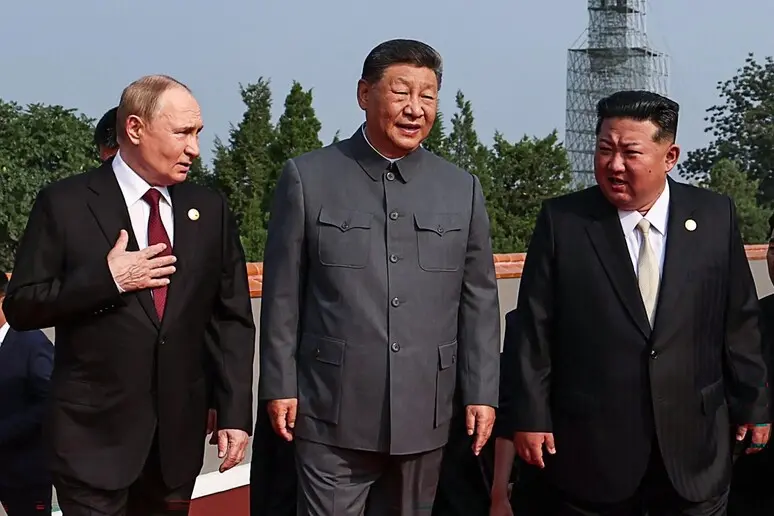
The most controversial point, however, is article 63, which extends the possibility of prosecuting organizations and people resident outside China if they are accused of undermining ethnic unity or promoting separatism. A very broad formulation which, according to several experts, could strengthen what is now defined “transnational repression”: Pressure on dissidents in the diaspora through intimidation, surveillance and indirect retaliation against family members remaining in their homeland. Beijing rejects these accusations and maintains that the rule complies with international law and is necessary to protect national security.
The new law is not born in a vacuum. It formalizes practices that, above all in Xinjiang, Tibet and Inner Mongolia, they have been gradually introduced over the past fifteen years.
It is precisely this gradualness that has made the phenomenon almost invisible to the eyes of the West. There wasn’t a precise day when the world realized that something was changing. First came the increasingly tight controls on religious activities. Then widespread video surveillance, facial recognition, linguistic restrictions in schools, “patriotic education” programs, the reduction of spaces dedicated to local cultures, the progressive replacement of minority languages with Mandarin.

In 2020, thousands of families in Inner Mongolia protested against the replacement of Mongolian language education with Mandarin. The demonstrations were quickly repressed. In Tibet, control over monasteries has become increasingly widespread and the cult of the Dalai Lama is strictly limited. In Xinjiang, however, the most dramatic event took place.
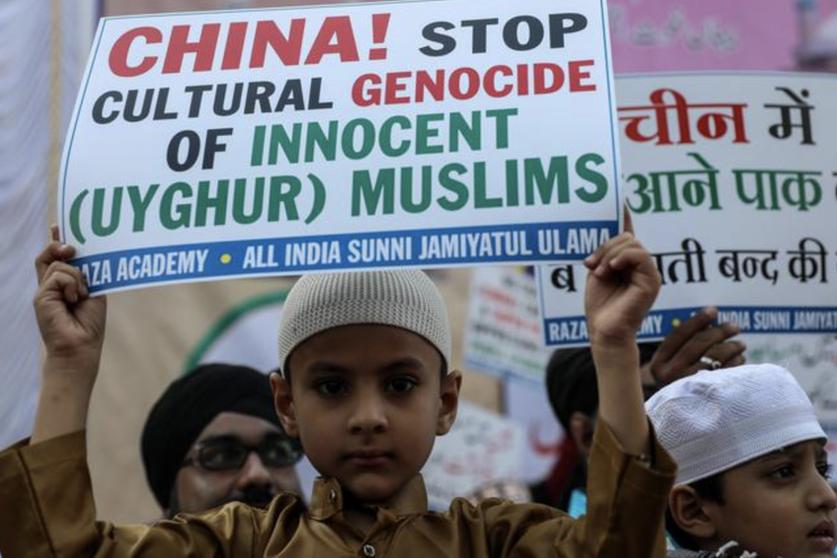
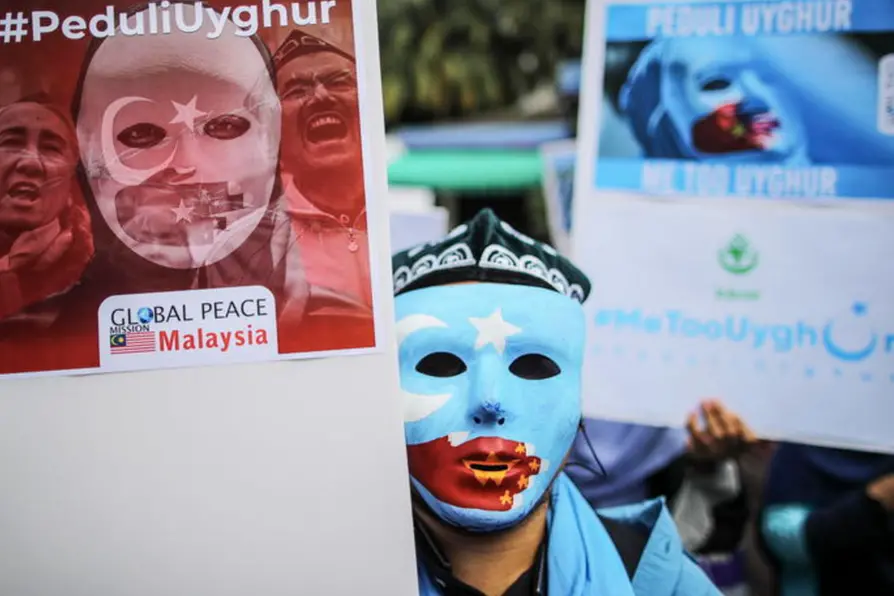
According to numerous investigations by the BBC, Radio Free Asia, United Nations reports and organizations such as Amnesty International and Human Rights Watch, over a million Uyghurs and members of other Muslim minorities have been locked up, over the years, in a vast network of detention and “re-education” centers. The Chinese authorities have always rejected this reconstruction, claiming that they were professional training centers intended for the prevention of terrorism and religious extremism.
In 2021 the British Parliament passed a motion defining The treatment of Uyghurs in Xinjiang is “genocide”. Similar assessments have been expressed by other Western parliaments, while Beijing continues to deny any violation of human rights, denouncing a disinformation campaign orchestrated by the West. What is striking about the new legislation is the language. It doesn’t talk about repression, but about harmony. Not of uniformity, but of integration. Not of erasure of differences, but of “progress”. It is a lexicon that transforms obedience into cohesion and assimilation into civic value.
Precisely for this reason, various observers have recalled, at the level of the ideological framework, some experiences of the European twentieth century based on the superiority of national identity compared to particular identities. The comparison with the fascist racial laws, evoked by some commentators, does not concern a historical or legal equivalence, but the underlying logic: when it is the State that establishes which identity must prevail and which cultures can survive only if subordinated to the dominant one.
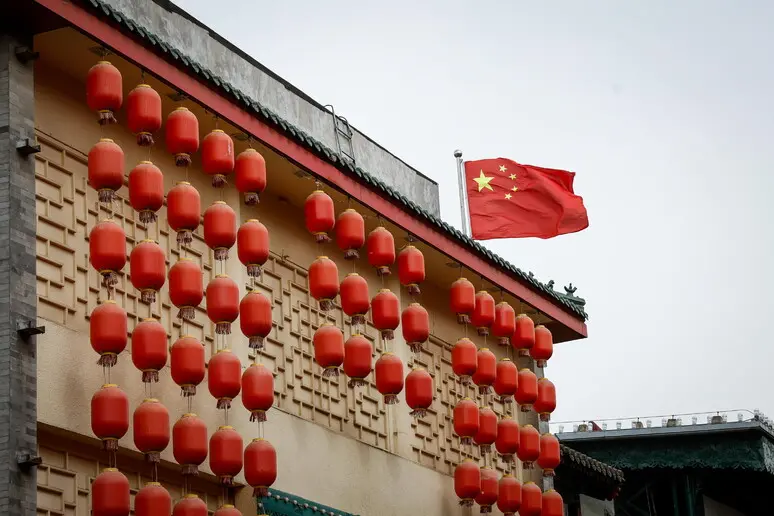
For Xi Jinping all this represents the building of a stronger and more cohesive nation. For its critics, however, it is the last piece of a project destined to transform the richness of differences into a single authorized voice.
Because identities, before being canceled with violence, are often made superfluous. And when a language stops being taught, a religion can only be practiced within boundaries established by power, and a culture survives only if it conforms to the official narrative, disappearance does not happen overnight. It happens one generation at a time.