






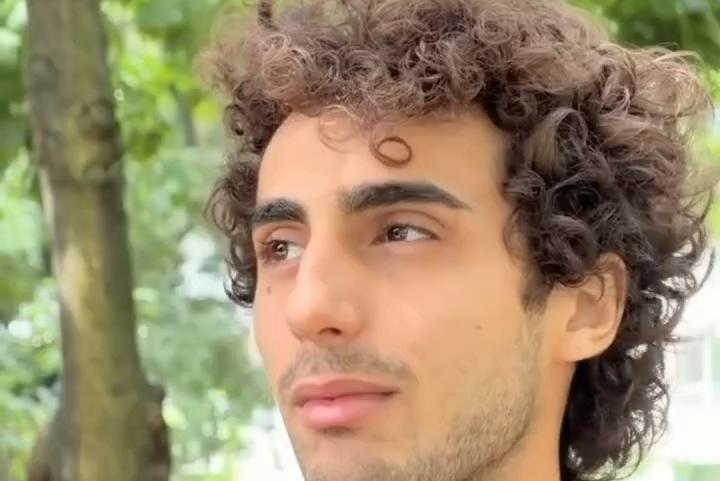
Upon hearing the news that Alessandro Chiani, the 19-year-old sentenced to 20 years in prison last May 20, for attempted murder and robbery of 50 euros against Davide Cavallo, a 22-year-old student who was stabbed and seriously injured that evening of October 12, 2025 in Corso Como, in Milan, reached by Famiglia Cristiana, commented as follows: «I admit to being a little surprised that I am being asked what I think of Alessandro’s admission Chiani to the path of restorative justice”. But it is a surprise opposite to what generally occurs when the victim does not feel ready or denies consent.
«I’m a bit surprised”, said Cavallo, because I have always shown myself to be very open to this type of discussion, regarding my story and since the letter and then in the courtroom when I was able to look these kids in the eyes and hear the phrase “I don’t want to lose myself” from their mouths, there I understood and I can also state with certainty that there is an intention of rehabilitation and not a small one.it is an intention both on my part, because it will absolutely not be easy for me to face such a process psychologically, and on their part, because they will look each other in the face after a hard blow to their lives, to themselves: this intention that we both have in facing our respective difficulties, without wanting to let ourselves be overcome by the darkness, to use the words of a person to whom I feel indirectly connected because we share a unique experience I would say. This intention is worth its weight in gold today, on the part of young people who, with the resources of their twenties, are facing some of the most difficult situations one can face, prison and neurological rehabilitation. As one of my lawyers would have said, we cannot fail to seek an attempt to mend the wound of the social fabric, we cannot simply abandon this possibility to nothingness, to clichés such as “throw them in a cell and throw away the key”. In the end I think that the restorative justice process for the kids who have been admitted to it is ideal and I am very curious to see what it will be like, because in addition to the intention it must clearly be accompanied by action.”
This is one of the rare cases that almost naturally lead to a process of restorative justice, because the desire for a meeting between the attackers and the attacked was spontaneously expressed already on the day the sentence was read: a rare event, a spontaneous approach, which occurred without the mediation of the institutions. While normally, for a restorative justice process that can involve both to start, the victim needs to take time, a complex process.
After the Cartabia reform, admission to restorative justice processes, if the convicted person requests it and if the judge admits it, have in fact been institutionalized in Italy, but this can remove a component of spontaneity in a discipline that is still young.
These are paths that run parallel to the criminal sentence, which remains and runs its course, but which can affect the execution of the sentence. According to Italian law, to involve the victim and the perpetrator of the crime together in a restorative justice process, the non-forced or forceable consent of both parties is necessary. But a convicted felon, if he requests it, can be initiated into the process by the judge even if the victim is against it, but in this case he is not involved and the discussion can take place with available people who have been victims of similar crimes. This is one of the points that is controversial about the Italian application, it can happen that the real victim ends up having a bad experience with the condemned person’s admission to the process, even if he is not involved in it.
In the case in question, however, the path is already far ahead: the young Horse, in his admirable calmness and maturity, has already spontaneously taken the most difficult step on his own, even though he says he is aware of the fact that no more difficult steps will come.