


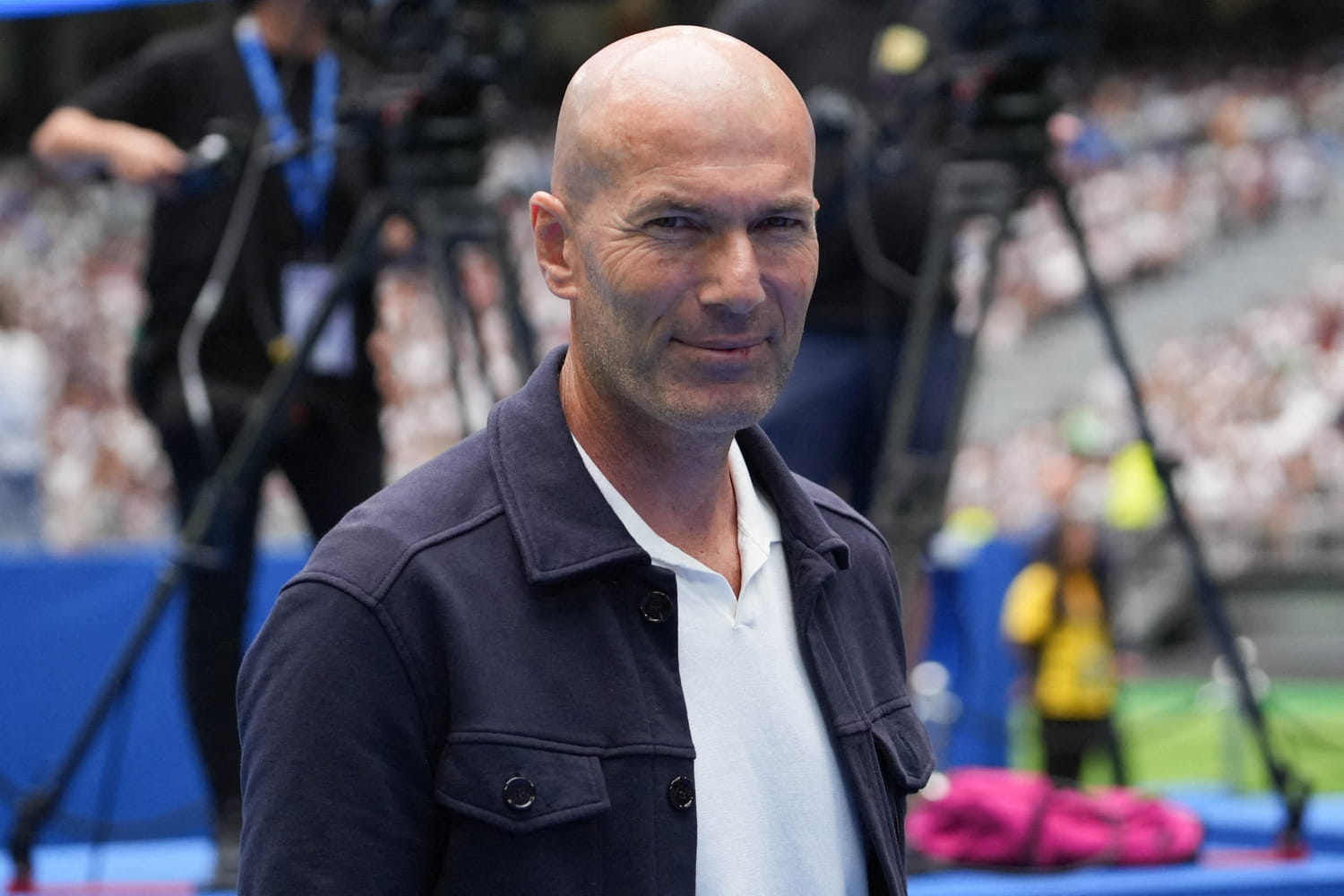


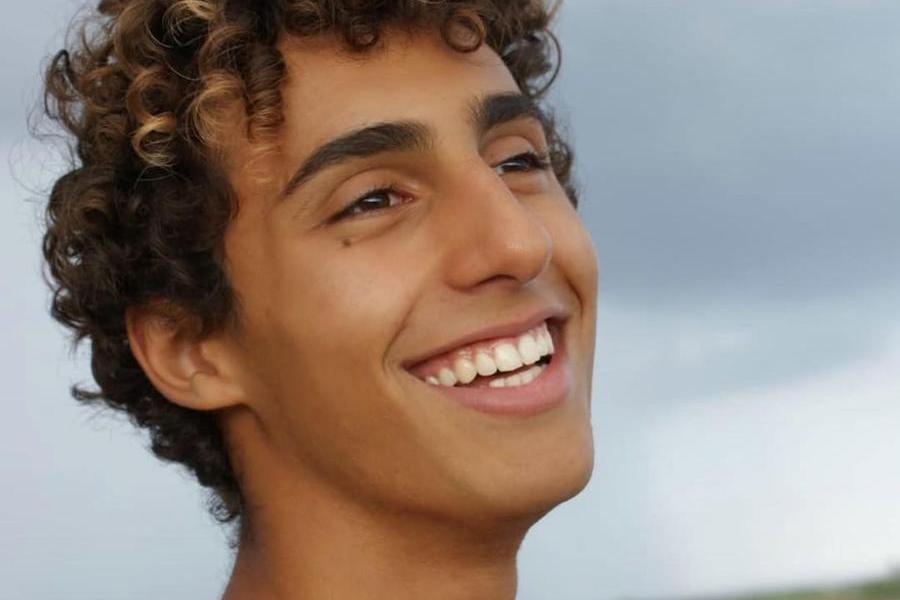
Davide Cavallo’s embrace and empathy towards his attackers struck the imaginationalso because it contrasts with what appears to be the common feeling both in the public debate and in the perception of the courtrooms. Davide is the Bocconi student, stabbed in Milan on 12 October 2025, in Corso Como, who suffered permanent injuries as a result of that gesture. Yet in the courtroom, at the courthouse in Milan, present at the reading of the sentence that sentenced Alessandro Chiani to 20 years for attempted murder, and Ahmed Atia to 10 months and 20 for failure to provide aid, he embraced his attackers and spoke to them, sending a message to the world against revenge. A rare fact that Maria Martello, professor of psychology of interpersonal relationships, and before that, honorary judge at the Juvenile Court and then at the Court of Appeal of Milan, defines: “The island that never exists”.
Dr. Martello, what does the scene of that hug tell us?
«The scene of a longed-for justice that struggles to become an expanded experience: I believe that each of us in our hearts, when we have committed a wrong, desires within ourselves to be embraced and loved even with our own mistakes. We all desire it, but almost no one is able to give it as a gift to others: the exceptional thing that happened in the courtroom is that someone had the courage to give it as a gift and to do it with authenticity, which is very different from the embrace that can be given in a hypocritical or superficial or instrumental way. Here, however, the gesture was gratuitous, dictated only by a generous and profoundly human heart. And this surprises us, because we have become accustomed to inhumanity. We should all re-educate ourselves a little to rediscover humanity.”
What do we do with the assumption of responsibility?
“It must be reiterated that offering understanding to the other does not mean a reduction in punishment: responsibility remains and has definitions on a legal level which correspond to penalties for the rights violated, but from a human point of view there is a higher justice and this boy was capable of carrying it out.”
Davide said that after the heartfelt apology, something inside him was mended. Does a similar gesture also help those who are victims?
«When we are victims of crime, we all risk becoming victims of ourselves too, if in managing the trauma suffered, which remains such, we confuse it with the emotions and pain that we perpetuate by continuing to think of ourselves as victims of the injustice suffered, but this does not help to overcome it».
What happens when the consequences are serious and irreparable as in Davide’s case?
«I happened to speak with victims of major crimes who formed associations and here I saw that there were some who remained in the constant wave of demands and were never satisfied with justice, with the penalty however high, others instead transformed their associations into bodies that worked to prevent those crimes from being repeated. The second attitude was good for society, but above all for the people who acted in this way. Freeing yourself from the burden that an illicit event has caused helps you to face the future by looking at it in a positive and constructive way.”
Often in news contexts the word forgiveness is debased, like a question thrown point blank out of time to a hot victim. Does serious forgiveness take time?
«That is a vulgar and instrumental use of the word forgiveness which, however, is a complex process. I would say that to get there, first of all, we need the formation of a priori principles: starting with the importance of gratuitousness, of doing things in life, when there are no ongoing conflicts, “as a gift”, something not to be taken for granted in a historical time of individualism and commercial logic. If I have within me the concept of this beauty of the gift, which is good for those who receive but also for those who give, one day after a conflict, giving myself the necessary time to process the trauma, I will also be able to give a gift to those who have hurt me: in the sense that I will have the opportunity to say that I want the law, the right and the certainty of punishment, which are very important, to be applied, and at the same time that on a human level I can forgive because I do not identify the person with their mistake. But to get to this, you need to have sown first, in times of peace.”
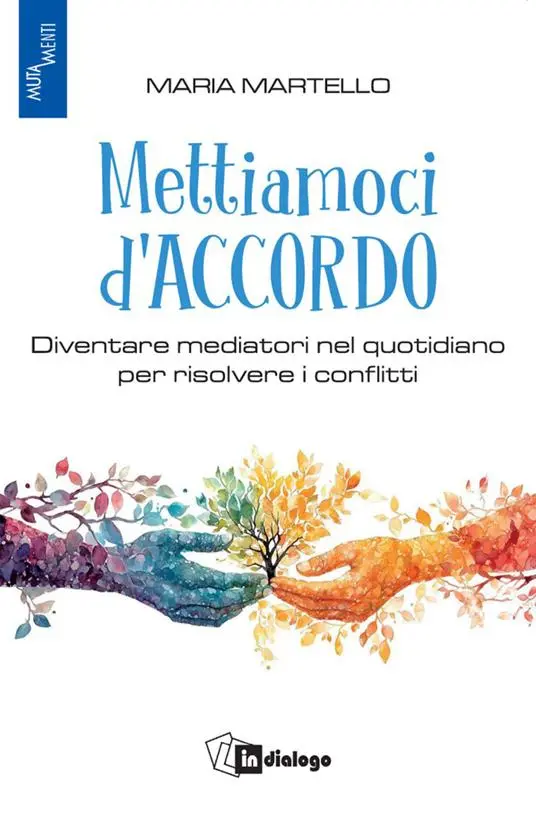
The book Let’s agree, becoming mediators in everyday life to resolve conflicts, Maria Martello, InDialogo
You have just written a book called and it talks about exactly this: Let’s agree (InDialgogo), what is your aim?
«It is all aimed at creating this basic training that must be created in times of peace, in times in which a trauma not intended as physical and/or psychological violence suffered, but as the weight of the complexity of an interpersonal conflict, has not yet overwhelmed us. We are all destined to encounter it, small or large, in life, because through the experience of conflict, we evolve. But we need to learn to manage it before the trauma arrives.”
Should this prevention work on conflict management be done with children?
«With little ones it is very effective and very rewarding, because they have no defenses to dismantle, the difference is a bit like when you teach skiing to a child or an adult. With my students we did some experiments in the first primary classes and saw that the children soon learn to manage conflict and also obtain better academic results later. But it is true that relationship education should be done in all school levels, because relationships change with age and responsibility. Not only that: there is no adult who cannot make up for this educational gap.”
The news story from which we started leads us to reflect on a futile conflict that permeates our world: on social media, in public debate, every opposition degenerates into conflict. Is there a relationship between this verbal conflict and that of the knife in the street?
«The humus in which all these phenomena grow is the same and there is a responsibility of adults, of those who use public words, the alternative is to give the humus a different terrain: I am convinced that in the human soul there is always a desire for good. If it finds answers, it leads to abandoning evil. I have faith in young people, they thirst to be educated in a serious, authentic way, on values, not on image, not on likes on the internet. But for this to happen they need the physical embrace of the parent’s body, of the friend they frequent in person, not via social media, and with whom they share humanity, without the need to pretend to be holy or perfect. Humanity is beauty, exaltation, misery: people love each other not because they are perfect, but with their imperfection. For there to be human brotherhood, everyone must have accepted their own limits and those of others: often people who are unable to forgive others first struggle to forgive themselves, their own limits.”