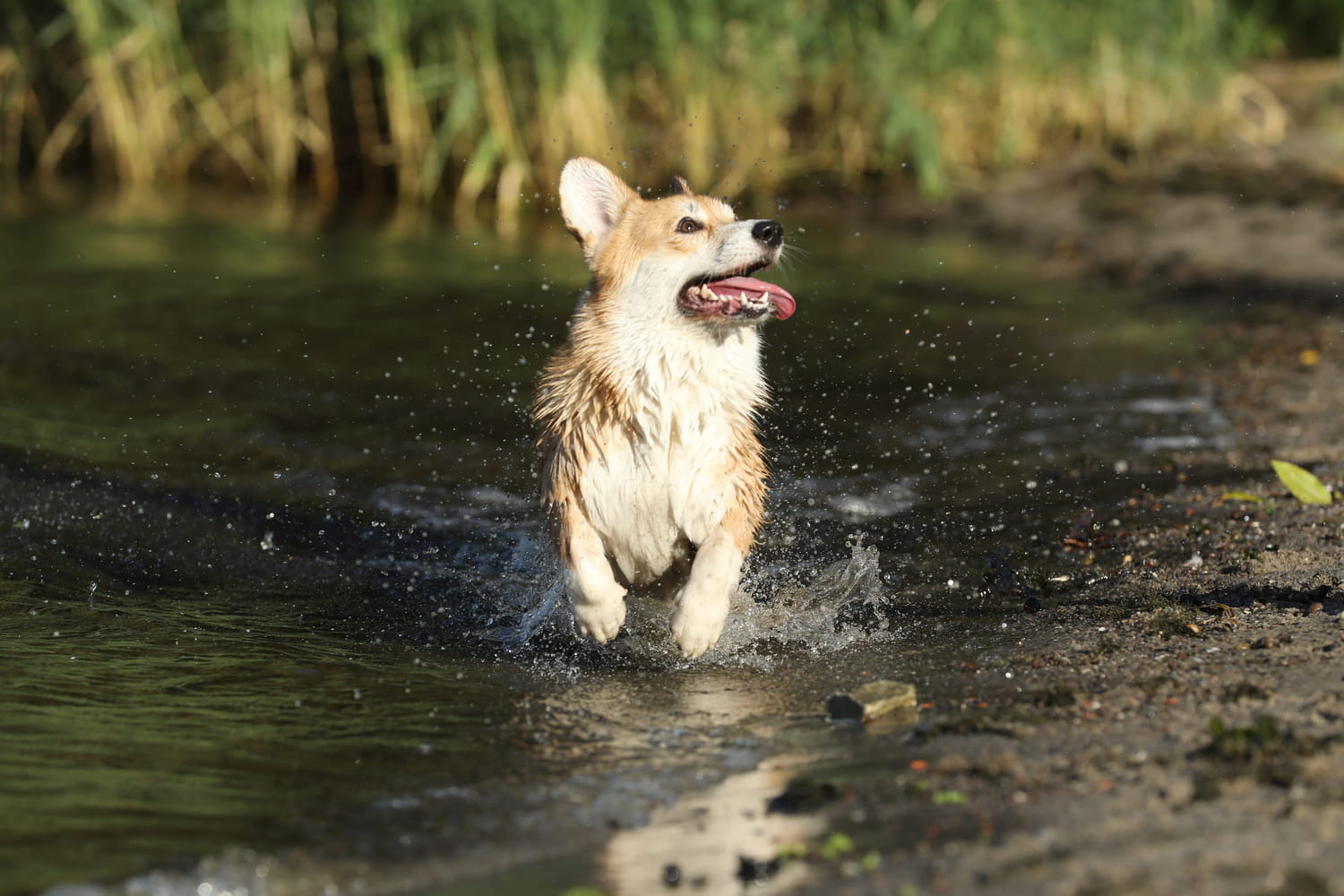
When it’s hot, taking a swim to cool off is the classic reflex. But in recent years, a discreet danger has been spreading in bodies of water throughout France, with potentially fatal consequences for animals.
When a heat wave appears, dog owners generally know the actions to take to relieve their companions: take walks early in the morning or late in the evening, give them frozen treats, cover them with a towel soaked in cool water… or of course, take them for a swim! Like us, doggies love to cool off in a lake or river when temperatures rise. But these water points can hide a real danger that many owners are unaware of.
The government has also called for vigilance in recent years, after “several cases of dogs dying suddenly, recorded following frequentation of water points”. In Gironde, Mayenne, Haute-Savoie, Hautes-Alpes, Rhône… Several press articles report sudden deaths throughout France, all following swimming, with similar symptoms such as vomiting, tremors, hypersalivation, respiratory problems, or even loss of balance. The culprit? Proliferating cyanobacteria.
Also called “blue-green algae,” these are microorganisms that grow naturally in yards and bodies of water, and can be highly toxic to animals. Also dangerous for humans, they proliferate when water stagnates and during extreme heat… precisely when we most want to swim.
Luckily, we can spot them with the naked eye and therefore prevent a dog from diving into infected water: these cyanobacteria form blue-green patches at the bottom of waterways, which can break off and accumulate on the edges, forming a sort of film on the surface. This is the most obvious sign of their presence, but other clues can also alert you, such as a musty smell, or of course dead fish or animals near the water.
On the other hand, it is difficult (if not impossible) to distinguish these potentially deadly algae from other harmless algae. So when in doubt, it is better to avoid going near it. The government also recommends vital precautions for dog owners: keep them on a leash of course, but above all do not let them access the swimming area, drink water from streams, or even play with sticks or pebbles that have been in contact with the water.
If poisoning is suspected, it is essential to take the dog to a veterinarian as quickly as possible, as cyanobacteria can be lethal in just one or two hours. Although there is unfortunately no targeted treatment against these toxins, “rapid treatment by the veterinarian, who will offer supportive symptomatic treatment, can be effective” according to the public service website. The best solution, however, remains vigilance.