




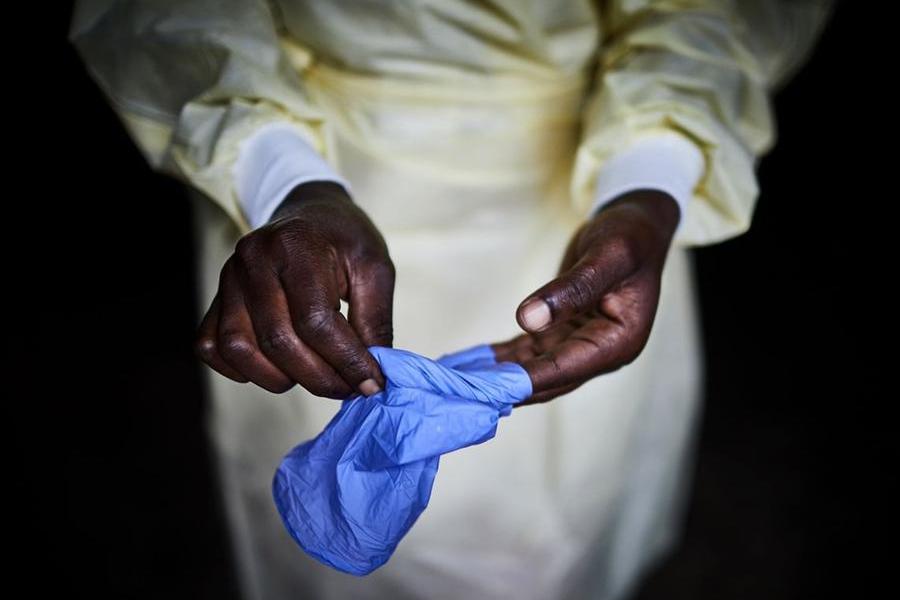
There is growing concern about the spread of Ebola disease. The World Health Organization reports that to date there are 600 suspected cases of Ebola and 139 suspected deaths, with numbers set to increase further given the time needed to detect the virus.
51 cases have been confirmed in the Democratic Republic of Congo (where the first case was reported) and two in neighboring Uganda, the WHO director-general said on Wednesday, Tedros Adhanom Ghebreyesus.
Speaking to reporters in Geneva, Ghebreyesus said the outbreak of the Bundibugyo variant of Ebola probably started “a couple of months ago.”
Last Sunday, the World Health Organization ruled that Ebola disease caused by the Bundibugyo virus in the Democratic Republic of Congo and Uganda constitutes a public health emergency of international concern, but does not meet the criteria to be defined as a pandemic emergency.
The 51 confirmed cases in the Democratic Republic of Congo are located in the eastern province of Ituri (epicenter of the epidemic) and in the province of North Kivu. Of the two cases confirmed in Uganda’s capital, Kampala, both were from the Democratic Republic of Congo; one of the two died. The first known case was that of a nurse who showed symptoms and died on April 24 in Bunia, the capital of the Ituri province.
Ebola virus disease causes an extremely lethal hemorrhagic fever, but the virus, which has claimed more than 15,000 lives in Africa over the past fifty years, is relatively less contagious than, for example, Covid or measles.
However, this new epidemic is worrying for several reasons, highlighted by Chiara Montaldoinfectious disease specialist and medical director of Doctors Without Borders Italy, in a speech to Radio3 Science: “The numbers of infections are very high, there is a wide geographical extension and the evolution is very rapid. Among other things, it is a rarer virus than the known ones, so in this case the drugs and vaccines we have available for the Zaire-type serum do not work. The context in which this epidemic exploded is also worrying: the north-east of Congo is the scene of a conflict that has lasted for years and this means reduced access to health services, numerous displaced persons and therefore very large population movements which favor the spread of infections”.
Attention therefore remains maximum, even if, according to the European Center for Disease Prevention and Control, the risk of contagion in the European Union is considered “very low”. In Italy, a Circular from the Ministry of Health has decided to activate “health surveillance for healthcare and non-healthcare personnel employed in cooperation/healthcare or logistical support activities at governmental, non-governmental and cooperating organisations, which provide healthcare, welfare and logistical services, employed in the areas of the country affected by the outbreak”.