




“”Mom, I’m not coming home.”
Looking back, it wasn’t a combination of major political events that changed my life, but an imperceptible whisper. It was a one-minute phone call, half of which was spent in silence. But that was enough for, in the autumn of 2016, I found myself homeless.
I had to leave my country to escape fascism and be able to write, think and simply be. The arrest of people like me – critics of the regime – was already the order of the day in Turkey, and I was fed up with receiving rape and death threats, each more detailed than the other. But the main reason I left home is that fascism is a strange beast. It forces you to think obsessively about nightwear. The lackeys of fascist regimes always knock on the door around four in the morning. While they arrest you, they enjoy humiliating you for what you are wearing. So, on the night of November 6, 2016, in Zagreb, a city where I had a friend and owned a small apartment, when I went to bed for the first time in many years without worrying about how the police would judge my clothing, I decided not to return to Turkey.”
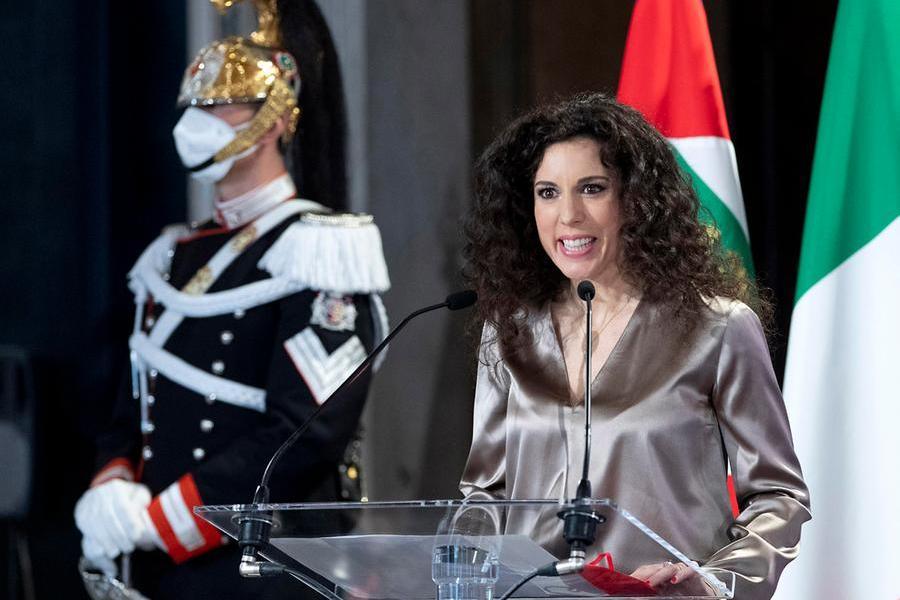
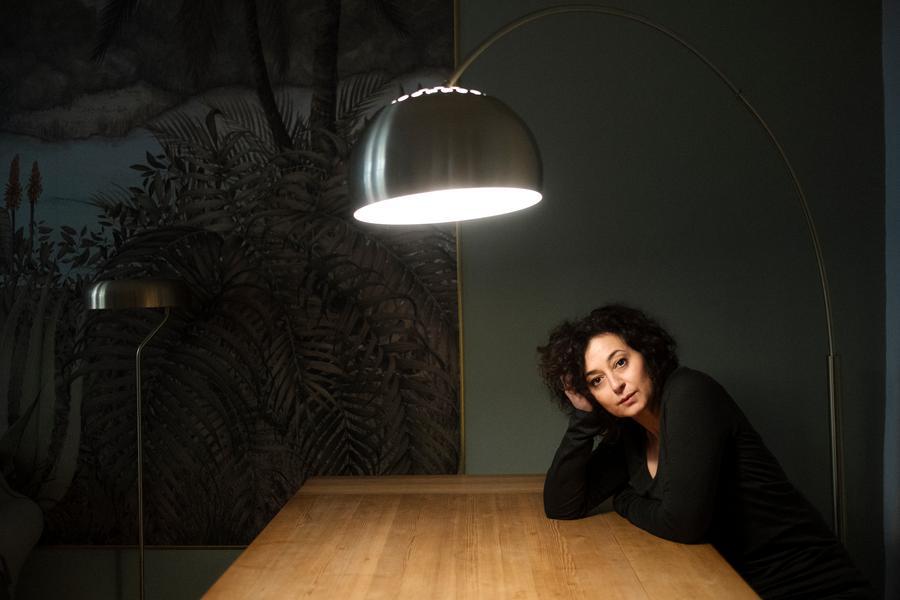
The book by Ace Temelkuran, published in Italy by Bollati Boringhieri, begins with this powerful personal testimony “Foreigners like you”, which has the subtitle: “The nation of the excluded in the new millennium”. Ece Temelkuran,
Turkish writer, journalist and political commentator, she is followed on social media by almost three million people and her articles have been translated and taken up, among others, by important international newspapers such as GuardianThe New York Times, Le MondAnd, New Statesmano Der Spiegel; collaborate with International. He lives in Berlin, having been unable to return to Türkiye since 2016 due to his ideas. Temelkuran has a degree in Law and is a prolific author of
novels, of which Türkiye Crazy and Melancholy (2018) appeared in Italian. For Bollati Boringhieri published How to destroy a country in seven moves. The road that leads from populism to dictatorship (2019 and 2021) and Trust and dignity. Ten urgent choices for a better present (2021, finalist for the 2022 Terzani Prize).
Written in epistolary form, the book talks about the excluded in the new millennium, the disorientation in which we live and shows how a new nation of foreigners is taking shape. It is no coincidence that Temelkuran publishes a quote from the South African naturalized French writer Breyten Breytenbach (1939-2024): “The word exile can be replaced in every way by refugee, misfit, excluded, marginalized, expatriate, squatter, foreigner, illegal immigrant, heretic, foreigner, rebel, vagabond, displaced person, marginal individual, new poor, economically fragile, drifter. The paradox is that by adding all these people we would probably find that we form a new silent majority.”
Ece, do you feel part of this silent majority?
Yes, we are the majority, we homeless today form the most populous nation in the world. And I’m not just talking about those who have been forced to leave their homes or have lost them due to war or natural disaster. I am also referring to those who, despite living in the country where they were born, no longer recognize it, no longer feel at home. The lack of human dignity, this radical inequality, does not make people feel at home in this world dominated by neoliberalism. Neoliberalism makes selfishness prevail, thinking only of oneself, the idea that we must trample on others. If many things go wrong in today’s world I think it is precisely due to this widespread neoliberal morality that imposes itself through violence and propaganda, not so much and not only to the fact that Putin invades Ukraine or the genocide in Gaza.
Today, can even a white American citizen, born and raised in Minneapolis, feel excluded and without a homeland due to the violence committed by ICE agents?
Certain. Minneapolis is a micro nation of foreigners. The inhabitants experienced the hostility of their government, which made them feel foreign and disoriented in their city. But I find the population’s response to violence and in defense of their dignity positive. The citizens felt united, they understood that if the immigrants and refugees were taken away, they too, American citizens, would find themselves homeless. A fine example of a nation of foreigners. There the silent majority spoke, its voice was heard.
How did you experience the humanitarian tragedy in Gaza?
Gaza was a preview of the new world order that awaits us. They want to deprive all of humanity of their homes. People’s homes become the target of real estate investments, the infamous Riviera, human beings become commodities and some individuals have less value than others. Many people around the world have rebelled against this injustice, but the protest does not seem to count for anything for the new world order and for leaders like Trump.
How are things going in your Türkiye?
It is difficult to understand the tiredness of people under a regime that has held power for over twenty years now. In Türkiye people are incredibly tired. But I regain some hope when I see people like the mayor of Istanbul Ekrem Imamoğlu, put in prison by Erdogan. There are still antibodies.
If you look around the world today, where do you see democracy fully realized or at least in good health?
I don’t see it. Many people are convinced that today fascism is only represented by leaders like Trump, Erdogan and Putin, but in reality democracy is weakened or lost because neoliberalism has swallowed up the main promise of democracy, that is, equality. However, I see encouraging signs such as the new mayor of New York Mamdani or the mayor of Istanbul İmamoğlu. But these are isolated examples, I don’t feel like saying that a healthy democracy is widespread in the world today.
You like to say that regarding the future we must have faith rather than hope, in what sense?
Yes, for the future I have no hope, but faith. Hope is a passive feeling, which sometimes paralyzes you waiting for something to happen. Faith in the world, in humanity and in human relationships, however, can be a stimulus to action. If you have faith you can do anything, even sacrifice yourself. Having faith in one another can help us in this nation of strangers.