



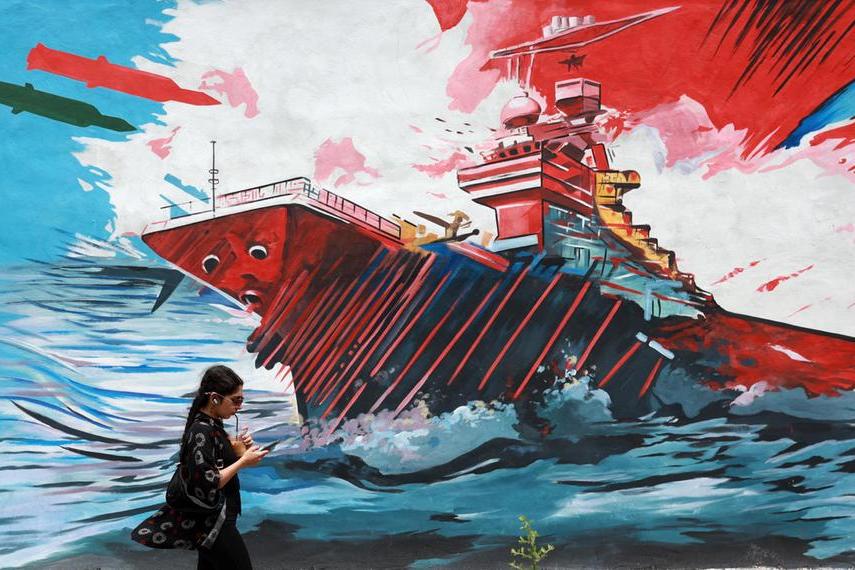
The risk is not theoretical, it is already written in the numbers. Tensions in the Strait of Hormuz – one of the key passages for world oil – reopen a wound that Italy has never really healed: its energy dependence on foreign countries. After the shock of the war in Ukraine, the country still finds itself vulnerable. We talk about it with Leonardo Becchetti, economist and one of the most attentive observers of energy policies, who highlights critical issues and missed opportunities. The judgment is clear: accounts under control, but insufficient strategy precisely where more courage is needed. The picture drawn by Becchetti leaves no room for illusions: without a turning point on energy, Italy will continue to chase emergencies. And those who pay the price, as always, will be the most fragile.
Professor, let’s start with current events: can what is happening in the Strait of Hormuz have concrete consequences for Italy?
«Unfortunately yes, and it is a dynamic we already know. It is a difficult situation because the underlying problem remains the cost of energy. If tensions worsen, we could revisit what happened with the war in Ukraine: an increase in energy prices that is immediately transmitted to the real economy. Inflation is growing and especially affects the weakest groups, because electricity, gas and food bills are the first items to be affected.”
So the main risk is a new wave of inflation?
“Exactly. We must be clear: today inflation is largely driven by energy. When the energy increases, everything else follows. And vice versa, when the cost of energy drops – or even disappears to zero at times, as happens with renewables – the pressure on prices also decreases. The problem is that we are still too exposed to the fluctuations of the international market.”
How important is the fact that the PNRR is running out of steam?
«It weighs a lot. The Plan has had a positive effect on GDP, this is indisputable. It represented an important Keynesian push (restart of demand, triggering of the virtuous circle of consumption, production, work), but now that phase is closing. And the problem is that we haven’t built enough structural alternatives. More could have been done, for example by investing more decisively in community homes and other interventions that would have strengthened the social and economic fabric.”
How do you evaluate the government’s economic policy overall?
«We must not make caricatures. There are also positive elements: the public accounts have been kept in order and this is a significant fact. It wasn’t obvious. However, when we look at the quality of growth and strategic choices, clear limitations emerge. In particular, much more could have been done on energy and long-term investments.”
We then arrive at the central node: energy. Where did the government go wrong?
«The most serious problem is the dependence on fossil fuels. This is where the country’s real weakness is concentrated. Continuing to be “slaves” of fossil fuels means exposing ourselves to every geopolitical crisis. And it is a condition that is no longer justifiable today. If we look at other European countries, the comparison is merciless: Portugal has reached 80% of energy from renewables, we are around 47%. This gap is not random, it is the result of political choices.”
Yet the topic of energy independence is very present in the political debate…
«Yes, but it often remains a slogan. If you really want energy independence, one simple thing must be said: Italy must produce its own energy. And today this means investing massively in renewables. There is no credible alternative. If you define yourself as a sovereignist, which also means being self-sufficient, then coherence dictates this path.”
What are the main obstacles to this leap?
«Paradoxically it is not a question of resources or projects. Today we have about 300 gigawatts of projects ready, but we need just ten per year to make a significant leap. The real problem is bureaucratic: authorizations, environmental impact commissions, blocked decision-making processes. That’s where everything gets stuck. We simply have to unlock what already exists.”
Are there any virtuous examples in Europe from which to take inspiration?
“Certainly. France, for example, has introduced a law requiring the installation of solar panels in car parks. We are talking about a potential capacity of around 10 gigawatts. It is an intelligent solution, because it creates an advantage for everyone: companies invest, citizens benefit, the energy system is strengthened. It is the classic case of “win-win” politics. Here, however, it is difficult to replicate similar initiatives.”
What about energy communities?
«We are late there too. It would be sufficient to incentivize them in a concrete way, for example through a direct discount on the bill. Instead, they remain undervalued tools. Yet they could have a significant impact on both an economic and social level.”
You also mentioned the comparison with other countries, such as Spain. What does that model teach us?
«Spain is an interesting case because it has been able to combine energy policies and social policies. It has reduced dependence on fossils and at the same time managed some aspects of integration better. It’s not a perfect model, but it shows that more can be done. Italy often limits itself to chasing, instead of anticipating.”
What if you had to summarize the main limitation of the current government in one sentence?
«I would say this: he wasn’t courageous enough on the choices that really matter for the future. I don’t think another government would have worked miracles on jobs or public finances, but on energy and immigration, yes, there could have been a greater impact there. And it would have been useful to the country.”
So where to start again?
«From the awareness that the time for half measures is over. Every international crisis — today the Strait of Hormuz, yesterday Ukraine — reminds us how vulnerable we are. The only way to get out of this fragility is to seriously invest in renewables and reduce dependence on foreign countries. It is an economic choice, but also a political and cultural one.”