




A treasure of our heritage for millennia, it has shaped the history of architecture. With its 80 varieties, this exceptional stone today enhances characterful renovations as well as the most modern projects thanks to its inimitable style.
Comblanchien, Massangis, Beaunotte, Bleu de Lignières… These reference appellations make Pierre de Bourgogne famous. Supported by the Geographical Indication, this noble material ensures total traceability and officially recognized quality, ideal for enhancing your spaces with complete confidence. Used in the manufacture of exceptional monuments (such as the feet of the Eiffel Tower or the Louvre or Orsay Museum, to name a few), it also stands out among individuals both outdoors and indoors.
What is Burgundy stone?
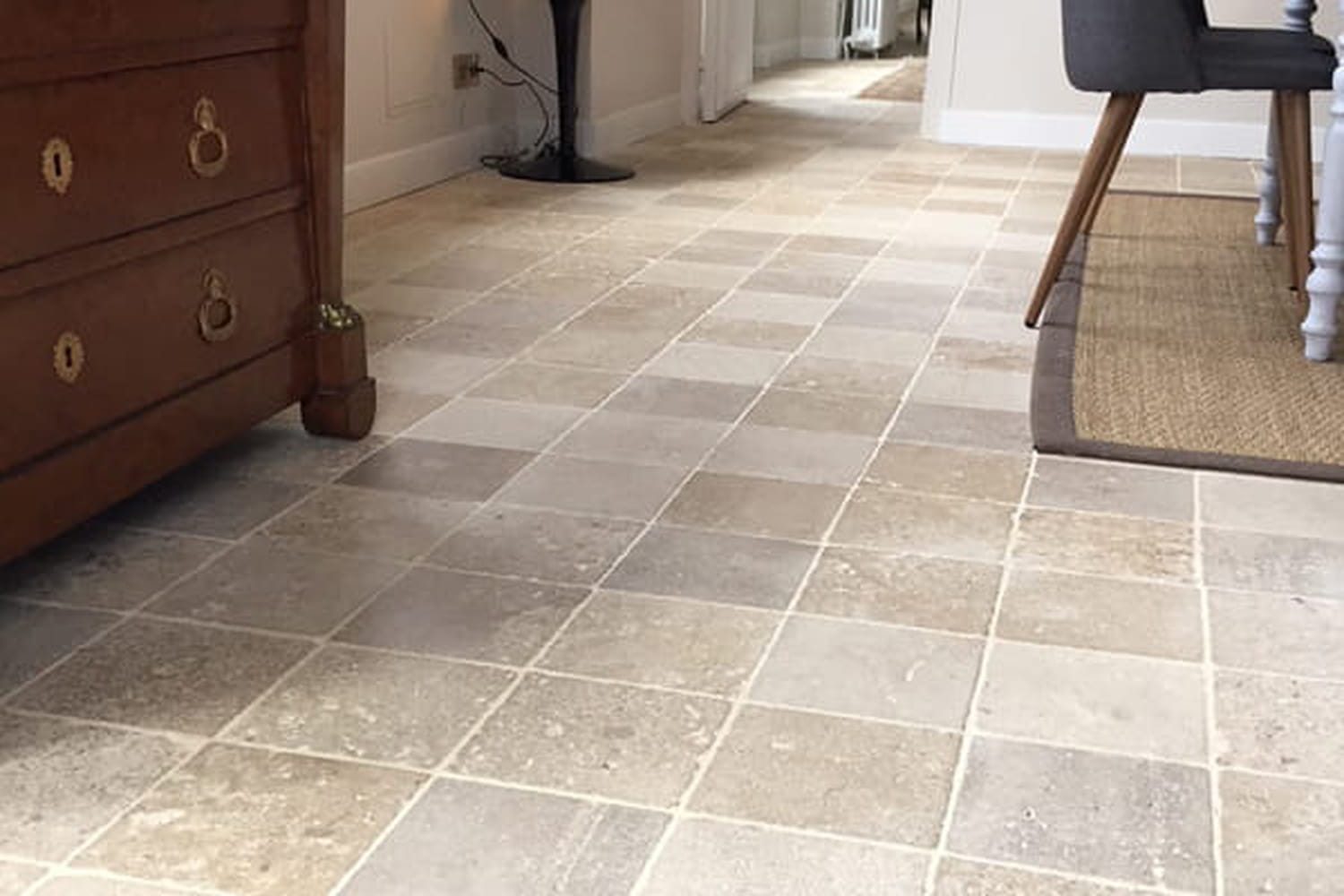
Very similar to travertine, Burgundy stone is a limestone resulting from the passage of the sea in the region several million years ago. Its texture: semi-soft to hard. Its appearance: extremely varied, both in the colors and in the veining and fossil residues of which it can be made. Ochre, beige, white, yellow or even pink, whatever its color, it can be used to restore old buildings or historic buildings, but also be adopted indoors once polished.
Burgundy stone is a real chameleon that can be used in many ways. But it is especially in paving, both interior and exterior, that it is most widely used. With its many colors, its different textures and multiple shapes (Roman opus, Cameau, strips, hexagonal paving stones, triangles or even hexagons) it can be found in living rooms, such as the kitchen or even the stairs.
In bathrooms, as in the bathroom, it finds its place on all the walls (even the shower!). As for the kitchen, it is in the form of work plan and even sink that it takes shape.
Outdoors, the terrace appreciates it in its version paving often XXL, as in facingwhile the edge of the pool benefits from its aesthetic and non-slip appearance.
When it is not ornamental, Burgundy stone is called wally and measures between 6 and 12 cm thick. It can then be used as a roof covering, not Japanese and of course in the manufacture of house walls.
As with cleaning all stones, avoid abrasive products which could damage the protective cullet. The same goes for high-pressure cleaners which can make Burgundy stone porous and therefore less permeable and more sensitive to frost. We prefer neutral products, such as black soapapplied manually with a mop and lukewarm water to respect the material as much as possible. You can also vacuum it easily for regular maintenance.
What price for a Burgundy stone?
It all depends on which variety you set your sights on. Expect around thirty euros per square meter for the most affordable stones and around one hundred euros per square meter for the most luxurious stones.