





by Ivano Zoppi
Pedagogist
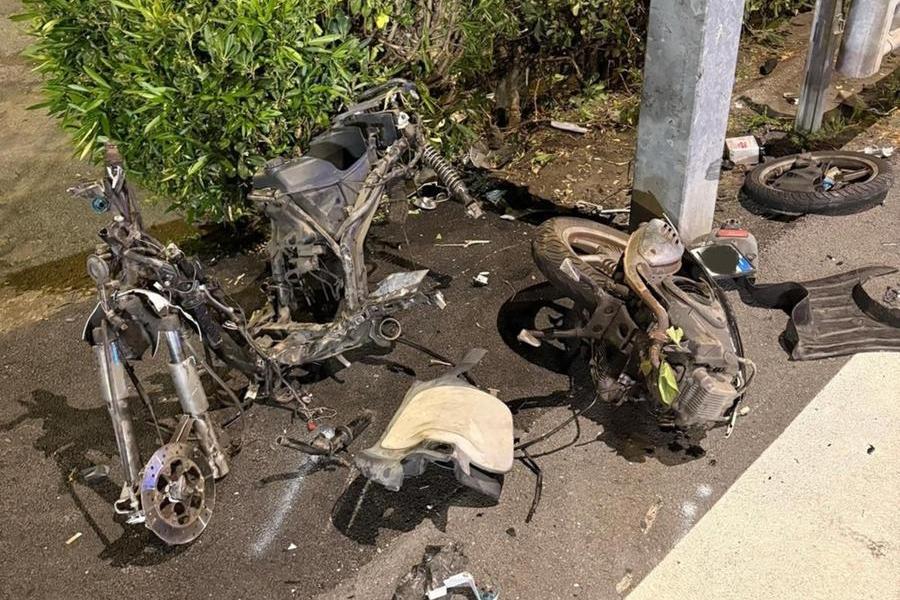
A collision between a car and a scooter. Two young girls in the saddle, one loses her life, the other fights in hospital in very serious conditions. Yet you can hear yourself laughing. Some boys get out of the car involved, driven by a new driver. One of them makes a video for social media. He laughs, jokes, in a clear state of alteration. Death becomes a lever for likes, a moment to share. The tragedy is there, just a few steps away, but this boy is already far away. He doesn’t run away along the streets of that highway, he doesn’t run across the fields or hills, he takes refuge in the story. Stay, but run away. He runs away from responsibilities, from the lethal consequences of an evening beyond the limits. The important thing is to tell, to share, despite the total, disarming and cowardly absence of empathy.
In the news of what has happened in Liguria in recent days there is much more than what the degradation can explain to us. There is a rejection mechanism, the detachment from a reality that many young people are unable to manage, except as users. Users of existences that are worth as much as a story about Instagram. Even when you become the protagonist of an episode of this magnitude, your first instinct is to step away, taking on the role of director, of witness, which almost happened by chance. To the point that this boy almost seems like a passer-by, one of many who, when faced with road accidents, fights or robberies, takes out his mobile phone to immortalize the scene.
Today that boy is afraid, he apologizes, he turns to the police following the threats and insults he received. Today that boy is no longer a witness, director or spectator, in that abyss he is now the “protagonist”. An abyss which keyboard wolves are now overlooking, who in turn want to feast on the anguish, fear and bewilderment of those who were unable to respect even the death of a 23 year old girl.
This spin blocked media traffic, which was wondering about the matter. A story that has blocked the way to respect, to condolence, to that task that only the silence of tears can carry out in certain circumstances. There remains only a noise, a background disturbance that covers everything and everyone.
There are no keys to escape from this oblivion, other than the courage to listen to us. One question would be enough to ask ourselves and our children: “What if it happened to me?”. Regardless of the roles, whatever part we imagine ourselves in this story – director, spectator or protagonist – we would understand that the answer does not lie on the screens. Not in front or outside, but inside us, in those emotions that we continually want to arouse, share, post, but which we do not know how to investigate, understand and respect.
One question would be enough, but I’ll add another, for the benefit of all of us. What citizenship do we imagine for our tomorrow? School, family, community are not distributors of ethics or dispensers of humanity. Common good, common sense, piety and civilization are words as beautiful as they are useless, if we do not decide to live them. If we do not decide to unlock them and let them contaminate our lives, freeing them from the need to be told at all costs and in defiance of any limits.