




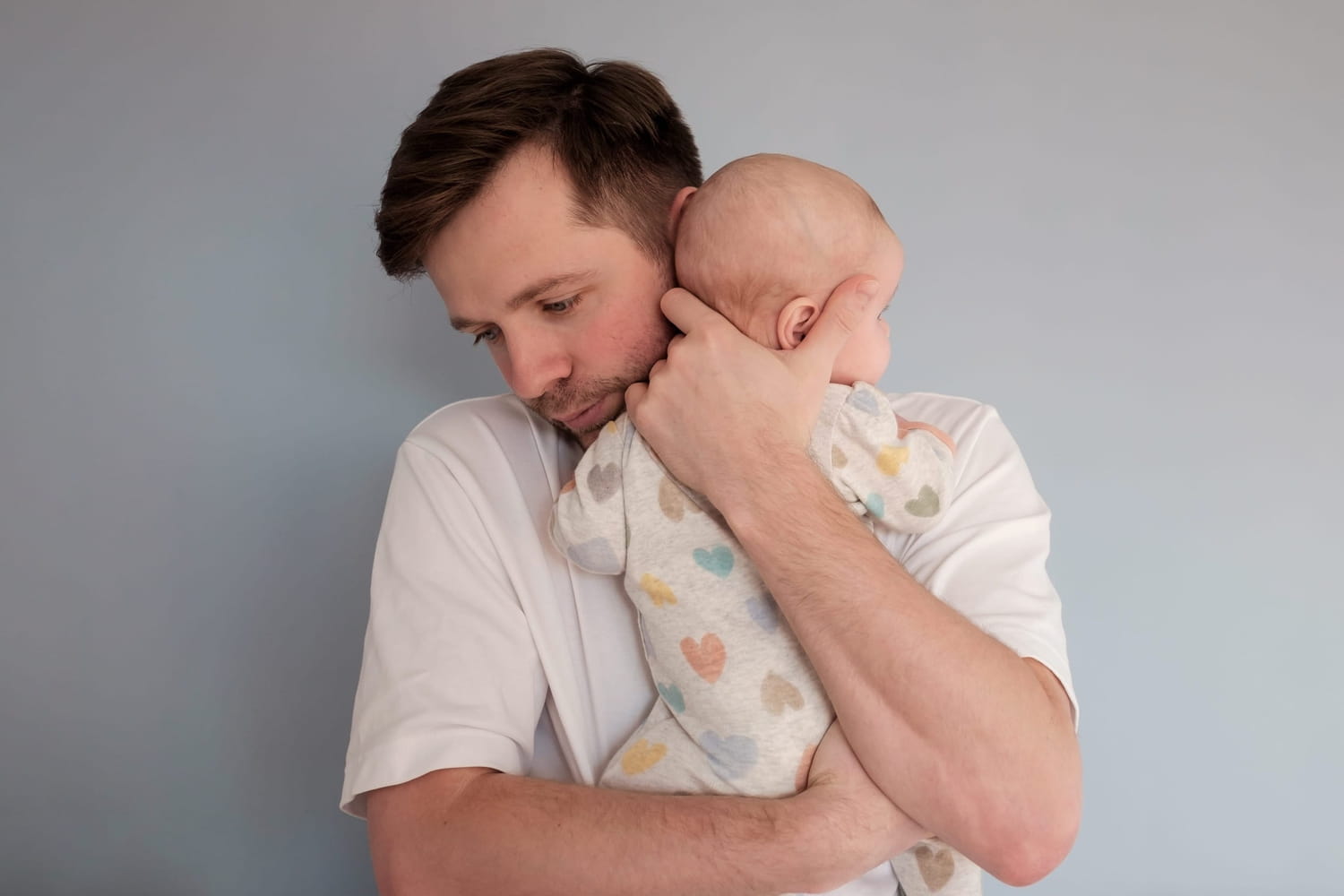
After the birth of a child, many young parents develop depressive disorders. But for dads, these symptoms appear much later than you think, at a specific stage in the baby’s life.
The arrival of a child is undoubtedly an overwhelming moment, in many ways. All parents will say it: life changes completely from the moment this little helpless being comes to expand the family. Because despite its paltry size, the baby takes up a huge place in the daily lives of young parents. But beyond the wave of happiness that hits the majority of new fathers and mothers, a birth is also often accompanied by physical and emotional fatigue, stress or anxiety, and sometimes even loneliness. So many signs that can announce the start of “baby blues”, or worse, postpartum depression. Today, according to Inserm (National Institute of Health and Medical Research), up to 20% of mothers and 10% of fathers present depressive symptoms in the two months following the birth of their child.
While it has long been known that dads are also prone to depression and stress-related disorders after the arrival of a baby, a new scientific study shows that their symptoms develop much later than previously thought. At the end of March 2026, researchers from the Karolinska Institute in Sweden and Sichuan University in China published the results of their work carried out on more than a million fathers, whose children were born between 2003 and 2021. They studied the frequency with which these men received a new diagnosis of depression, between the year preceding their partner’s pregnancy and their child’s first birthday. And the risk increases significantly at a specific point in the child’s life.
According to this study, fathers are less likely to develop depressive disorders during pregnancy or in the first months after childbirth. It is in reality after a year after birth that the risk increases sharply: the number of diagnoses then jumps by 30%. Anxiety, alcohol and drug consumption, stress… Rates are much higher than before pregnancy, demonstrating a real impact of fatherhood on men’s mental health. Donghao Lu, lead author of the study, recalls that it is essential to “pay attention to warning signs long after the birth of their child”and not just in the beginning.
Precisely, as it occurs later, we then speak of postnatal depression rather than postpartum depression, which by definition appears in the weeks following childbirth. If the child’s first months are often considered the most difficult, the period afterward also brings about significant changes: fatigue accumulates, the couple’s relationship evolves (not always in the right direction), financial pressure sets in… Some fathers can also feel sidelined in relation to the bond between mother and baby, and develop a strong feeling of loneliness.
In short, “the transition to fatherhood is often accompanied by positive experiences, but also new sources of stress. The relationship with their partner may be affected and sleep quality may deteriorate, which may contribute to an increased risk of mental disorders”. The researchers of the study also emphasize that, although post-natal depression is less documented than in mothers and therefore less supported, the well-being of fathers is no less important, “for themselves and for the whole family.”. Indeed, other research shows that paternal depression can increase the risk of mental health problems in the mother and child later. All of these elements support the importance of increased and continuous monitoring of all young parents after a birth.