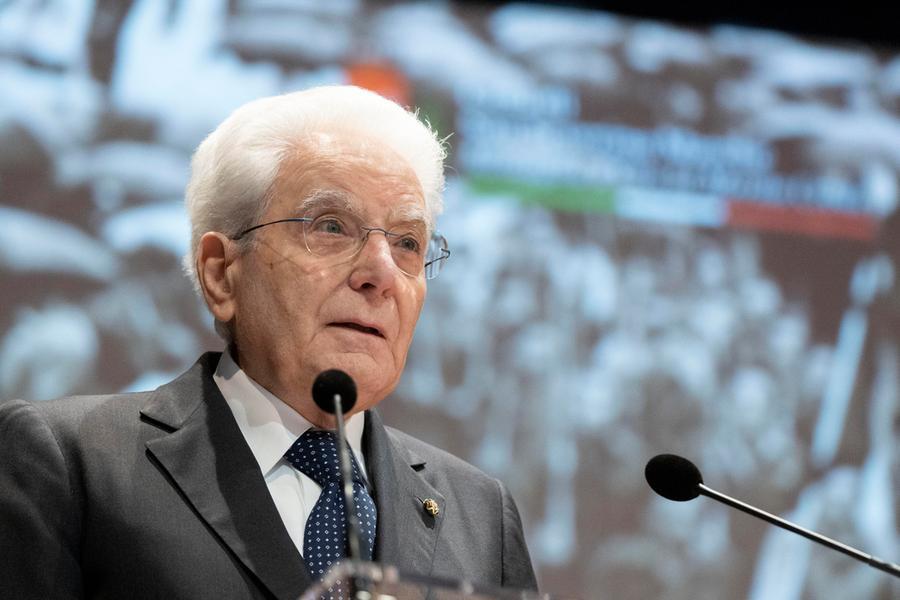



«With all evidence, the majority of the problems affecting children and adolescents can be traced back to the new fragilities of family units today. The great prevalence of neglect and witnessed violence among the forms of mistreatment indicates the need to support families in their primary educational task, which cannot be replaced or delegated to other agencies». This was declared by the Italian Child and Adolescent Authority Marina Terragni participating in the conference “From data to action”, promoted by the Research Center on Evolutionary and Educational Dynamics CRIdee of the University and the Guarantor Authority for Childhood and Adolescence – AGIA, in collaboration with the Italian Coordination of Services against Child Maltreatment and Abuse – CISMAI, Terre des hommes and International Society for the Prevention of Child Abuse and Neglect – ISPCAN.
The European discussion morning on 28 April highlighted the importance of data collection, i.e the systematization of the data collected on the complex phenomenon of child maltreatmentand on the courage, as a country, «to assume international leadership, strengthened by a legal tradition, high-level scientific expertise, national regulatory plans and mature policies, proposing itself as a pathfinder country in the UN Global Alliance» as he concluded Luca Milanidevelopmental psychologist coordinator of the event.
Recommended by all three representatives of the Authority for Children and Adolescents Marina Terragni, Edited by Žiobienė of Lithuania e Jenni Saukkola of Finland, the protection of minors from child pornography, which is increasingly widespread due to the improper use of digital platforms, is an issue that needs to be worked on as a priority.
Equally recurring in the debate, moderated by Rocco Briganti of ISPCAN, was the problem of violence against girls and boys within the familyan issue that highlights the need to intervene with regulations and social services to support fragile families. The need for prevention applicable in social networks, in the family, school and sports contexts (to date still little investigated) has also been confirmed.
The research presented
Third National Survey on the mistreatment of children and adolescents in Italyconducted by Terre des Hommes and Cismai for the Authority for Children and Adolescents, highlights alarming data: out of a total of 374,000 minors in the care of social services as of 31 December 2023, in Italy almost 114,000 are victims of maltreatment. From 2018 to 2023 the increase was 58% and 87% of violence was recorded in the family.
According to the survey, presented by Federica Giannotta, Advocacy manager of Terre des Hommes, and Gloria Soavi, psychologist of CISMAI, and which takes into consideration 326 Italian municipalities and covers a pool of over two million seven hundred thousand minors, the most frequent form of mistreatment is Neglect (neglect) suffered by 37% of minors, followed by witnessed violence at 34%. Psychological violence and physical abuse, however, account for 12% and 11% respectively. Less common are treatment pathologies (4%) and sexual abuse (2%). Maltreatment affects males and females without distinction but the survey also reports, for the first time, an accurate picture of the forms that abuse takes. In 87% of cases the abuser belongs to the immediate family circle.
Risk and protective factors in the evaluation of parenting skills
The study presented by psychologist Luca Milani highlighted data on the protection interventions implemented by the Services, determined by complex configurations of risk and resources. In particular, the presence of risk factors such as social deviance, parental psychopathology, substance use, or poor educational skills are correlated with removal and protection interventions. On the other hand, the presence of protective factors such as personal autonomy, a good level of empathic skills and an effective collaborative relationship with the Services is correlated with more favorable outcomes.
Reception project for minors with specific needs cared for in residential facilities in the area under the jurisdiction of the Public Prosecutor’s Office for minors of Milan
The study, coordinated by the psychologist of the Catholic University Sarah Miragolianalyzed the specific needs of minors in residential facilities in the area under the jurisdiction of the Public Prosecutor’s Office for minors in Milan, linked to family problems such as conflict between parents, educational difficulties, drug addiction, deviance, maltreatment. These are 2,641 minors (of which 40.1% are Italian citizens and 47% foreign, equally divided between males and females with an average age of 11 years), in care as of 31 December 2024.
When the roots weigh: adverse childhood experiences and prevention paths in the perinatal period
The psychologist from the Catholic University Chiara Ionio explained the study on adverse childhood experiences that influence maternal health in the period following the birth of the child (post-traumatic symptoms related to childbirth, post-partum depression) and on prevention pathways in the perinatal period. Screening for adverse experiences, specific interventions and the strengthening of the mother-child relationship already during pregnancyare a fundamental lever to interrupt the intergenerational transmission of trauma.
Co-parenting, parenting and child well-being
The topic of co-parenting, parenting and children’s well-being was addressed by the psychologist Elena Camisasca of E-Campus following a study on 225 families with school-age children between 7 and 11 years old. The results of the study indicate that, when both parents are neither authoritarian nor permissive, but authoritativea good psychological adaptation of the children is observed. This happens because parents are able to work as a team, supporting each other and thus reducing parental stress.
In the second part of the conference, in light of the problems emerging from the research presented, the European guarantors of Italy, Lithuania and Finland discussed national policies and the strengthening of protection systems with reference to the ISPCAN Rise UP Program in Italy.