



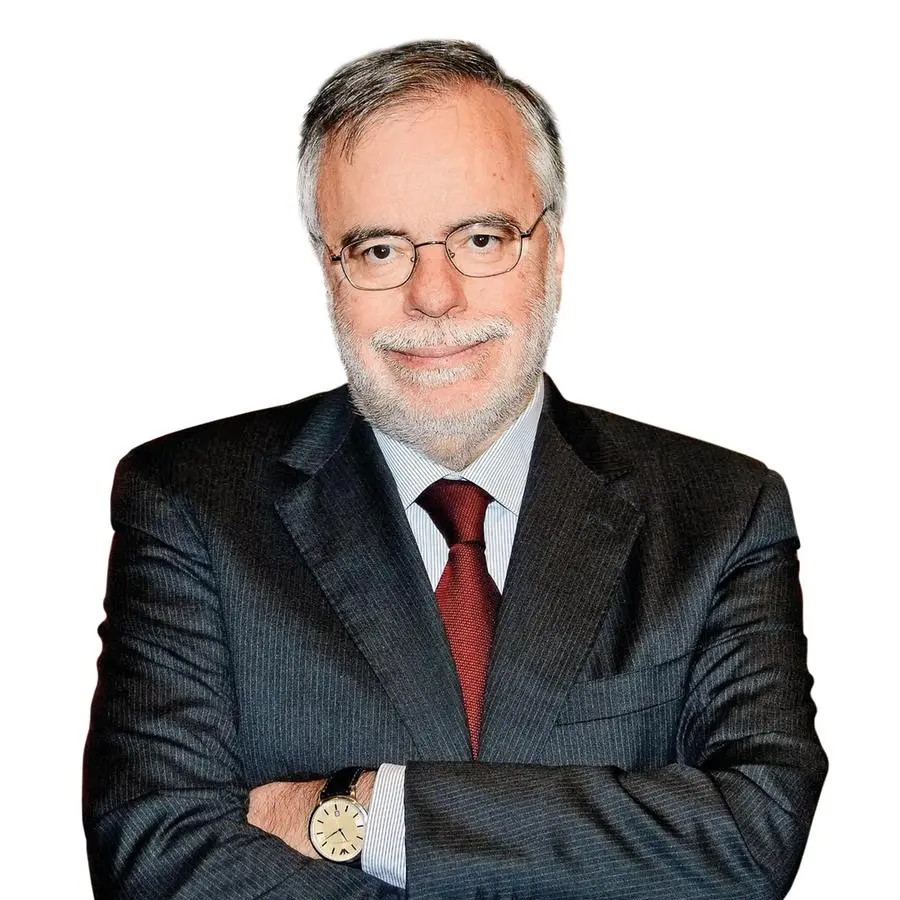
One year after the death of Pope Bergoglio we publish the reflection of the historian Andrea Riccardi, founder of the Community of Sant’Egidio and minister for International Cooperation and integration from 2011 to 2013, collected in the special Pope Francis. The revolution of love
The years of Francis’ pontificate had a great impact on the Church. Bergoglio was elected in 2013 at the heart of a crisis highlighted by the resignation of Benedict XVI. There was a serious difficulty of governance in Catholicism: Ratzinger’s resignation showed how difficult it was for him to lead the Church and the Curia. Pope Benedict had produced an important teaching, but it was necessary to lead the Church into a tumultuous contemporaneity. Think of the difficult relationship with Islam, which arose right at the beginning of the pontificate with the Regensburg speech, which had aroused harsh reactions from Muslims. Wojtyla’s election in 1978 had shown how the cardinals did not want an Italian candidate, choosing a charismatic Pope from the East. Ratzinger’s choice had confirmed the Wojtylian line, but in 2013 that Wojtylian vision without Wojtyla did not lead to unanimity. The candidacies of Scola and Ouellet proposed it, but the Sacred College looked away from Europe. This led to the choice of a Latin American and Jesuit cardinal, new characteristics in the history of the Church.

After the election, I spoke of “Pope Francis’ surprise”. Where did he come from? From a story of pastoral commitment in a large city, Buenos Aires. In 2007, for the first time in the history of humanity, city dwellers had outnumbered rural dwellers. Greater Buenos Aires had thirteen million inhabitants, of which three in the archdiocese of Bergoglio. The Church, this is the message that emerged with his election, must not close itself to the city and its suburbs: “God lives in the city and the Church lives in the city”.
The words “openness”, “encounter” were key in Bergoglio’s proposalwho rejected a Church closed within its perimeters and secure in its structures. There is a people to live among. The intervention of the Cardinal of Buenos Aires at the meetings before the Conclave was striking for the prospect of going out towards the peripheries: «When the Church becomes self-referential and then becomes ill… evils which, over time, afflict ecclesiastical institutions».
It is no coincidence that the Pope’s first document was theEvangelii gaudiuma motivated and pressing invitation to Christians to go out, communicate the Gospel, dialogue with people, participate in everyone’s life. It was Francis’ revolution. On this, the Pope, slowly but progressively, began to encounter resistance that came from the “laziness” of people and institutions, but then also from a different feeling regarding his message of a merciful encounter with humanity. His simple and personal way
has attracted criticism among some clergy and Catholics. Traditionalist positions have consolidated, which ignore the Pope and are a rule in themselves. A part of Catholicism, also taking advantage of the climate of discussion and freedom established by
Francis refused to walk with him and change his approach to reality. This refusal denies one of the historical characteristics of Catholicism which is measured and grows with the “prophecy” of the Pontiff, his reading of the Gospel in history. If you don’t measure yourself with the Pope’s words, you often end up in traditionalism, whatever your starting positions: you become crystallized in a “bubble” or sect spirit. Francis’ evangelical wave has not stopped, but, in many sectors, it has been hindered or ignored. Yet his message at the beginning of his pontificate remains there, as a proposal for today.
An important development due to Francis was that relating to the “Church of the poor”. For Bergoglio, Catholic welfare institutions that, even in an updated way, took care of the poor were not enough: «The commitment must be
by body”, he said as a cardinal. Francis placed the poor at the center of the Church and of the life of Christians, allowing them to mature
compassion in communion. Thus the poor not only receive from Christians, but have much to give, such as words, teaching and friendship. This process creatively realized the reception of Vatican II and the dream of John XXIII, «the Church of all
and particularly the Church of the poor”, and profoundly impacts Christian life today. The poor, with Francis, are at the heart of the Church.
The Pope then captured the war climate of our time, speaking of a “third piece war”. With the encyclical Brothers all it showed the fragility of a globalization without fraternity, which would have resulted in many conflicts. His message for brotherhood, beyond Christians, has become the basis of cooperation and dialogue with other religions, especially Muslims (with whom relations were tense at the beginning of the pontificate and have grown significantly today). Fraternity, of which everyone can be an actor, prevents war and prepares peace, removing hearts and minds from polarizations and hateful distances.And.
It is still early to draw a balance sheet of his pontificate, but it must be said that some “processes” initiated by him have already deeply touched the people of God. The Pope, who was a point of reference during the Covid pandemic, was an essential witness of peace during the war in Ukraine following the Russian invasion. He has repeatedly pointed out how this war represented a defeat for Eastern and Western Christianity, for Europe and humanity: «Every war», he stated, «leaves the world worse than it found it. War is a failure of politics and humanity, a shameful surrender, a defeat in the face of the forces of evil.”