





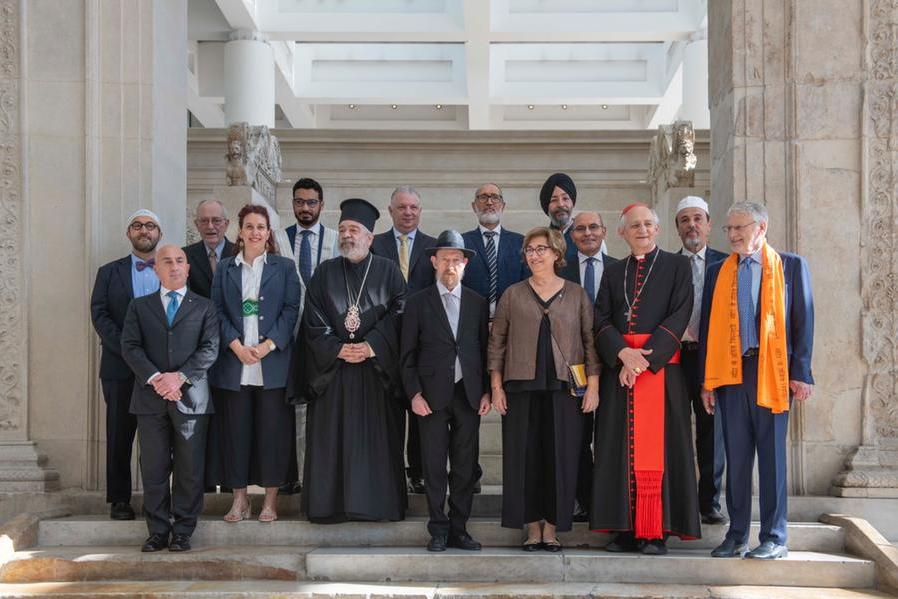
This afternoon the national leaders of the religions present in Italy will be received at the Quirinale by the President of the Republic, Sergio Mattarella, to whom they will deliver a copy of the Pact “The Italian way of interreligious dialogue. Religions in public space and for social cohesion”signed this morning at the Auditorium of the Ara Pacis Museum in Rome. An official document to give continuity to a common journey that lasted three years, which began in June 2023 with a series of meetings at the headquarters of the CEI who have started a fraternal and welcoming collaboration based on trust and responsibility, a discussion and friendship in respect and valorization of mutual differences, a reflection on the need to be a resource capable of weaving dialogue, communion and peace in the public space.

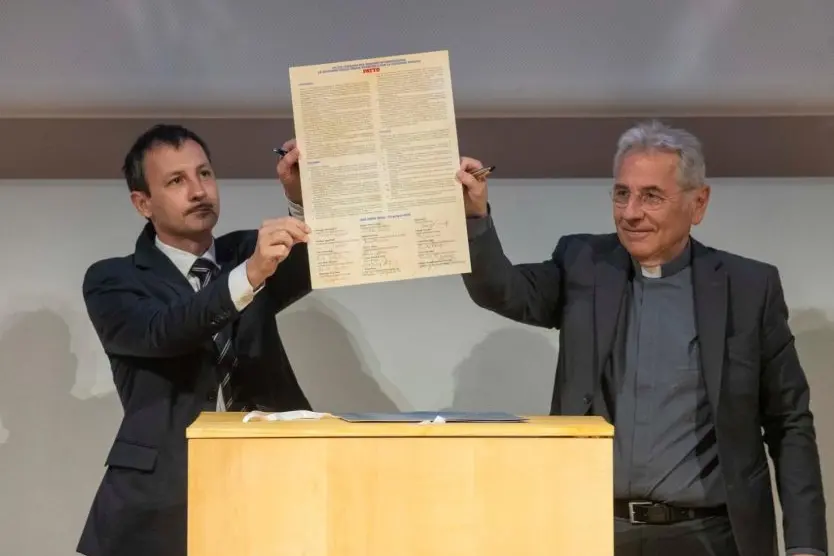
To achieve a common goal together: «We share the value and complexity of being believers and practitioners of different faiths in a post-modern secularized, multicultural and pluri-religious society, wounded by conflicts and extremism, including pseudo-religious, deriving from ethnocentric, prevaricating positions, of closure and cultural and economic colonization, and we share the importance of acting together for the Common Good, certain of the relevance of interreligious dialogue for the development of society Italian”.
Since 2024, the work has also involved a group of young delegates, representatives – like adults – of Assembly of Rabbis of Italy, National Spiritual Assembly of the Bahá’ís of Italy, Islamic Cultural Center of Italy, Italian Islamic Religious Community, Italian Islamic Confederation, Italian Episcopal Conference, Federation of Evangelical Churches in Italy, Tevere Institute, Sacred Orthodox Archdiocese of Italy, Sikhi Sewa Society, Soka Gakkai Italian Buddhist Institute, Italian Buddhist Union, Union of Italian Jewish Communities, Union of Islamic Communities of Italy, Italian Hindu Union. Among the commitments undertaken, that of “promoting the equal dignity of every religion before the State through a critical and constructive dialogue on the relationship between religion, secularism and politics in the Italian context” and that of “promoting a culture of peace”.
A significant and historic result, in a phase marked by tensions and conflicts at an international level. According to ccardinal Matteo Maria Zuppi, archbishop of Bologna and president of the CEI“walking together is not at all a given, both among us and within the different confessions.” And he cited the interreligious meeting called for by Saint John Paul II on 27 October 40 years ago in Assisi, underlining that the Pact «is nourished by these roots, a further reason for responsibility. In these times the terms have been reversed: the right of force prevails and not the force of right. Instead, differences are a source of richness: dialogue makes us all stronger, it strengthens mutual identity not to clash, unlike polarization and extremism that pushes us to see in the other – different by faith or culture – an enemy. To fight ignorance, evil, prejudice, we need to grow in knowledge. The great faiths have developed and spread in the Mediterranean: we hope that this Italian path can radiate knowledge and respect for the common good”, he hoped. «The Italian way of interreligious dialogue answers a question of meaning: what importance, what impact does interreligious dialogue have for the society in which we live? What we propose is the main path of meeting with others, of dialogue between different people, welcoming what from their respective traditions can help the growth of our society”, underlines Monsignor Gaetano Castello, auxiliary bishop of Naples and since last May president of the Episcopal Commission for ecumenism and dialogue.
Alberto Aprea, president of the Italian Buddhist Institute Soka Gakkaipublicly thanked Don Giuliano Savina, director of the National Office for Ecumenism and Interreligious Dialogue of the CEI since 2018, for “the precious opportunity to deepen knowledge between the different religious traditions”. And regarding the Youth Table he highlighted: «The new generations, with their passion, creativity and sensitivity, can build a way for a peaceful society. They are a concrete reason for hope.” Thanks to Don Savina also from Franco Di Maria, of the Italian Hindu Union: «Religious intolerance is far from over. In an era in which it seems that only the balance of power counts, the Pact invites meekness, compassion and the restlessness of true thinking.” And Rav Giuseppe Momigliano, vice-president of the Assembly of Rabbis of Italy, remarked that «in the particularly difficult situation of bloody conflicts in many parts of the world, it is important that religious communities provide a positive example of capacity for dialogue and, where possible, collaboration, hoping that this constructive climate can, from the signing of this Pact, extend to all those who we are here to represent at this moment». Along the same lines Filippo Scianna, president of the Italian Buddhist Union: «In our traditions the Pacts are sacred, the decision to safeguard a common direction over time. We express our satisfaction with the signing of the Pact which unites the different religious confessions in a concrete commitment to dialogue, peace and shared responsibility». An aspect also highlighted by Mustapha Hajraoui, of the Italian Islamic Confederation: «In Islamic thought, a pact is not a simple formal agreement, but a responsibility before God. We believe that Islam can and must contribute to the life of the country not as a foreign body».
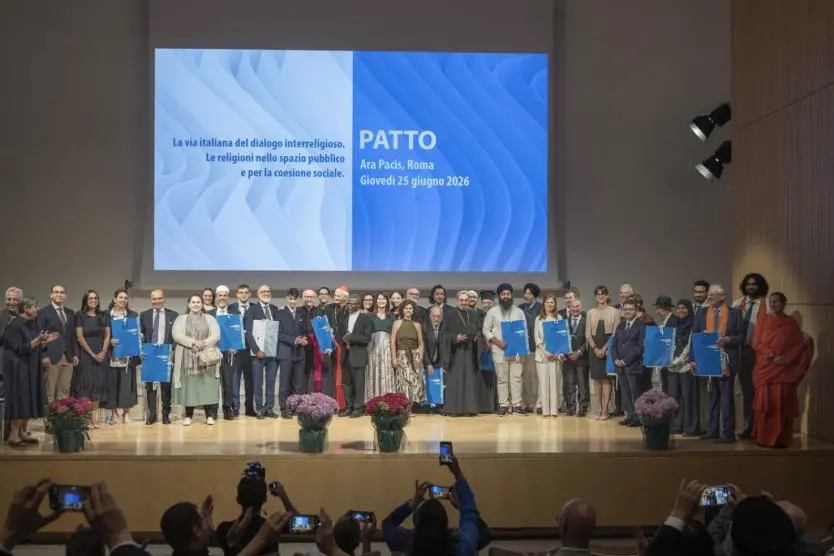
Cristin Cappelletti, secretary of the National Spiritual Assembly of the Bahá’ís of Italy, recalled that June 25 marks the 80th anniversary of the Constituent Assembly: a coincidence to “overcome differences and look to the future with confidence, draw on the spiritual forces that do not go in the direction of conflict and passivity”. I agree Naim Nasrollah, of the Islamic Cultural Center of Italy: «The Italian way to interreligious dialogue is founded not only on shared principles, but on concrete experiences of listening and dialogue». Daniele Garrone, president of the Federation of Evangelical Churches in Italy, observed that «Our time also sees the use of muscular references to God to support conflicts and hate speech. Religions in Italy have taken another path and intend to continue following it: a source of hope that can protect us from apprehension, resignation and cynicism.” For Metropolitan Polykarpos, of the Sacred Orthodox Archdiocese of Italy, «dialogue represents a sign not of weakness but of profound spiritual responsibility. I hope that the Pact translates into presence in public space». Because it is not just a “formal” act, recalled Yassine Baradai, of the Union of Islamic Communities of Italy: “Interreligious dialogue in Italy is a way in our daily coexistence, in concrete relationships between people, in the realities that work in silence every day to face many challenges together: racism, Islamophobia, anti-Semitism… Faiths can help to mend, to educate. Because dialogue is also a divine instrument, it becomes a prayer, a way to reach God.”