





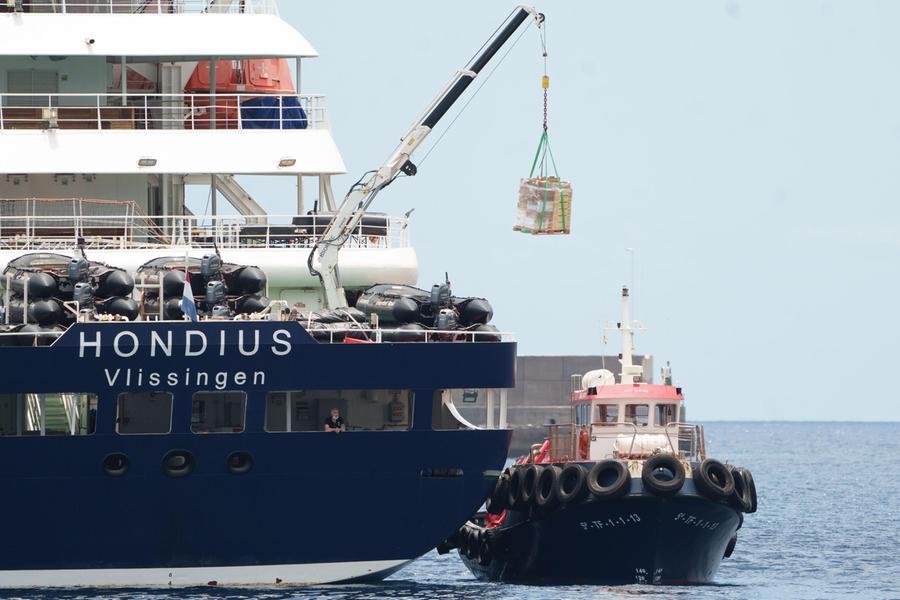
The hantavirus outbreak is still contained exploded on board the Dutch cruise ship MV Hondius. This is what Gloria Taliani, full professor of infectious diseases at the Sapienza University of Rome, sayswhich however invites us to maintain high attention in terms of international health surveillance.
After the new confirmed cases, the evacuations and precautionary quarantines taken in several European countries, we interviewed the infectious disease specialist again to understand what is changing compared to the early stages of the story.
Professor, since our last interview on May 4th there have been new confirmed cases, evacuations and quarantines. From an epidemiological point of view, are we still faced with a contained outbreak?
«Yes, in truth it seems that the outbreak is still contained. New positive subjects have emerged, but are currently asymptomatic. This confirms that the infection has spread inside the ship, but the overall number of infected remains very low compared to the number of exposed. We cannot therefore speak of an epidemiologically relevant outbreak from the point of view of general danger. Obviously it will be necessary to continue monitoring, because incubation can be very variable: from a few days up to six, seven or even eight weeks in some sporadic cases. But I would say no that this could translate into a widespread epidemic risk.”
Yet, the case is rekindling fears and fears in the population…
«Yes, and it is clear how Covid has left a deep collective fear. I’ll tell you an episode: this morning a nurse in the hospital stopped me before entering the lift, telling me to wait for the next one “seeing as this virus is circulating”… There is a lot of misinformation. Understandably, people are more sensitive to any news regarding viruses and infections, but the information must be timely, based on facts and not on vague or frightening hypotheses, otherwise there is a risk of panic.”
So there is no real pandemic risk?
«No, frankly not. The strain identified is the Andes hantavirus, for which human-to-human transmission is considered possible. But it remains a difficult transmission, not an easy one. We are not faced with a flu virus or measles, which have completely different levels of contagiousness. For the hantavirus, close contiguity, close and prolonged contact, is generally required. It is a much lower order of risk than what the population today tends to instinctively imagine.”
How much do climate and environmental changes influence the emergence of viruses of animal origin?
«They have a great impact. Deforestation, climate change and the movement of animal species in search of food make the proximity between humans and wild animals more frequent. This increases the risk of zoonosis, i.e. transmission to humans of pathogens that do not normally affect them. However, in the case of hantavirus, there are elements that reassure us: transmission requires specific conditions and does not occur easily.”
Do you think it plausible that everything started from the so-called “patient zero” identified before boarding?
«Yes, it’s plausible. From what emerges, this person would have frequented environments contaminated by rodents before boarding. But this confirms the fact that the outbreak remains confined to those who have been exposed directly or very closely. There is no concrete reason why an ordinary person today should worry about a generalized risk.”
So, don’t the four Italians placed in fiduciary isolation also cause particular concerns?
«Frankly no. This is an extremely prudent measure. They were on the same plane as a passenger who later tested positive, but in a different and distant area from her. In these cases the health authorities adopt very precautionary criteria, also to avoid any future disputes. But I think it is very unlikely that these subjects will develop the infection.”
After Covid, many countries updated their pandemic plans. In situations like this, what tools are actually used?
«The protocols arise from the methods of transmission of the pathogen. Since this is a virus that can spread through the air, albeit with difficulty, health authorities tend to adopt very prudent measures such as fiduciary confinement. But there is another important element: in the advanced stage of the disease, when the patient is already very symptomatic, the viral load often tends to decrease. This makes contagion even less likely. In the case of the deceased passenger, for example, the combination of the low infectivity of the virus and the probable reduction in the viral load makes the risk of transmission very low.”
After the official withdrawal of the United States from the WHO, how much does the weakening of international health coordination risk having in situations like this?
«It weighs a lot. Shared monitoring and common guidelines are key. When each country faces emergencies in isolation, confusion and flaws in the system inevitably arise. In this specific case the risk remains low, but let’s imagine a different scenario, with a more transmissible pathogen: here we are talking about people from all over the world who move rapidly between different continents. Without effective international coordination the risk would increase enormously.”
How much more fragile can the global health surveillance system become without strong international bodies?
«It can become much more fragile. The weakening of the World Health Organization or the defunding of bodies such as the US CDC risk weakening invaluable control systems. Let’s not forget that HIV was identified precisely by linking apparently unconnected cases. Global monitoring and the ability to correlate different events are key strategic tools. Today three factors coexist: the enormous international mobility of people, the increase in contact between humans and wild animals and the possible weakening of global health surveillance systems. This combination can create problems with readiness and efficiency in responding to emergencies. And it is a topic that should be thought about very seriously.”