





Now the topic linked toartificial intelligence it is no longer a taboo: we are learning to know it and apply it in the various areas of our daily lives, for better or for worse. Without going into ethical discussions related to the application of this new technology, it is important to understand where it is used and why. For this purpose Intesa San Paolo and Campus Bio-medico University of Rome have published the first study on the diffusion of artificial intelligence in healthcare.
The study shows that AI is already an established reality for the sector Italian MedTech, which is one of the liveliest in Europe. Suffice it to say that 78% of companies have already integrated it into their products or services and 61% are in advanced stages of development. Despite its increasingly widespread diffusion, artificial intelligence is still unable to reach patients and enter the departments in a significant way.
The barriers that prevent artificial intelligence from actually reaching the bedside of those who suffer and transforming care models are not of a technological nature. There is no shortage of ideas or machines but, according to the study, the real obstacle is bureaucratic: almost 70% of the companies interviewed report the complexity of the rules as the main obstacle. Added to this is the difficulty of finding professionals capable of managing the certifications and the lack of funds.

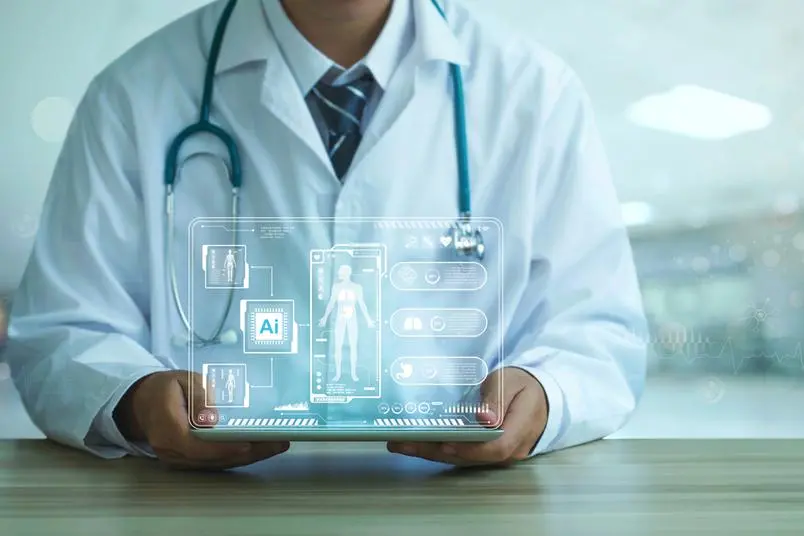
Another crucial point raised by the Observatory concerns the geography of health. We often think that great medicine only lives in large city hospitals. However, Professor Leandro Pecchia, director of Tech4GlobalHealthwarns that the real challenges today are played out on the territory. Innovation is still too “hospital-centric”, while the needs of citizens – think of the elderly or the chronically ill – are linked to daily life, home, proximity.
Artificial intelligence must not be a luxury for a few centers of excellence, but a tool to make the healthcare system fairer. «AI is a critical lever to guarantee sustainability and competitiveness» explains Pecchia. If used well, it can allow a doctor to follow a patient miles away with the same precision as a specialized department, giving oxygen back to a local healthcare system that is often in trouble.
But how does this technology translate into real benefits? The answer lies in training. It is not enough to purchase modern software if the entire healthcare organization – from managers to GPs – is not enabled to use it. We need a change of mentality that involves all staff, to prevent technology from being seen as a burden instead of a help.
The commitment of the Campus Bio-Medico University and Intesa Sanpaolo has already obtained extraordinary recognition: the laboratory has been accredited as a World Health Organization (WHO) Collaborating Center for biomedical engineering. It is a sign of hope that tells us that Italy can lead the digital health revolution without losing its human vocation.