


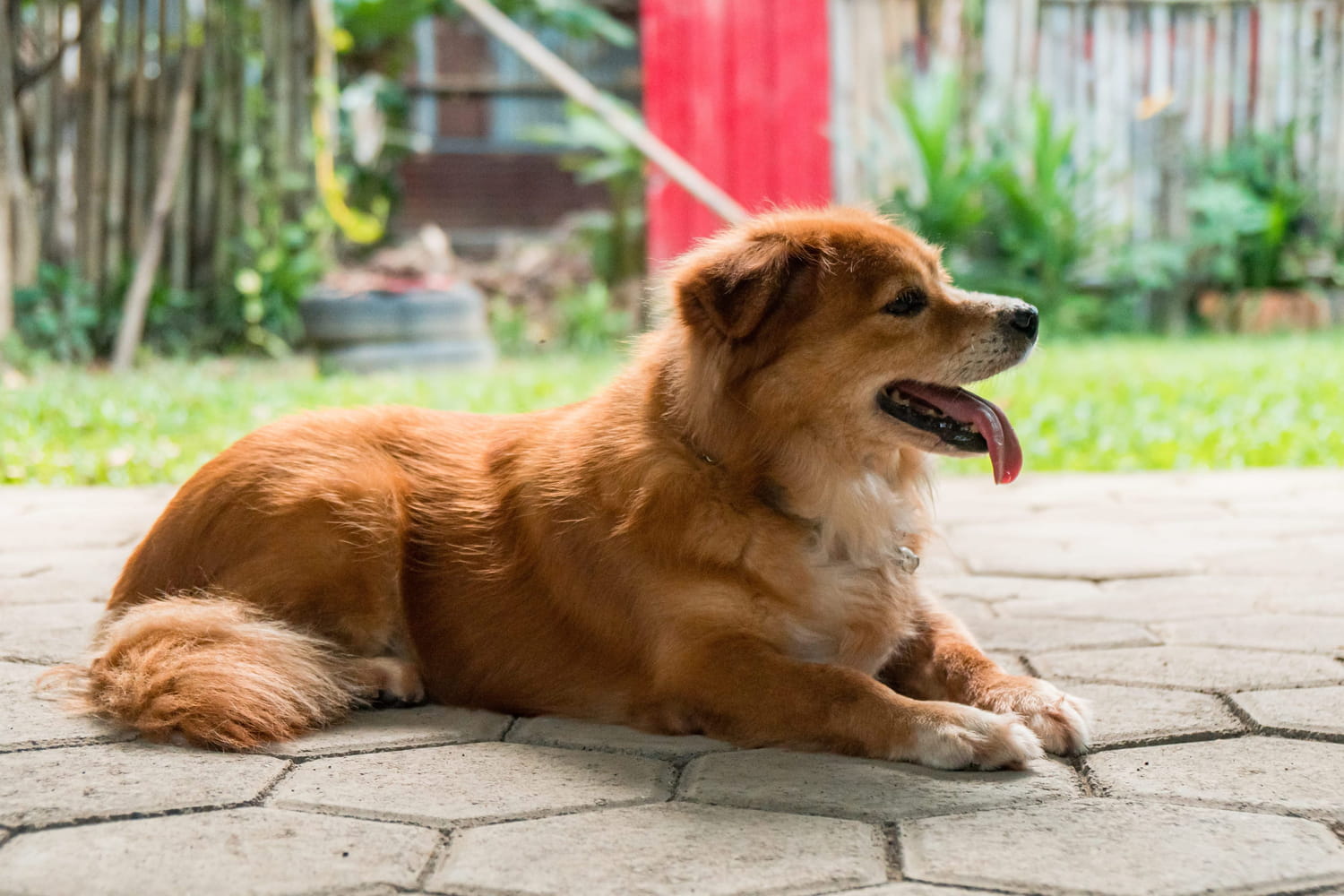
A dog that limps or that no longer jumps on the sofa are not the only reasons to go see an osteopath, there are other more subtle signals, which owners do not necessarily notice, which should alert them.
Just like a baby who has not yet learned to speak, a dog cannot express his distress with words. While it is easy to spot a high-pitched cry of pain or a broken leg, detecting discomfort that has been present for months is another story: an animal will never complain as we would. Faced with chronic pain, our companions tend to suffer in silence. Of course, most owners will immediately notice when their pooch starts to limp, but other, much more subtle cues too often go unnoticed.
“I get called a lot when the dog has trouble jumping on the couch or in the car, that’s the sign people notice the most.”confirms Morane Teisseire, animal osteopath in the Paris region. But the specialist explains that certain other behaviors, which seem seemingly harmless, can also be evidence “that there is surely something” and it would be better “do a quick check-up”.
The first thing, which few dog owners pay attention to, is the way he sits: “Even if everything is fine, a dog that always sits or lies in the same direction, on the same side, could be a sign that something is blocked.”. Another even more subtle detail, a slightly different area of hair, a little duller or finer for example, is not automatically linked to a skin problem. This can also indicate a blockage at the joint, or even a problem with an organ. Because yes, osteopaths also treat internal physiology, particularly the digestive system.
Morane Teisseire also warns: “Sometimes people tell me that the dog often has gas, and that alone means that he digests poorly, even if there is nothing dramatic. Same with a dog who often has diarrhea or who vomits from time to time. These are not emergencies that require going to the veterinarian, but it can be good to work osteopathically to check that there is nothing bothering the digestive side.” Indeed, the veterinarian treats more emergencies and relieves pain with medication, but “If we don’t deal with the underlying problem, the cause, it risks starting again.”.
For the animal osteopath, the most important thing is above all to observe his dog and to be attentive to the “slightest change in behavior, even insignificant”which could indicate the beginning of discomfort or even a deeper health problem. It’s the same principle as for us: you might as well consult as soon as a symptom appears, rather than waiting for the phenomenon to get worse. “A session once a year may be enough to check that everything is going well and to have regular monitoring, which can possibly avoid more serious veterinary problems.thus recommends Morane Teisseire.