





The first candidates will take their Baccalaureate Grand Oral from June 22. This event marks the last stage of a marathon started several months ago. Here are the criteria on which they will be graded.
THE Grand oral exam is a key stage for Terminale students, often a source of stress. For this session, general baccalaureate high school students will take their Grand oral between Monday June 22 and Wednesday June 1er July 2026 at the latest. The objective: to test both their knowledge and their oral fluency. The interview with the jury refocuses on the learnings of the year, without addressing the orientation project. Here’s how the test works and what examiners expect from candidates this year.
What is the assessment grid for the Grand oral du bac?
The Grand Oral of the baccalaureatewhich has existed since 2021, aims to assess students’ skills such as public speaking, in a structured and argued manner, and the ability to develop reflection. The Ministry of National Education shared a indicative grid for the evaluation of the Grand oral. Students will be graded on:
- The strength of the candidate’s knowledge
- The clarity of his words
- His ability to argue and connect knowledge
- His critical mind
- His involvement
How does the Grand Oral of the baccalaureate take place?
The Grand oral test always takes place in several stages. Two questions are prepared during the year with the teachers. For the general baccalaureate, these questions relate to one or two specialty coursesand on the specialties of the series concerned for the technological path. The jury chooses one of the questions on which the student will be questioned. In short, there is:
- Preparation for 20 minutes : the student prepares his oral, he can create a support (map, diagram), he establishes his plan and his argument.
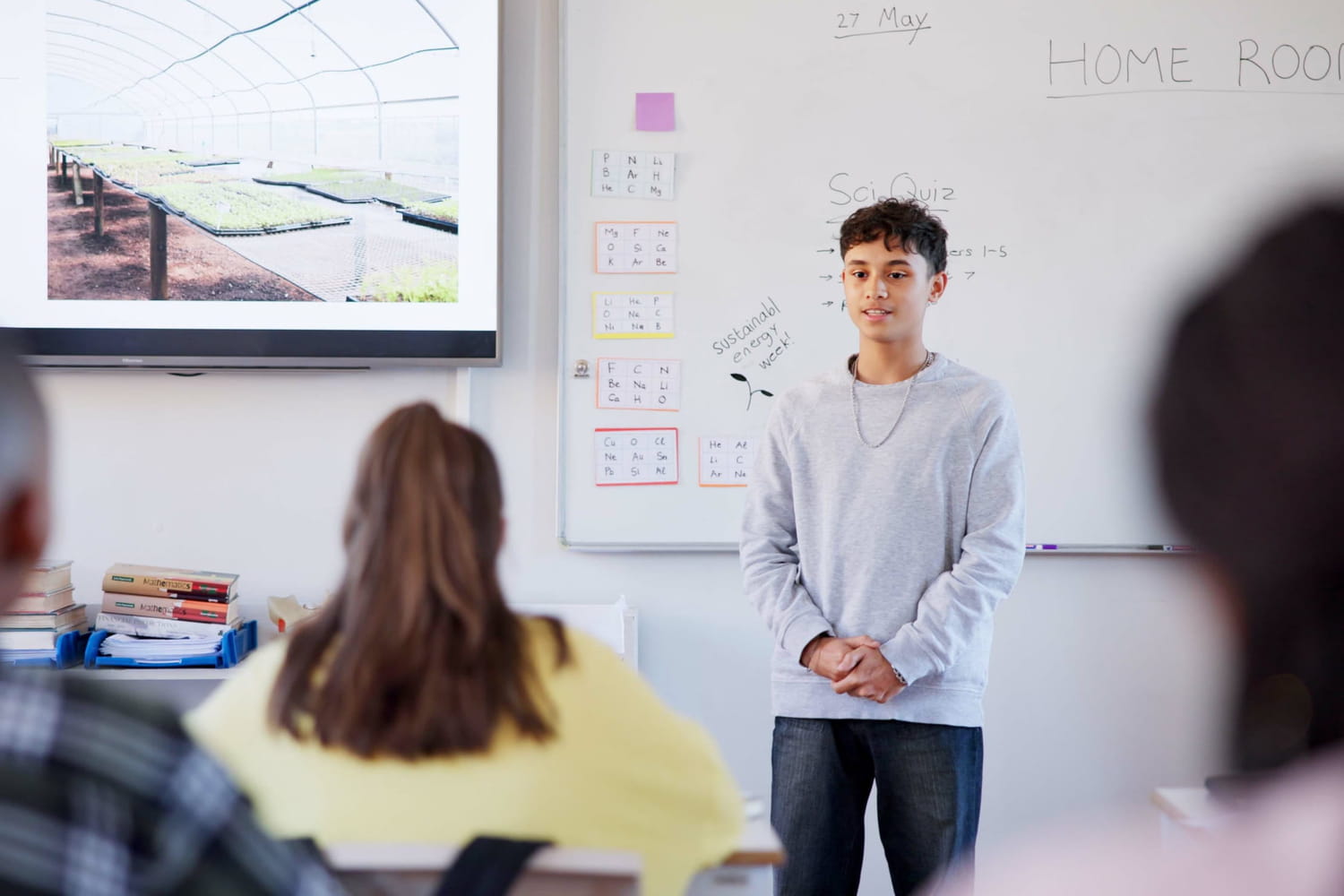
- 10 minute presentation, standing : the student explains why he chose to address this question by developing his answer.
- Discussion with the candidate for 10 minutes : the jury questions the candidate to help them explore their subject in more depth, and thus assess the solidity of their acquired knowledge and their argumentative skills.
THE Grand oral jury is made up of two examiners: a professor of the specialty chosen for the question, and a professor of any other discipline, or a librarian professor. These cannot, under any circumstances, be the candidate’s teachers.
What is the coefficient of the Grand oral test?
In general, the Grand oral counts for a coefficient of 10, and a coefficient of 14 for the technological route. As a reminder, the Grand oral test is graded out of 20 points : it counts in the final exams, which represent 60% of the final baccalaureate mark.
To prepare for the Grand Oral test, you must train in advance with the jury’s expectations in mind. To do this, the student can start training on the quality of his oral performance : speak out loud while standing straight in your room, in front of a mirror, for example, while timing yourself.
The candidate must above all develop a clear and reasoned planwith keywords linked to knowledge learned in class or outside. Moreover, interaction with the jury should not be neglected preparing questions that might be asked. To do this, you can call on someone close to you to play the game and question you.
How to choose your subject for the Grand Oral?
The subject or problem chosen for the Grand oral must be in connection with the chosen specialty(ies)and studied throughout the year. In the case of two specialties, you can definitely opt for one transversal subject. Obviously, the key to your reflection must be based on a theme that fascinates you, on which, at least, you can always bounce back and develop a path of argument.
And even if you master your subject perfectly, do not reveal all your knowledge during your presentation. Remain evasive on certain points, which the examiners will not fail to ask you to elaborate on later. This way, you will have plenty of time to demonstrate your field of knowledge, without being caught off guard by questions that you would not have considered.