





Not all cheeses are equal in terms of calories. Questioned on the Journal des Femmes, nutritionist Nina Voit helps us identify those with the richest foods and especially explains to us why the calories on the label are not the only criterion to observe.
Cheese is often singled out because it is fatty and high in calories. But it is also a product rich in protein and beneficial for health. Nutritionist Nina Voit explains to Journal des Femmes how to decode cheese platters to make the right choices. To understand why one cheese weighs more than another in terms of calories, you have to look at its composition. As Nina Voit reminds us, the calculation is simple: “One gram of carbohydrates (sugars) is 4 calories, one gram of protein is 4 calories and one gram of fat is 9 calories.” So mathematically, the fatter a cheese, the more calories it has.
The secret of high-calorie cheeses often lies in the humidity level. Imagine a sponge: the more it dries, the more it shrinks, but its material remains ultra-concentrated. This is the case for hard cheeses which, by losing their water during ripening, concentrate their nutrients and calories.
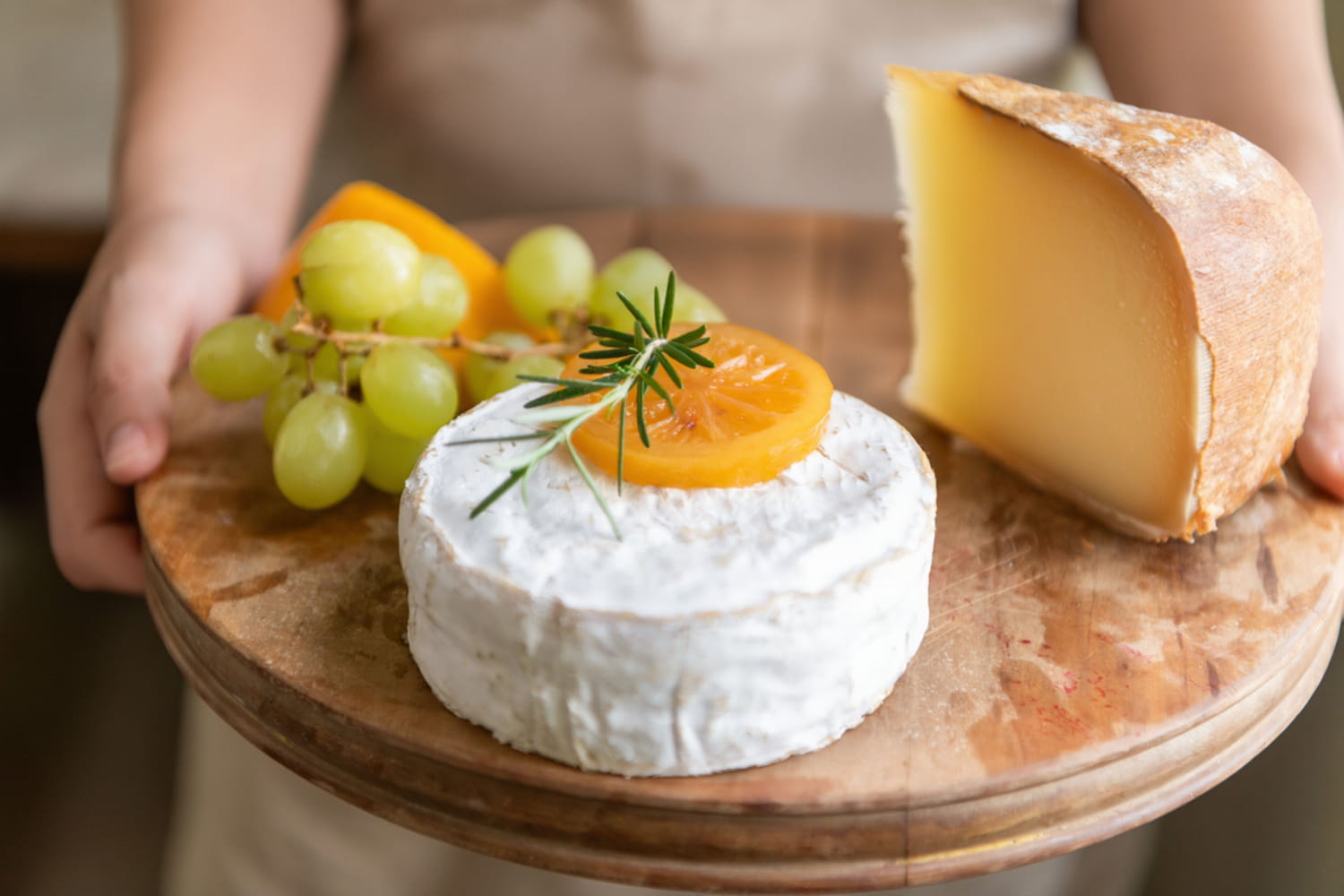
But there is a “gourmet exception” that overturns the rule: “triple cream” cheeses. The champion in this area is Brillat-Savarin. Unlike cheeses which dry out over time to become rich, this one is “boosted” from the moment it is made by the addition of liquid cream. Result ? Even if it remains very creamy and rich in water, its fat content explodes. With around 400 kcal per 100 g, it dethrones most of its cousins and becomes the true calorie champion. Just behind, we find blue-veined cheeses like Roquefort or Bleu d’Auvergne, as well as very mature pressed cheeses like Old Cantal.
That said, choosing a high-calorie cheese can be a real health benefit, provided you choose it made from raw milk. Unlike industrial versions, a cheese like Brillat-Savarin made from raw milk is a living material, a true reserve of bacterial biodiversity. “This cheese has been worked by bacteria which will predigest the milk and make it assimilable.“, she explains. While industrial cheese is often “dead” enzymatically due to pasteurization, traditional cheese nourishes and enriches the intestinal flora.
In summary, calories should not be your only guide. The important thing is to choose raw milk products (except during pregnancy), a true French specialty, because they help our body to better digest the proteins and fats they contain. “A pasteurized and industrialized cheese will have slightly fewer calories on the label, but above all it will be very poor in good bacteria“. And since it is less nutritionally dense, we tend to eat twice as much.
The ideal time to eat cheese is in the morning or at midday. “Its richness in fats provides lasting energy for the day“. It is better to wash it in the evening because its slow digestion (3 to 4 hours) mobilizes the gallbladder and disrupts sleep, which can cause nighttime awakenings and sweating. As fats circulate via the lymph which stagnates during the night, this promotes water retention and a feeling of swelling upon waking. In terms of quantity, the nutritionist recommends approximately a 30 gram serving per day.
Thanks to Nina Voit, holistic therapist, food coach, author and creator of “Common Sense on My Plate®”. Exclusive interview conducted on April 20, 2026.