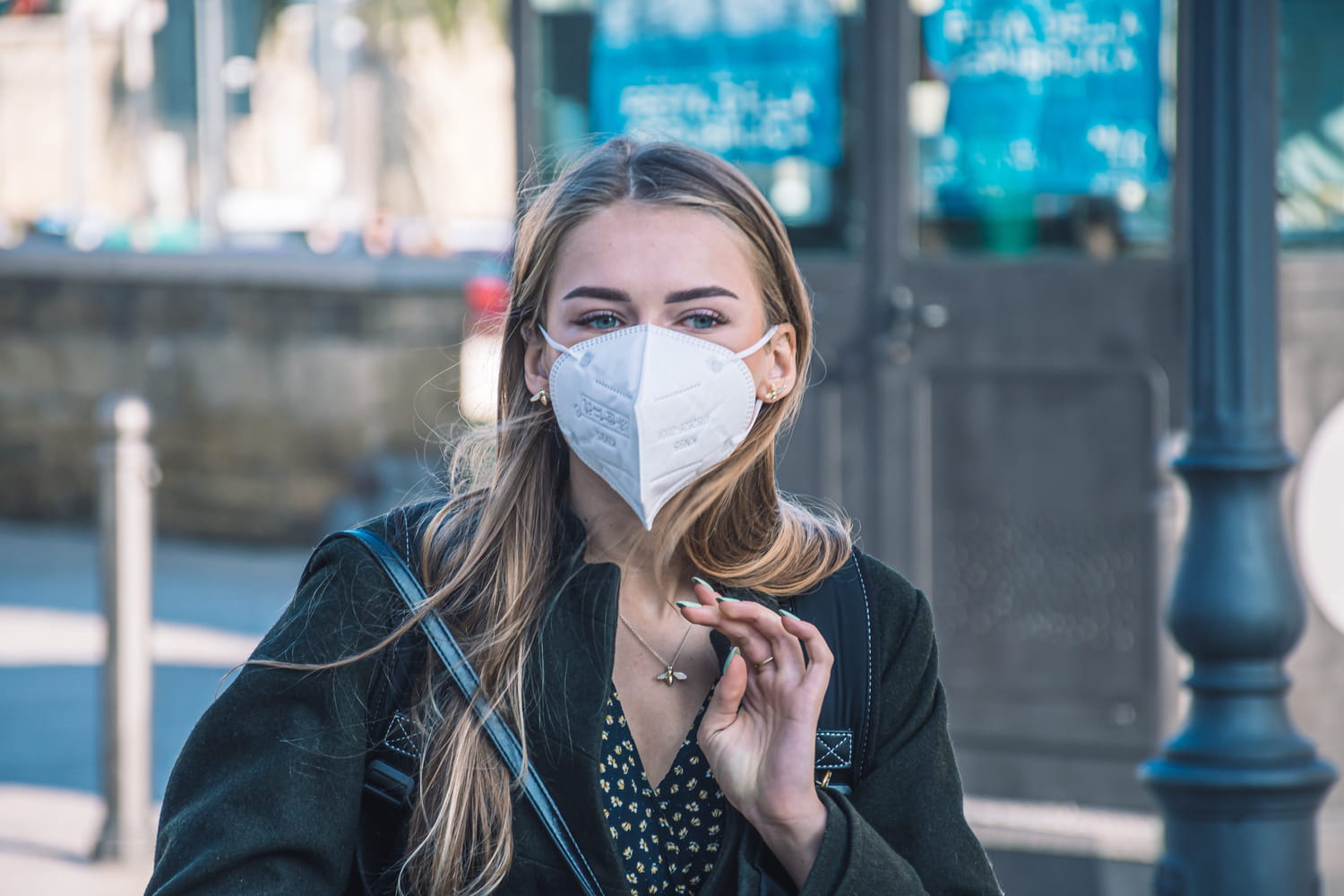
While the smells of burning and plumes of smoke extend as far as the eye can see, health authorities are calling on the population to be extremely vigilant. Faced with the fallout of toxic particles, a bad reflex persists: use the wrong mask. The Nouvelle-Aquitaine Regional Health Agency reminds you of the instructions to follow.
In New Aquitaine, fires require colossal resources. Municipalities in Gironde, Landes and Lot-et-Garonne find themselves on the front line, confronted with imposing plumes of smoke. But under the effect of the winds, the deterioration of air quality extends well beyond homes, affecting the Arcachon Basin, the metropolis of Bordeaux and several neighboring departments. These fumes released contain millions of very fine particles (PM2.5) and toxic soot. Invisible to the naked eye, they infiltrate very deeply into the pulmonary alveoli and the blood, causing irritation, asthma attacks and major respiratory problems.
Faced with this respiratory risk, the ARS Nouvelle-Aquitaine and the prefecture have ordered the destocking and free distribution of FFP2 masks in pharmacies in the affected areas. As the health authorities point out, the FFP2 (or N95) mask is the only individual equipment capable of offering real protection. It combines high-performance filtration (blocking at least 94% of microparticles from the combustion of pine trees and vegetation) and perfect face sealing to prevent smoky air from infiltrating through the sides.
To be truly effective against smoke, the FFP2 mask meets very precise rules of use transmitted by the ARS. An FFP2 mask can be kept on for up to approximately 8 hours. However, if it becomes wet (from sweating or breathing), its filtration capacity decreases and it must be changed more quickly. To prevent particles from passing to the sides, it is essential to properly adjust the metal bar on the bridge of the nose and to adjust the elastics behind the head or ears. Wearing an FFP2 increases resistance to inspiration. It is therefore totally not recommended to engage in physical activity or intense exercise outside while wearing it.
During periods of exposure to fumes, wearing a traditional surgical mask or a fabric mask gives a false sense of security. The surgical mask retains the spit emitted by the wearer, but is not waterproof and does not filter fine particles. The smoke passes through its membrane without difficulty. The fabric scarf or mask, even when wet, only stops large ashes and allows almost all toxic pollutants to pass through. To protect vulnerable people as a priority (chronically ill people, seniors, young children, pregnant women) and exposed professionals, ARS Nouvelle-Aquitaine is deploying 3.5 million FFP2 masks in pharmacies in Gironde and Landes by Wednesday.
Even equipped with an FFP2 mask, containment remains the priority. The FFP2 mask retains particles and soot, but it does not filter carbon monoxide (CO) or toxic gases. In the event of particularly dense smoke or an unbearable odor, the mask never replaces strict confinement at home (VMC turned off, windows closed) or evacuation ordered by emergency services.