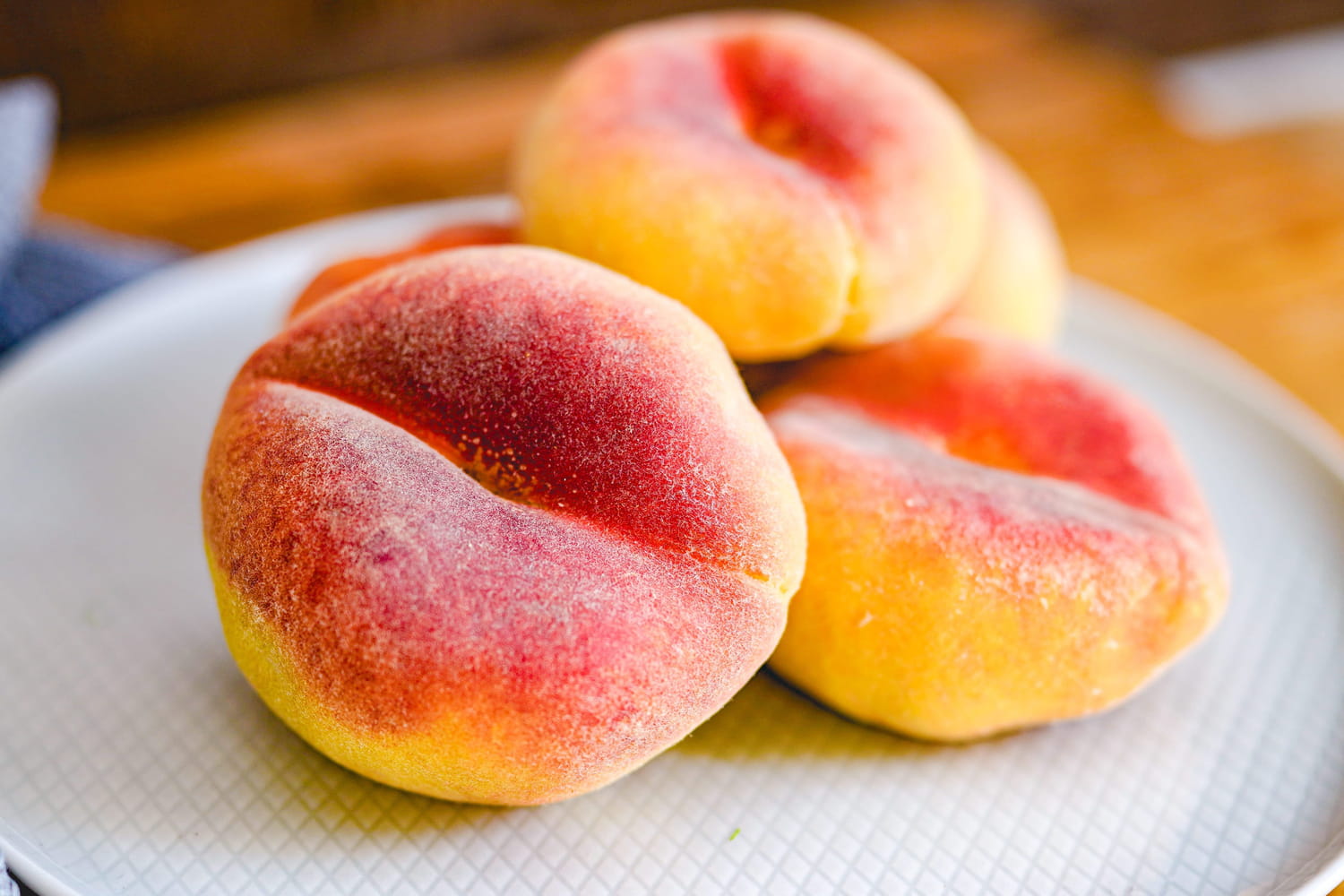
Sweeter than the classic peach, the flat peach has certain particularly interesting health benefits, especially in the middle of summer. Explanations with dietician-nutritionist Christopher Robbe.
It has been everywhere on the shelves for several weeks. Sweeter in the mouth than round peach, also easier to bite thanks to its flattened shape. But from a nutritional point of view, the flat peach actually has almost nothing different from its classic cousin. “The flat peach and the round peach belong to the same species. Their nutritional composition is therefore very similar”explains Christopher Robbe, dietitian-nutritionist at Médoucine. Like many colorful fruits, it contains polyphenols, “plant compounds that help protect cells against aging”. It is also a low-calorie fruit (40 to 45 kcal per 100 g). Here are the six reasons that deserve attention.
- Flat peach hydrates deeply. Made up of 90% water, it is a great ally in hot weather. “It is an excellent summer fruit to supplement fluid intake”notes the nutritionist, who nevertheless reminds that it is not enough on its own to compensate for abundant sweating: water remains essential as a supplement.
- Flat peach provides vitamin C, which “participates in the functioning of the immune system and helps fight against oxidative stress”specifies Christopher Robbe.
- It protects the skin and vision. It contains carotenoids, precursors of vitamin A, “beneficial for the skin, vision and natural defenses”.
- It regulates tension and supports the muscles. Rich in potassium, it contributes to “muscular, nervous functioning and blood pressure balance” – a mineral particularly useful during periods of high heat.
- It nourishes the microbiota, improves transit and suppresses hunger. Its fibers “promote satiety, nourish the intestinal microbiota and contribute to good transit regulation”.
- It limits blood sugar levels. Flat fishing has “a moderate glycemic index and its fiber slows the absorption of sugars. Christopher Robbe recommends consuming it at the end of a meal rather than as an isolated snack, “to avoid blood sugar spikes”.
These benefits are not limited to a particular audience. In pregnant women, “fishing helps meet the needs for water, fiber and vitamin C, which also improves the absorption of dietary iron”indicates the nutritionist. Among seniors, “its tender texture, its richness in water and antioxidants make it an easy-to-eat fruit, useful for maintaining good hydration”. Among athletes, it “helps to contribute to rehydration after exercise while providing natural carbohydrates which contribute to the reconstitution of energy reserves”.
How to make the most of it? “The best way is to eat them!”indicates the nutritionist. Eaten fresh, with the skin well washed, the peach fully retains its fiber and vitamins. For a more lasting satiating effect, it can be combined with a source of protein or good fats: natural yogurt, a handful of almonds or a few pumpkin or chia seeds. “This association promotes more lasting satiety and limits variations in blood sugar levels.”
How much? One to two peaches per day (150 to 300 g) fit well into the recommendations of five daily fruits and vegetables – taking into account an overall maximum of 300 g of fruit per day from all sources. The only precautions, according to Christopher Robbe: people allergic to fruits of the rosacea family, and those suffering from irritable bowel syndrome, “who may be sensitive to excess fruit depending on their individual tolerance”. “The idea is never to demonize a food, but to adapt the quantities to each person”concludes the nutritionist.