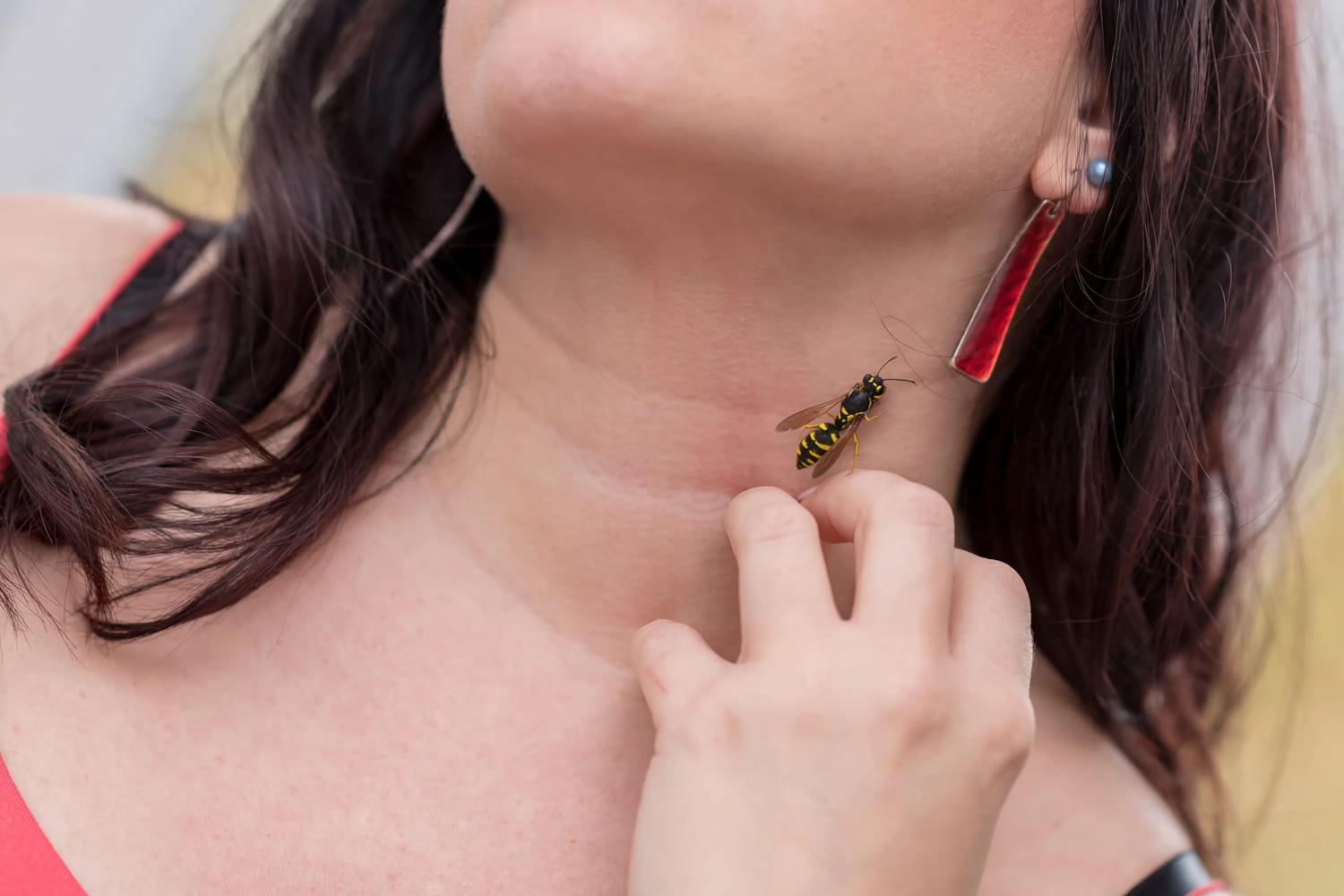
Faced with wasps, many are afraid of a serious reaction if they are stung and would like to be able to anticipate the risk of allergy. How to do it? The express response from our allergist doctor.
In summer, the fear of being stung by a wasp is universal. For many, a crucial question arises, especially if you have never encountered a stinger: are you allergic without knowing it? Faced with this uncertainty, some people imagine that it is possible to carry out preventive laboratory tests to reassure themselves before summer. To see more clearly, we interviewed Dr Juliette Caron, allergist doctor at the Hospital Group of the Catholic Institute of Lille.
To the question of whether you can detect an allergy before being bitten, his answer is categorical: it is scientifically impossible. “For us to say that it is an allergy, we first need a first contact to synthesize immune defenses against the venom. Otherwise, it’s not an allergy.” answers the specialist. We cannot therefore determine in advance whether or not we are allergic to a wasp sting because the body must encounter the venom for the first time to learn how to react, in a normal or abnormal way.
Once bitten, how do you know if you are allergic? The answer is not hidden in local swelling, but in the generalized reaction of the body. If a simple redness or a large painful pimple at the site of the bite is benign, the real signal of an allergy appears elsewhere on the body. “It is the appearance of symptoms distant from the bite, such as giant hives all over the body, difficulty breathing, dizziness or discomfort, which indicates a systemic allergic reaction.“, describes the allergist doctor.
This distinction is crucial because allergy to wasp venom is unpredictable and potentially dangerous in the future. “A generalized reaction may get worse with the next sting“, warns Dr. Caron. A first confrontation can trigger patches of pimples all over the body, while the second sting, months or years later, risks causing much more severe respiratory complications.
It is precisely this risk of worsening over the course of accidents which requires serious medical care. In the event of a suspicious reaction that goes beyond just the skin, you should not hesitate to make an appointment with a specialist: “This is why we still recommend consulting. It’s really the grade that will determine the support afterwards.“, concludes the allergist. After an assessment, concrete solutions, such as prescribing an emergency kit or desensitization, can be put in place.