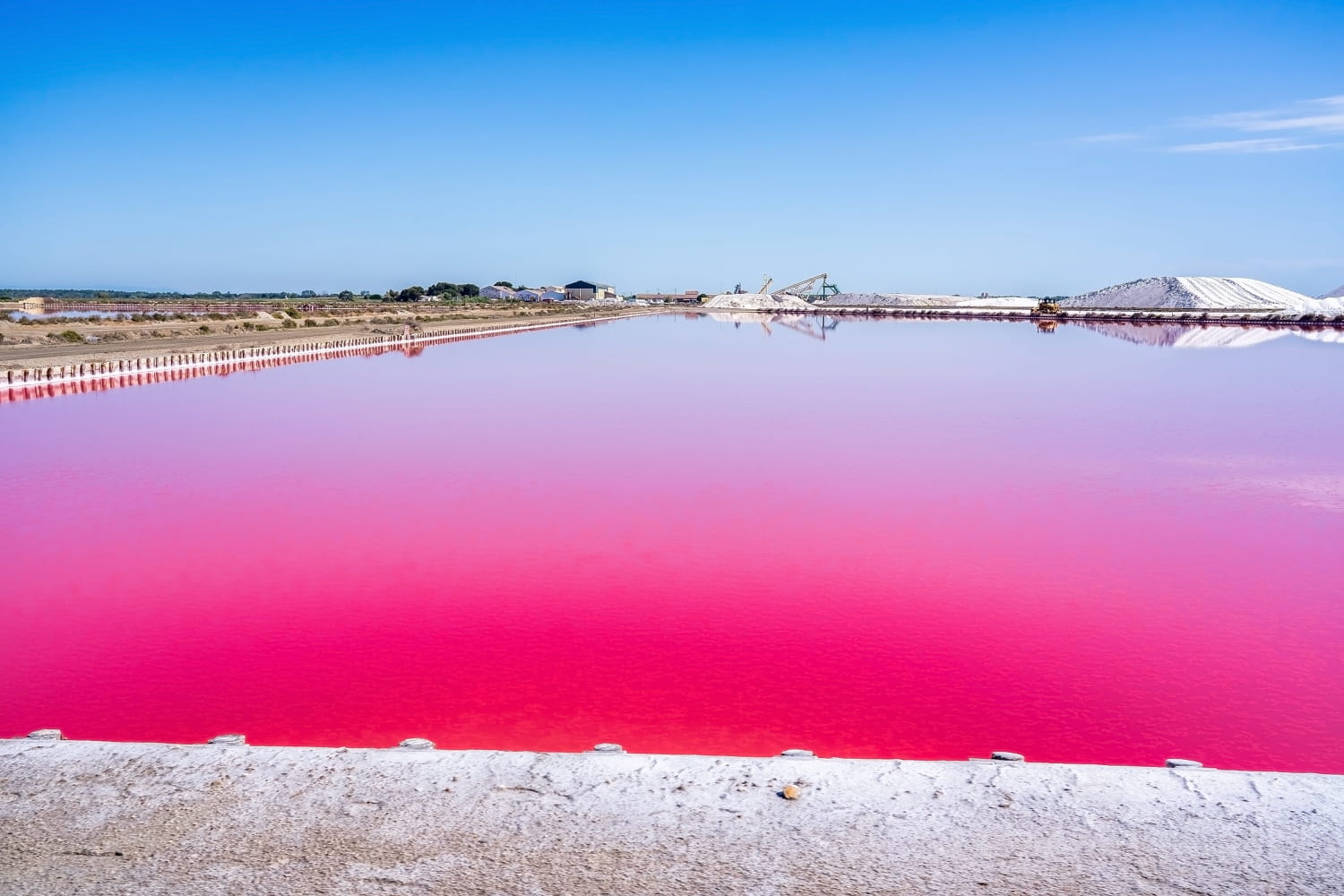
NASA has captured an incredible geological phenomenon from space: a pink heart extending over 10 kilometers. Scientific explanation of the phenomenon.
The world of astronomy has never ceased to surprise us. During the “Expedition 70” space mission, the curious eye of a NASA astronaut was attracted by an unusual spectacle while observing planet Earth: an immense bright pink spot, drawing the contours of a heart in the middle of an arid landscape. After the strange white spot spotted in northern Chad and a black volcanic spot in Libya, this spectacular natural formation, which extends about 10 kilometers wide, has also aroused the curiosity of scientists and Internet users. Back to this unexpected discovery.
Contrary to what one might think, this phenomenon owes nothing to digital editing. NASA confirmed that the photo was completely authentic and that it was captured using a very special camera (Nikon D5 equipped with a 500mm lens). This pink heart is located in Argentina, in the plains, near the town of Bahía Blanca, 800 km from Buenos Aires). It is actually a natural formation known as “Salinas Las Barrancas” (or “Laguna de Salinas Chica”), a saline lagoon surrounded by desert areas and vast salt fields.
The appearance of this pink heart is the result of a combination of very specific geographical and climatic factors. The heart shape is due to the natural topography of the basin. This unique geometry, however, is only blatantly visible when viewed from above, at a perfect vertical angle, as if from Space.
As for the pink color, it is explained by the fact that the region undergoes regular cycles of heavy rains followed by intense evaporation. As the water dries, it gives way to high concentrations of salt. The pink-white coloring comes from the presence of ultra-resistant micro-organisms (such as certain micro-algae) highly adapted to these extremely saline environments. Beyond the beauty of the image, which is part of a NASA series entitled “A Pair of Hearts” comparing different heart-shaped terrestrial structures, this site is of major scientific interest for astrobiologists.
These extreme saline environments serve as models to study the limits of life on Earth. By understanding how these microorganisms manage to survive despite extreme salinity, lack of water and intense exposure to the sun, researchers hope to develop new avenues for detecting possible traces of extraterrestrial life on other planets or moons in our solar system.