



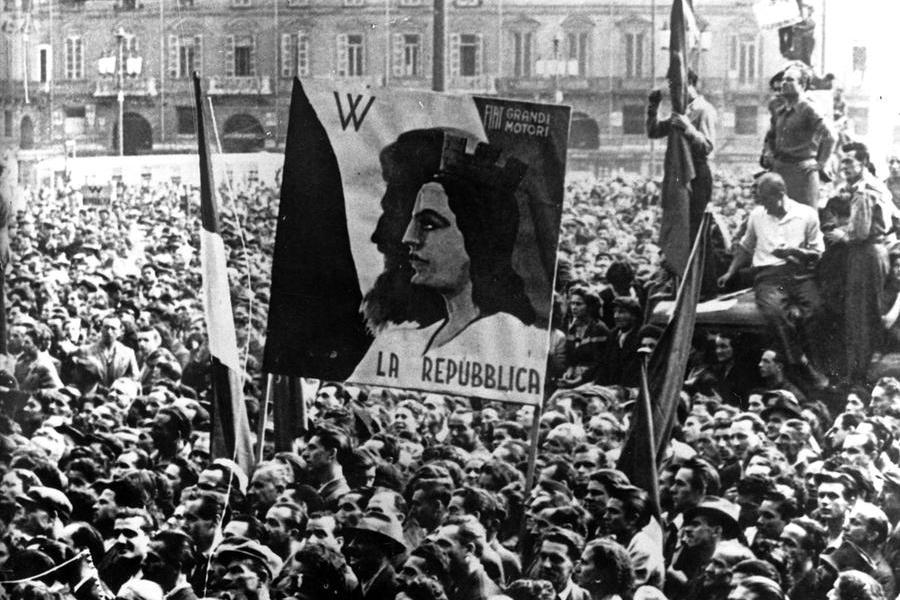
Sunday 2 June 1946 dawn rises over Italy in line. Spring already had the taste of summer: a clear sky, the warm air, the cities still wounded by the war but filled with a new euphoria. In front of the polling stations set up in bombed schools, in hastily patched up municipal offices, in classrooms with walls still cracked by bullet scars, there are already very long queues. Men with good Sunday jackets. Workers. Former partisans. Decayed nobles. Peasants arrived by night train. And especially women. Women everywhere: mothers, daughters, sisters, young people, elderly people, nuns leaving the convents at matins. They hold the electoral certificate as if it were a love letter (as the famous journalist Anna Garofalo wrote) and tell each other not to wear lipstick so as not to invalidate the ballot. For the first time, women are voting at a national level (many had already done so in the “dress rehearsal” of the March administrative elections) to choose the destiny of the country.
In the end, almost 90 percent of those entitled to vote will vote. An impressive figure for a destroyed, hungry country, still riddled with resentment and revenge. We go to the vote to decide between Monarchy or Republic, but also who would be part of the Constituent Assembly. The walls of the cities are covered with posters: the crusader shield of the Christian Democrats (“God sees you in the urn, Stalin doesn’t”), socialist and communist symbols, references to the Savoy monarchy and the monarchist party. Behind that vote, however, the battle for the soul of Italy is also being fought.
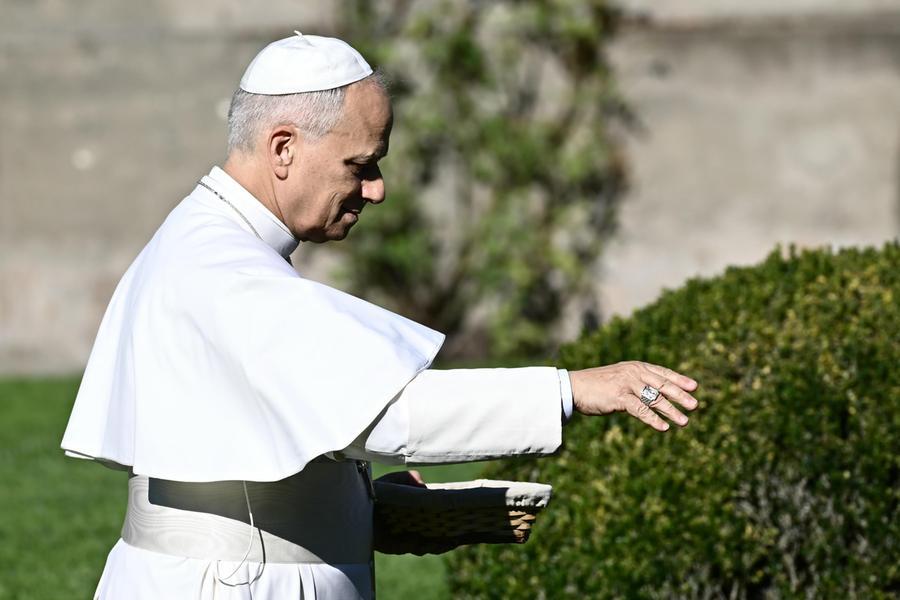
Pope Pius XII watches the events with anxiety. The Vatican, despite the Concordat, did not particularly like the Savoys, compromised with fascism and complicit in the face of racial lawsthe. But he feared the communist advance infinitely more. On June 1st, on the eve of the vote, the Pope spoke on the radio using prudent but very clear words: the crossroads was between “Christian civilisation” and a “statism without religion”.
In the parishes, meanwhile, the priests are openly campaigning. In the South, many parish priests push for the monarchy. In the North, however, an important part of the clergy, many of whom had supported or even been part of the Resistance, believed that the Savoys were finished. The cardinal of Milan Ildefonso Schuster, who had tried to convince Mussolini to surrender to the Allies, was a staunch republican, while the archbishop of Naples Alessio Ascalesi openly sided with the monarchy. The secretary of the PCI Palmiro Togliatti and the socialist leader Pietro Nenni strongly supported the republican choice in the referendum of 2 June 1946, helping to mobilize the popular vote against the Monarchy. It was here that Alcide De Gasperi’s political masterpiece emerged. The leader of the Christian Democrats and Prime Minister understood before the others that the fate of the Church could not remain chained to that of the royal house. A rigorous Catholic, but a very lucid statesman, he convinced the Vatican that the DC would defend Catholic values even within a Republic. It was a decisive step: it disengaged Italian Catholicism from the Savoys and prevented the referendum from becoming a religious war. Without his mediation the country would have exploded.
The Scrutiny was an Italian novel, full of suspense and fear. In the Sala della Lupa in Montecitorio, under the Medici tapestries, bags from all over Italy accumulate. Some were Social Republic mailbags; others, old flour sacks from peasant Emilia; Even garbage bags full of ballots arrived from Naples. The valets of the Chamber wear tailcoats with tricolor armbands. The calculating machines tick non-stop. The counting clerks redo the accounts by hand. Allied officers chew gum observing that fragile democracy trying to be born from the rubble. The Allies followed that watershed event carefully: the Americans were for the Republic, the English for the monarchy. That day the New York Times headline: «Italy decides today. The glory of women with their first vote.” When the first data arrives from the South, the monarchists rejoice: Naples was close to 80 percent for the King. But then the numbers from the North begin to flow in: Emilia, Tuscany, Lombardy, Piedmont. The North of the Resistance. A Republican avalanche. Italy appears split in two. For days the country remained suspended. Violent clashes broke out in Naples, resulting in deaths and injuries. The armored cars raced through the streets between the opposing marches.
On June 10th in Montecitorio, in a very crowded Sala della Lupa, the President of the Cassation Giuseppe Pagano almost hastily pronounces the final declaration. The Republic obtains 12 million and 700 thousand votes, equal to 54.27 percent of the valid votes, the monarchy 10 million and 700 thousand, equal to 45.73. As historiography has now ascertained, it was his reckless final declaration (“the Court of Cassation will issue the results with the data of the missing sections in another meeting”) that was “instrumentally used by the uncontrolled and repeated references to alleged fraud, thus fueling an alternative story that goes as far as spanning the following decades”, as the Sapienza historian Umberto Gentiloni Silveri writes. A controversy that is still open today. But it was precisely then that De Gasperi decided to force history. On the night between 12 and 13 June, faced with the concrete risk of a civil war, he provisionally assumed the functions of head of state. Some monarchist circles called for armed resistance. But the “King of May” Umberto II understood that it would be a bloodbath and left in exile for Lisbon. On 18 June the Court of Cassation definitively proclaimed the Republic. History had rendered its verdict.