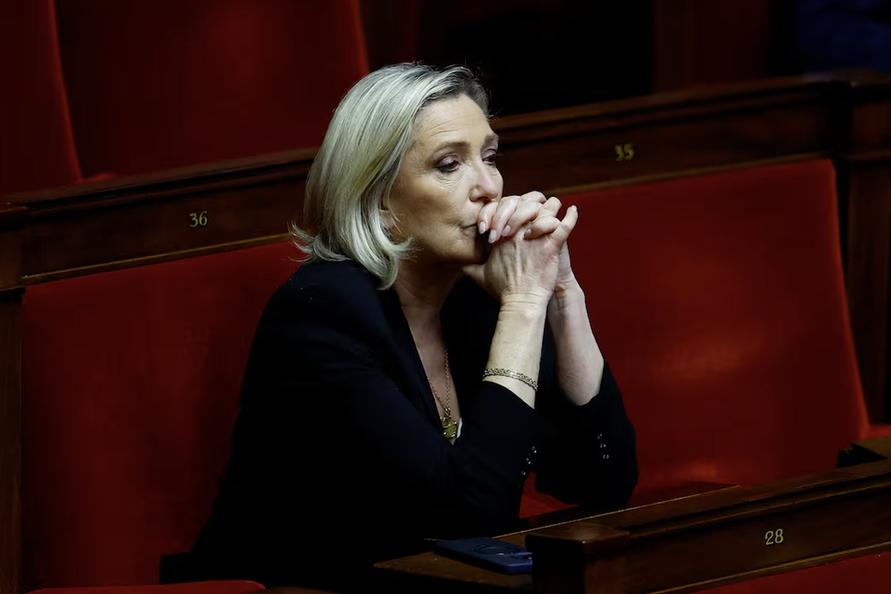
“Welcome to the era of electronic bracelets”, comments MP François Ruffin on X. And we must give him at least this merit: of having found the right formula for saying the absurd. Because France, home of the guillotine, of the Commune, of de Gaulle and of the great republican funerals, finds itself today discussing not a program, not an idea of the State, not the destiny of Europe, but Marine Le Pen’s ankle.
The Paris Court of Appeal did what the courts, when they are serious, must do: it read the papers, confirmed the guilt, reduced the additional sentence, left the passage to politics open. Translated from judicial French into current language: Marine Le Pen is guilty, but she can run for the Elysée. As long as she runs slowly, within the established times, with the electronic bracelet to remind her that freedom, even when it is invoked during the electoral campaign, remains a very concrete thing.
Here the theater begins. Because the court did not take away the right of the French to vote for it. But he didn’t even pretend that nothing happened. He held together two principles that today seem incompatible: popular sovereignty and equal law for all. In short, Marine Le Pen was not eliminated by the judges, as her parents will already shout. She was left to face her own responsibility. Candidate yes, but with the physical mark of condemnation. Not a footnote. An object on your ankle.

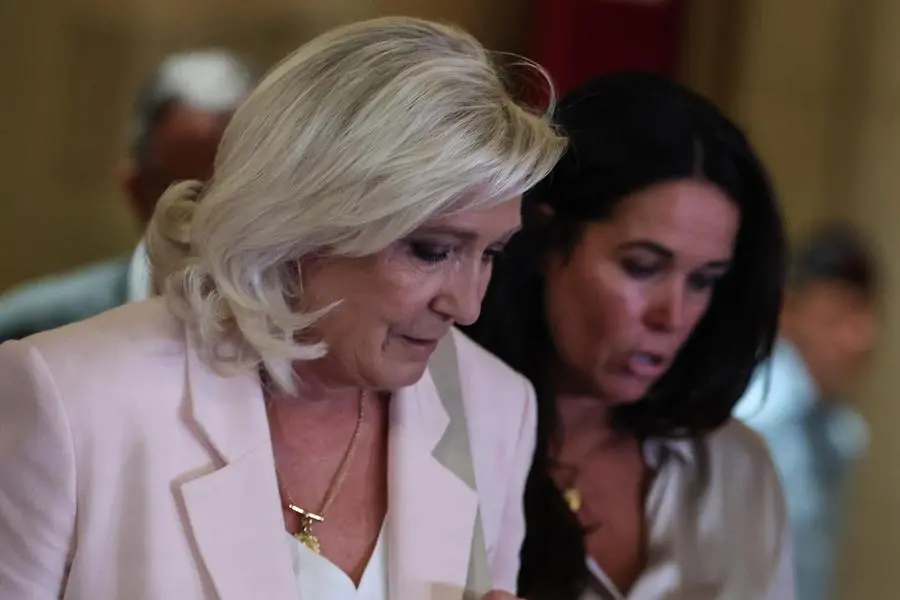
This, of course, is explosive. Mrs Le Pen had said that no, you don’t campaign like that. You don’t go and ask for the French vote by first having to ask a magistrate for permission to go to a rally, a market, a party meeting. You cannot aspire to the Elysée with your day marked by authorisations, exemptions and controls. Argument not without common sense. But now that the sentence has arrived, that common sense risks becoming a luxury.
At the headquarters of the Rassemblement National, a decision is being made in these hours whether to transform the condemnation into an obstacle or a banner. Modern politics lives on symbols rather than reasoning, and an electronic bracelet, in the hands of a party accustomed to presenting itself as a victim of the system, can become a medal. Marine Le Pen could present herself as the Joan of Arc monitored by the judiciary, the shackled patriot, the candidate who endures everything to save France. It’s a powerful setting. And dangerous.
On the other side there is Jordan Bardella, the lucid, young, television dolphin, already ready to inherit the crown without having to carry the weight of the dynasty. If Marine drops out, he becomes the natural candidate. If Marine stays, he has to clap. It is the law of political succession: everyone waits for the throne, but no one can seem too impatient. Also because in the Le Pen family, more than in normal parties, politics has never been just politics. It is surname, destiny, inheritance, resentment, family romance.
The real point, however, does not just concern the Rassemblement National. It’s about France. A healthy democracy should be able to say two things together: that anyone convicted of undue use of public money is not a martyr, and that it is up to the voters to choose who to govern themselves by. Instead, today’s France seems forced to choose between two caricatures: on the one hand the people against the judges, on the other the judges against the people. It is a false alternative. But it works very well, because it feeds everyone: the populists, the moralists, the talk shows, the professionals of indignation.
Marine Le Pen remains at the top of the polls, or at least strong enough to make the Fifth Republic tremble. This is the political fact that no sentence erases. Lepenism is no longer a parenthesis, it is no longer the bad thinking of the suburbs, it is no longer the old Front National of Jean-Marie, with its unpresentable nostalgias. It has become a possibility of government. And it is precisely for this reason that the sentence weighs more. Because it doesn’t strike a folkloristic extremist on the fringes of the system, but a woman who can really get to the ballot, perhaps at the Elysée.
So here we are: a large European nation, in the midst of its political crisis, is wondering whether a presidential candidate can campaign with a monitor on her ankle. It’s not a grotesque detail. It is the summary of an era. Politics promises authority, order, moral cleanliness; then he stumbles upon reimbursements, assistants, European funds, stamped papers. The parties invoke the people, but end up before the judges. The judges uphold the law, but they know they are entering a minefield.
Tonight Marine Le Pen will speak to the French. Perhaps he will say that he sacrifices himself, perhaps that he gives up, perhaps that he leaves the task of completing the march to Bardella. Whatever he says, the transition has already happened. The Republic of electronic bracelets has begun. And not because a judge dared too much. But because politics, for too long, has dared too little with itself.