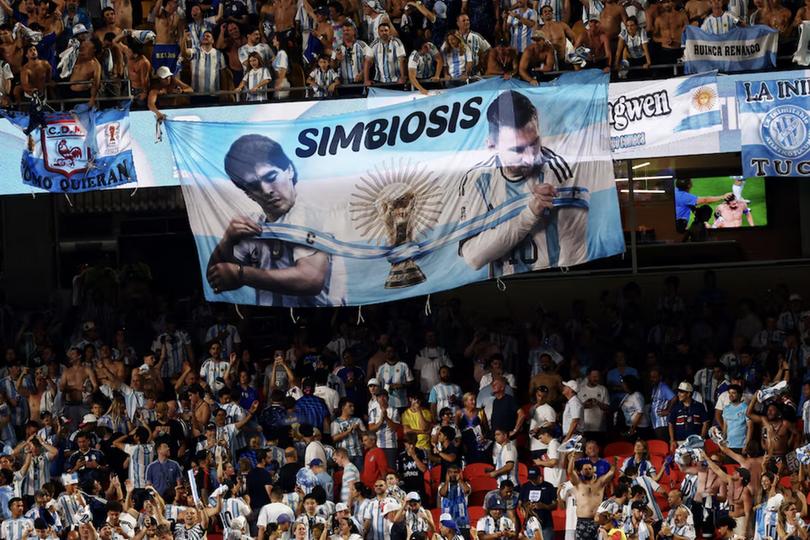
Tonight in Atlanta the roof of the stadium will close over two teams that are not just playing in a world championship semi-final. At 9pm, Italian time, when Kane and Messi they will shake hands in the center of the pitch, in the stands the blue-blue flags of Argentina and the three lions of England will wave together, and in the middle, invisible but heavy as a stone, there will be an archipelago of 12 thousand square kilometers that the English call it Falkland and the Argentinians Malvinas. It’s not a detail for reporters looking for colour: it’s the reason why this match, the second semi-final of the 2026 World Cup, has been defined for weeks as “the match” par excellence, the one that brings back to the field, in the form of a ball, a real war, fought forty-four years ago and never really concluded in consciences.
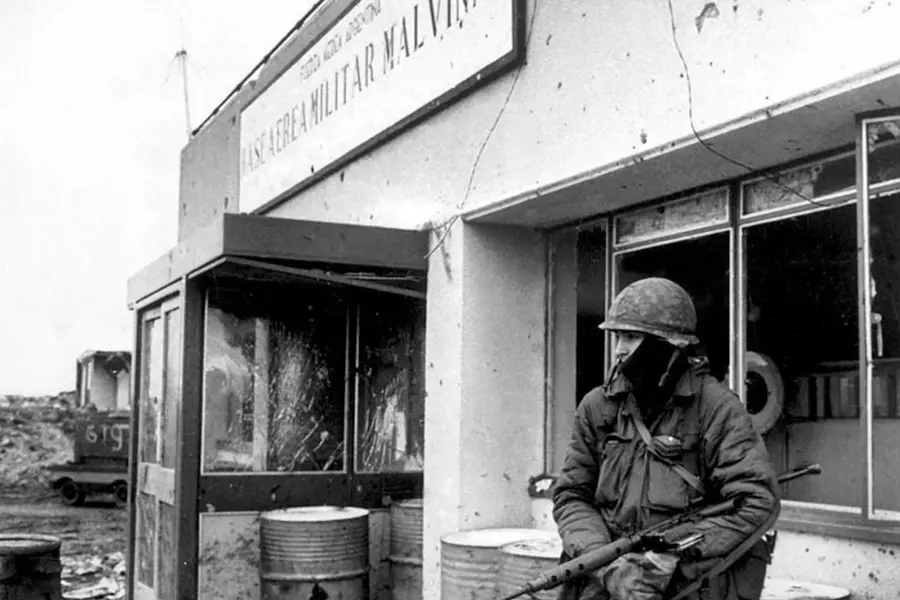
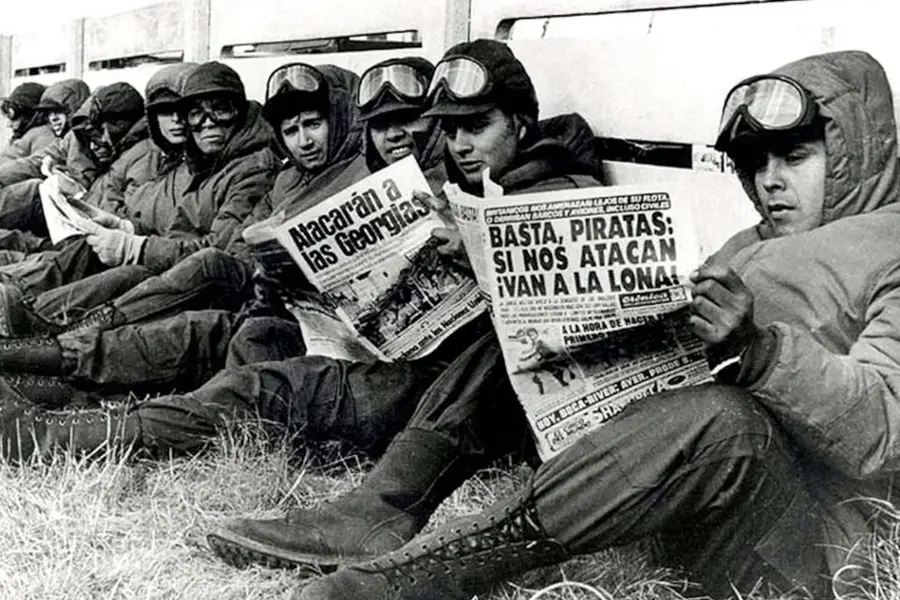
We need to start from there, from those windy and depopulated islands in the South Atlantic where just over 3,500 people live, almost all of British origin. On 2 April 1982 the Argentine army invaded them, starting a war that lasted 74 days and cost the lives of 650 Argentine and 255 British soldiers. It was the last act of a dispute that has its roots in the eighteenth century, when French, Spanish, British and Argentine settlements alternated on the islands, and which Argentina has claimed since the beginning of the nineteenth century on the basis of geographical proximity, just 500 kilometers from the South American coast, compared to the twelve thousand that separate the archipelago from the United Kingdomand of aSpanish colonial legacy never recognized by London. The British settled there permanently in 1765, in Port Egmont, and in 1833 took control of it with a military action that the Argentines have never stopped considering a usurpation.
What precipitated the crisis in 1982 was the military junta led by Leopoldo Galtieri: a dictatorial regime worn down by a devastating economic crisis and growing internal dissent, which chose the path of war to relaunch its consensus by focusing on nationalism. On the other side he found an opponent that no one in Buenos Aires had fully taken into account: Margaret Thatcher, also struggling with a declining consensus, was also ready to transform the crisis into an opportunity for political relaunch.
The historian Alessandro Barberowho dedicated one of his most popular stories to this conflict, defines it as a more unique than rare case: the only war fought from 1945 to today between two Western, capitalist countries, both allies of the United States. A cold war that for two months, in the South Atlantic, became a hot war, with the British aircraft carriers Hermes and Invincible setting sail from Portsmouth towards an archipelago that few in London would have been able to indicate on a map.
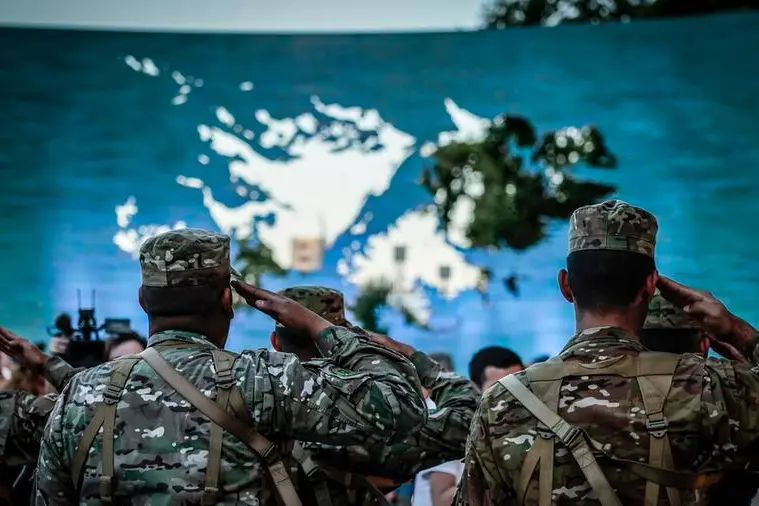
The United Kingdom won, clearly: on 14 June Argentina surrendered. But it was a victory that changed the history of both countries in opposite directions. In London he strengthened Thatcher, who won the elections the following year by a huge margin, consolidating the conservative season that would mark the decade. In Buenos Aires, on the contrary, the military defeat accelerated the collapse of the dictatorship and paved the way for the democratic transition of 1983. It is a paradox that historiography knows well: the same war that humiliated Argentina in the field freed it, indirectly, from its generals.
But it is what happened afterwards that explains why, today, it is not enough to say that it is just a football semi-final. In Argentina the wound of the Malvinas has never healed: it entered the 1994 Constitution, which defines the recovery of the islands as a “permanent and inalienable objective of the Argentine people”; it ended up on the 50 peso billwhich depicts the archipelago as the soil of the homeland; gave its name to hundreds of streets across the country; has its own museum in Buenos Aires, wanted by Cristina Kirchner, who during the years of her presidency made the Malvinas one of the most powerful symbols of Peronist nationalism, having herself photographed several times with the slogan «Las Malvinas are Argentineans». Every April 2, the anniversary of the invasion, Argentine schools sing patriotic songs. It is, as Il Post reported, citing an international analysis, one of the few things capable of uniting a deeply divided country, “like the national football team”.
Across the ocean, islanders responded as bluntly as possible: in 2013 a referendum asked them whether they wanted to remain a British Overseas Territory. 98.8 percent voted yes. For London, that figure closes any discussion: the self-determination of peoples, not geography, decides sovereignty.
It is within this framework, made up of never-elaborated mourning and national identities built even through defeat, that they will take the field tonight Tuchel and Scaloni.
It is not the first time that England and Argentina face each other, bringing with them History with a capital letter: in 1986, in Mexico, in the quarter-finals, it was Diego Maradona who wrote the most cited page of this rivalry, with the “Mano de Dios” and the “Goal of the Century” in the same match, played exactly four years after the end of the war.

Since then the previous World Cups have followed each other, the draw on penalties in 1998, the two English successes in 1962 and 2002, building an imagination around this challenge that goes far beyond the pitch. Even in these days the eve was not just tactical: In recent weeks, controversy has circulated over chants sung by Argentine fans on the Malvinaswhile the FBI has classified tonight’s match as a “high risk” event, strengthening security in Atlanta in view of the arrival of around thirty thousand fans for each of the two national teams.
It would be ungenerous to reduce all this to a propaganda pretext. There is, in reality, something more human and more ancient: the need, common to many peoples wounded by history, to find in sport a terrain where revenge is possiblewhere the wrong suffered can be righted for at least ninety minutes without shedding more blood. It is no coincidence that Scaloni and his players have several times, in these weeks of the World Cup, had to answer questions that had very little to do with football. And it is no coincidence that the Argentine press describes this semi-final as an opportunity to “win what weapons did not allow”, while the English press frames it, more simply, as another stage in their hunt for a trophy that has been missing since 1966.
Football remains, of course, with its autonomous logic: Messi and Julián Álvarez’s Argentina is chasing its third world final in four editionsa goal that only Brazil and Germany have achieved in the history of the tournament; Tuchel’s England, with Bellingham and Kane, are instead seeking access to a final act that has eluded the British national team since their home triumph almost sixty years ago. Whoever wins will face Spain on Sunday, who overwhelmed France 2-0 in the other semi-final. But this evening, the story of the match will hardly be able to remain confined to the tactical schemes. The Falklands-Malvinas are neither won nor lost on a football pitch: they remain there, isolated and contested, indifferent to the result. Yet for two nations that have built part of their identity around that war, tonight’s kick-off will tell, once again, much more than ninety minutes.
Where to watch England-Argentina
The semi-final is scheduled for 9pm (Italian time) at the Mercedes-Benz Stadium in Atlanta. The meeting will be visible free-to-air on Rai 1 and free streaming on RaiPlay, as well as on DAZN for subscribersalso live on the streaming service app. The Rai commentary will be entrusted to Alberto Rimedio and Daniele Adani. Whoever wins will face the Spain Sunday 19 Julyin the 2026 World Cup final.