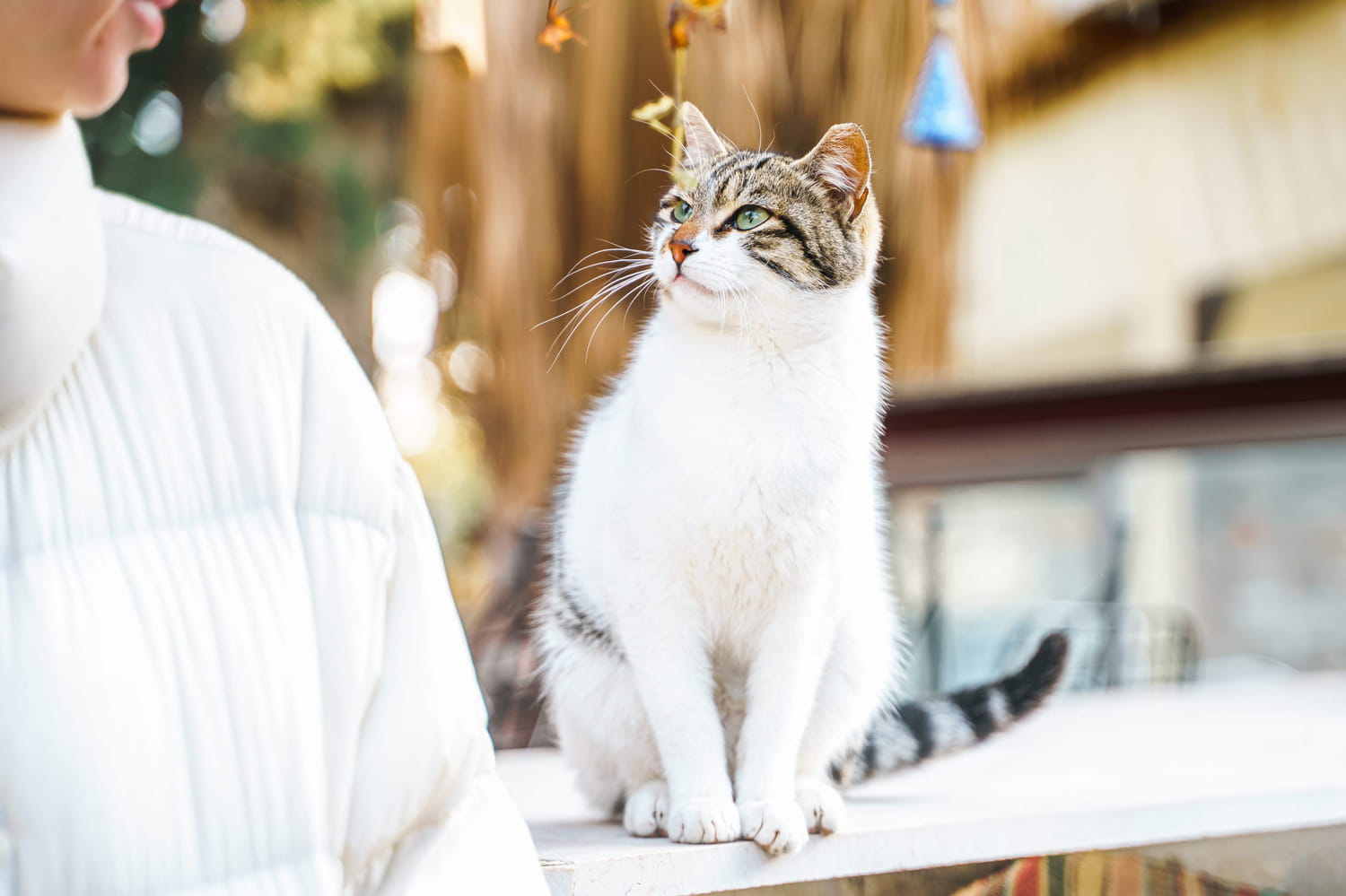
Like a human? Like a friend? Like a superior? The way cats really perceive us is likely to surprise more than one feline lover.
It’s the eternal debate between those who prefer dogs, and those who have more affinity with cats. The former prefer the loyalty and energy of doggies, while the latter more appreciate the independence and discretion of tomcats. Because if there is one thing that everyone agrees on, it is that the two behave in completely different ways. Especially with their master.
In the collective imagination, a belief often opposes the devotion of the dog to the supposed pride of the cat. “The dog thinks: they feed me, they protect me, they must be gods. The cat thinks: they feed me, they protect me, I must be a god”as summarized in the famous formula attributed to the writer Ira Lewis. While the two points of view seem consistent to animal lovers, the science doesn’t quite say the same thing. No, cats don’t consider us their slaves… but not their masters either.
For them, no hierarchy: we are their equals, literally. Indeed, according to the work carried out over 30 years by the British anthrozoologist John Bradshaw and relayed in his book Cat Sensedomestic cats see humans as their peers. In their eyes, we are cats… but bigger, hairless, and with strange behaviors. In short, deformed, stupid, and clumsy felines.
Unlike dogs, who have been selected and therefore evolved to recognize humans as their leaders, the alpha of the pack, cats have retained more of their wild nature and interact with us in exactly the same way as they do with their peers. This is why they rub against our legs, lick us to groom us, bring us their prey or “knead” with their paws. These behaviors and social protocols are exclusively reserved for members of the troop and family. This is how, according to John Bradshaw, cats see us as “big clumsy kittens”, even like their own mother.
And that’s probably also why they don’t listen to orders and seem to snub us: why the hell would they obey their equal? Concretely, if you thought you had successfully domesticated your cat, that’s not true. He is firmly convinced that he is living with a member of the family, with whom he must be particularly pedagogical, as he often seems to forget what being a feline really means.