Ulysses’ cunning lies not only in the deception linked to the Trojan Horse. In the Homeric poem, in the passage dedicated to Polyphemus, the general of Agamemnon’s armies declares his name is Nobody. In this way, when Polyphemus asks the other giants for help, they are unable to intervene. While he is fleeing, full of ubris (Hellenic arrogance), the hero however declares himself to be Ulysses. Polyphemus at that point relies on his father Poseidon, who punishes the Greeks by causing them to get lost in the waters. This sequence in Odyssey by Christopher Nolan, however, you won’t find it.

The reason is that here Ulysses is torn apart by guilt. He is responsible for the annihilation of not only Troy, but everything it stood for. He saw the blood, the brutality. He doesn’t want to go home because he doesn’t feel worthy. The death he generated lives inside him. It is somehow connected to the torments of Cillian Murphy in Oppenheimerand also approaches the Dark Knight: he is the champion that people need, imperfect and fragile, gripped by remorse. Historical verisimilitude matters little, what dominates are the different nuances that characterize the human being. While the battle rages, feelings are also burning. There is no longer time for the epic (here in the background), the focus is on the soul of man. Odyssey is a powerful and unexpected existential parable. Behind the grandeur of the staging lies an intimate and penitential path, which approaches spirituality and a sense of the sacred.
Adventure turns into suffering and memory becomes an internal demon. After having explored the territories of dreams in his previous works (Inception), deep space (Interstellar) and History (Dunkirk), this time Nolan faces the greatest challenge: finding the spark of cinema within an ancient tale. It is no coincidence that oral tradition triumphs. It brings to the screen a story populated by profound solitude and characters lost in their past.
Through the events of the myth, it pushes us to reflect on the collapse of a civilization. And perhaps the reference is precisely to the era we live in.
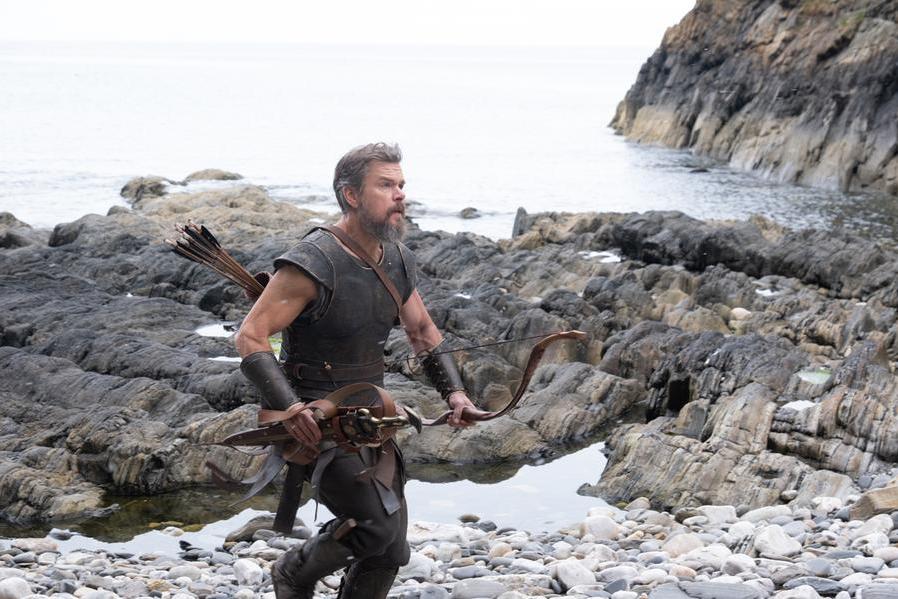
The core of this rereading lies in the very conception of the protagonist, played by Matt Damon. Nolan’s Odysseus is far from the classic and infallible hero to which literature has accustomed us. He is, on the contrary, a veteran deeply marked by wounds and remorse for the atrocities committed. By the director’s own admission, one of the sources of inspiration for portraying this figure so divided between earthly weaknesses and ideal aspirations was Scorsese’s The Last Temptation of Christ. Like Jesus, the hero of Ithaca is also crushed by a destiny that he feels is beyond his strength. This is why he is torn apart by doubt, torn between reality and the otherworldly dimension.
The return journey (the nostos) is a Via Crucis of the spirit. Wandering around the Mediterranean Sea loses any connotation of adventure as an end in itself to become a journey of spiritual purification. Each stage, each monster faced and each lost companion represent a descent into the underworld of one’s conscience, a painful confrontation with the limits of human nature.

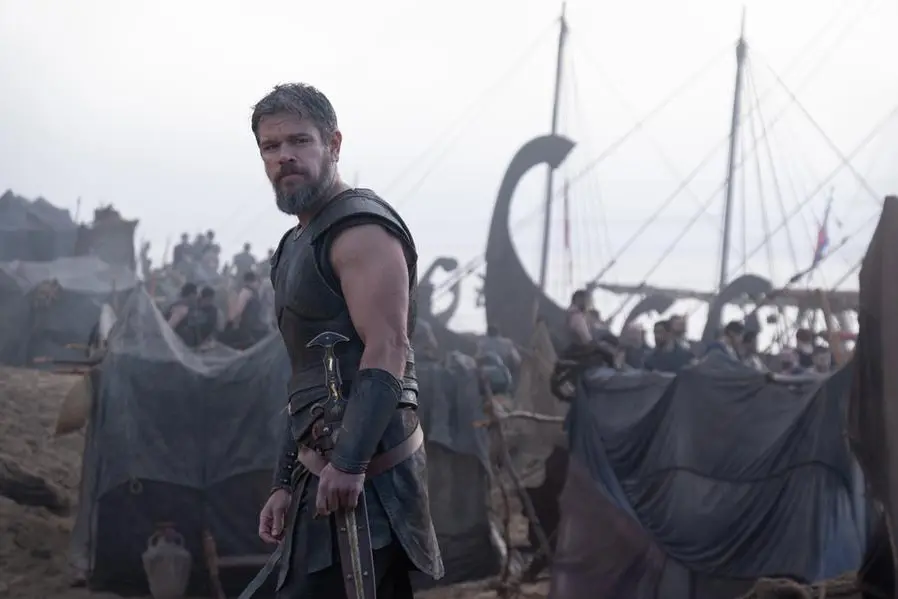
In Odyssey Nolan chooses to focus on free will and the search for wisdom. Ulysses is not saved thanks to superhuman strength, but through personal sacrifice and the recognition of his own fragility. It is the chronicle of an individual defeated by events who, stripped of all pride, learns to accept his own limitations in order to seek a profound reconciliation with himself and with his loved ones.
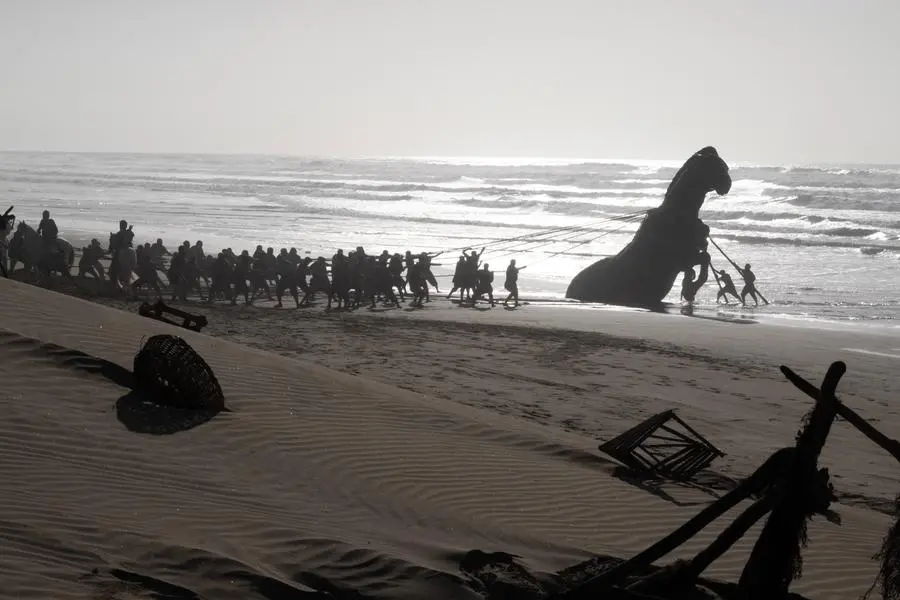
In the film the famous Trojan Horse is not a digital drawing made on the computer, but a huge, real, heavy wooden object, built by hand. It thus becomes the symbol of Nolan’s cinema itself: an extraordinary work of genius that can generate wonder, but also destruction, like Oppenheimer’s atomic bomb.
There is no room for the virtual tricks of modern computers, even Polyphemus is a six-meter animatronic. Nolan prefers to shoot his scenes live, using film. With a stellar cast (but then again, who would oppose his call?): Matt Damon, Tom Holland, Zendaya, Robert Pattinson, Anne Hathaway and Charlize Theron, just to name a few.
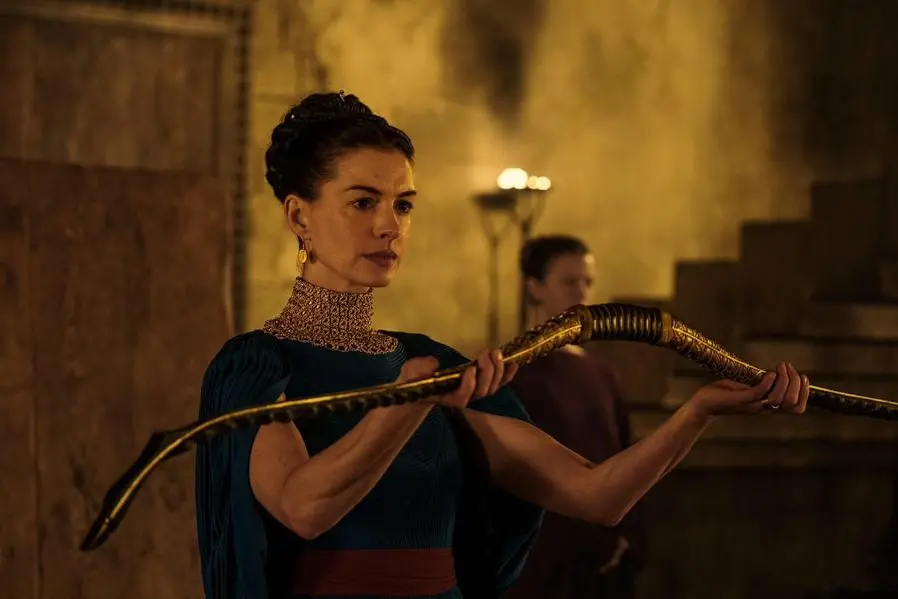
In an era dominated by flat screens and virtual worlds where everything seems fake, Odyssey it is a shocking blockbuster, dominated by the fury of the elements and the mysteries of Creation. In the end Nolan reveals himself to be similar to his Odysseus: a man of multifaceted intelligence who uses matter to tell us about the soul.