




Superman has been defeated. Not by one of the numerous villains he has faced over the course of these 88 years since his first publication on Action Comicsbut from another comic. In fact, for the first time, Man of Steel is no longer the best-selling comic in history, despite the 600 million copies sold since 1938. Displacing Clark Kent from the top step of the sales podium is One Piece, the flagship of Japanese manga in the world. The eye-opening detail is how long it took the two comics to reach 600 million copies sold. Superman was first published in 1938, the first chapter of One Piece is dated 1997. In less than thirty years the manga of Eiichiro Oda recovered 60 years of Superman publications.
Then perhaps it is worth analyzing the reason for this success and how it became a global franchise. On the other hand, a few days ago, from Sanremo, Tommaso Paradiso defined it as “the greatest work that has ever been conceived by a human being”.
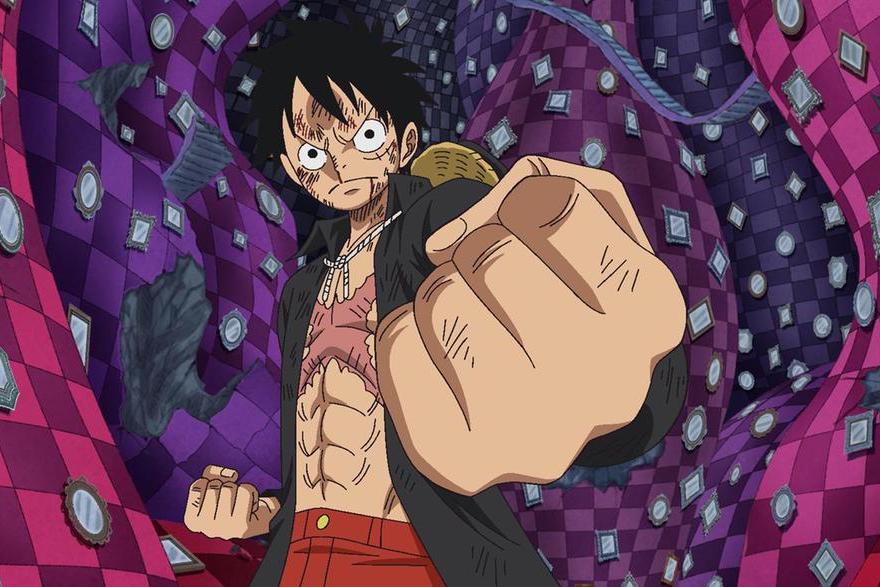
So why have One Piece, and manga in general, now become the most widespread and read comics in the world? Anyone who thinks they are just stories for kids, maybe even a little nerdy, is sadly mistaken. The narrative world created by the Japanese mangaka is extremely wide and varied, with many characters whose stories are intertwined in complex subplots. The plot seems simple and linear: the protagonist, Monkey D. Luffy (those nostalgic for afternoons spent on Italia 1 watching the anime will remember it as “Rubber Straw Hat”) he dreams of becoming the king of all pirates, and to be so he must find the One Piece. So he decides to form a crew and go on a treasure hunt. For now everything is simple, almost banal. But as soon as we get to the first sagas of the work we understand that it is not a story of pirates looking for treasure, it is the chronicle of a world looking for freedom.
Oda’s genius lies precisely in the contrast. The protagonist is a rubber boy who always laughs, but the world in which he moves is ruthless. Unlike American superheroes, who are often dark and serious, One Piece uses a colorful and absurd aesthetic to tell real human tragedies. If we scratch the surface of the “special powers”, we discover that the work is a merciless analysis of society.
Every island the crew visits is a metaphor for a modern evil. Topics such as dictatorships, racism, slavery and oppression of the weakest are commonplace in the chapters. The greatest evil is represented by a caste of nobles that rules the world. This caste is not made up of scary monsters, but called human beings Draghi Celethis. They are the descendants of those who founded the world, and for this reason, they consider themselves gods. They walk around wearing spacesuits and glass bubbles on their heads because they consider the air breathed by civilians to be too impure for them. In an age where the gap between rich and poor is at an all-time high, Oda’s satire is cutting. These nobles can enslave anyone, kill on a whim, and go unpunished. Seeing the protagonist, Luffy, punch one of these untouchables in the face is not just an action scene: it is the moment in which millions of readers (myself included) feel a sense of revenge against every form of arrogance of power.
But the power of the World Government is not based only on force, but on censorship. In the world of One Piece, there are a hundred years of history that have literally been erased from the books. Studying them is a crime punishable by death. Here Oda talks to today’s kids about the manipulation of information and post-truth. It teaches us that freedom is not just being able to travel, but having the right to know one’s roots and the truth, even when this is inconvenient for those in charge. An entire island of scholars (Ohara) is exterminated just because they are “guilty” of wanting to read the past: if this seems like a children’s comic, you are probably not reading carefully.
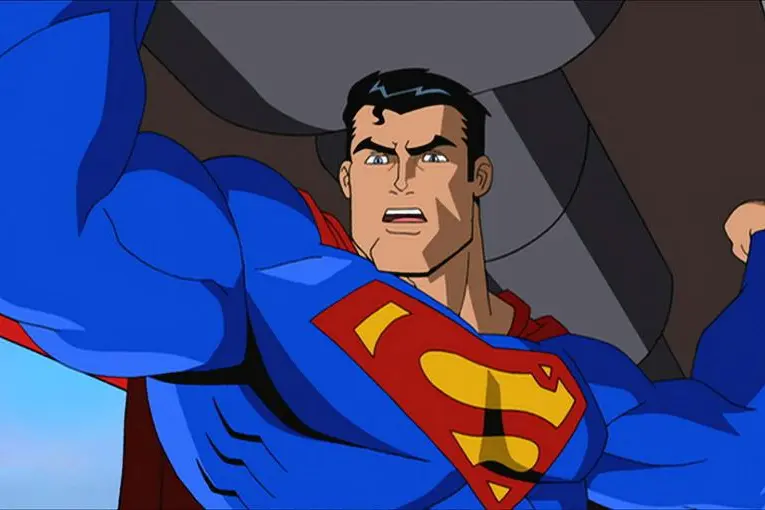
To understand why the world is preferring a rubber pirate to the Man of Steel, we need to go back to one of the most lucid reflections ever made on comics, paradoxically born from cinema. In Kill Bill: Vol. 2, the character Bill explains that Superman is unique: unlike Batman or Spider-Man, he does not “become” a superhero. He is Superman.
«When Superman wakes up in the morning, he’s Superman. His costume is the blue jumpsuit with the S. But the clothes he wears as Clark Kent… that’s his costume. It’s the costume Superman wears to blend in with us. Clark Kent is Superman’s image of us: weak, insecure, fragile.” Here lies the breaking point. Superman is a god who looks down on us and who, no matter how good he wants us, sees us as creatures to be protected. Luffy is the complete opposite.
Luffy was not born Pirate King, nor is he an invulnerable alien. He’s a little boy who ate a terrible tasting fruit and who had to struggle, lose battles and cry to learn how to use a power that at first seemed even ridiculous. If Clark Kent is Superman’s critique of humanity, Luffy is the exaltation of humanity. He doesn’t hide behind a civilian identity to blend in with us; he is always the same, whether he is eating a piece of meat or overthrowing a totalitarian regime. He doesn’t look at us from above: he is in the dust with us, ready to throw a punch at anyone who tries to take away our freedom.