





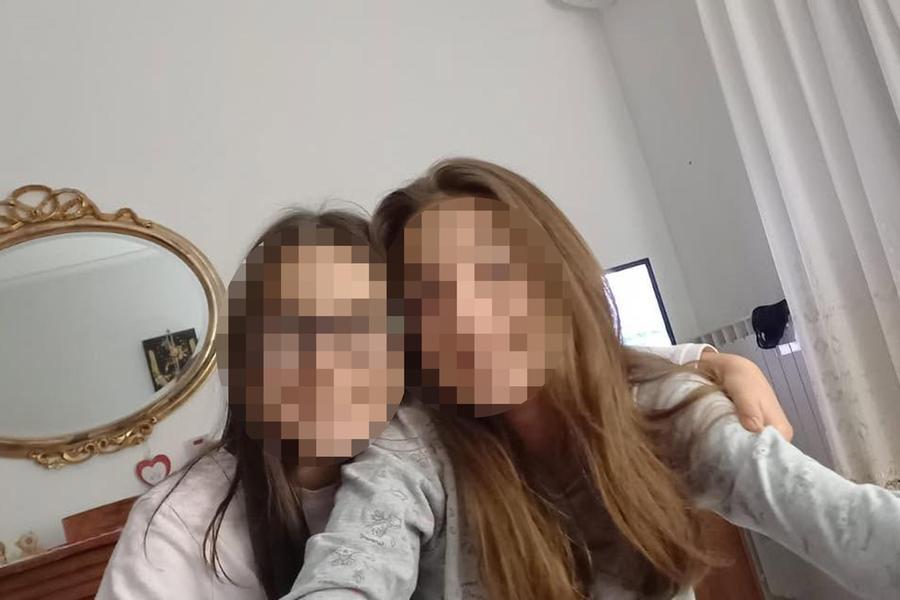
Can a parent’s love for their children be a sick love? The questions are inevitable after the Sulmona prosecutor, Luciano D’Angelo he stated this during the press conference in which he explained how it was possible to find the two little sisters who had been missing for several days and who kept an entire nation in suspense. The prosecutor specified that “This is a story that has nothing to do with crime, but only with a sick parental love.”
The “disease” in this story turned into an affair with criminal implications in which the fate of the two minors was uncertain for days because of his mother’s wicked plan who took the two daughters away from the community in which they had been welcomed after the suspension of parental rights of both parents.
In action, we see a parent who decides the fate of his daughters as if they were dolls whose fate is not negotiable with anyone, not even with the other parent, i.e. the father who for days tried in every way to understand what had happened to his two daughters.
Facts like these make it clear to us that social services do not “take away” children from their families, but almost always do they protect them from families who cannot give them the love and care they need. In this case, in a purely emotional reading of the facts, one might think that a mother has the right to take back two daughters that she feels she wants to have next to her. But it is not by kidnapping and hiding them that this mother can protect her and their right to a family relationship. Implicitly, with her plan of action, this mother told the world why her daughters were in a place where they were being protected by the very person who should have loved them most. The fact is that parental competence does not focus on what the parent wants, but on what a child needs. Too often parents think they have all the decision-making rights over their children’s growth path. But this isn’t always the case. Because the parent’s right can never infringe the child’s right. This matter becomes particularly complex in events that center on marital separation, the event whereby two people decide to no longer share their love affair, but at the same time are called – by love and by law – to keep their parental alliance alive and active. Unfortunately, in separations, alliances often fall apart, even those that should concern the care and education of children, two dimensions that often turn into a battlefield in which children become prisoners and hostages, and then become designated victims.
If we try to enter the minds and hearts of these two minors transferred from a community to an apartment where they lived segregated in a room without the possibility of going out and interacting with anyone, we can only imagine the sense of bewilderment, disorientation and vulnerabilitywhat they must have experienced.
This story, sad and terrible at the same time, must serve to remind all of us adults to a fundamental principle: our children are not our property. Our task is to prepare them and deliver them to life, becoming guarantors and guardians of their growth path. We must do it with love, with competence, with the attention they deserve and we must do it, at times, even against ourselves. That is, the good of our children does not always coincide with the good that we have in mind for them and about them. Parents sometimes forget this and in these situations it is sacrosanct that the well-being of children is protected and guaranteed by a child protection system which is often criticized and whose task is often difficult and difficult, precisely because it must be carried out in fragile, difficult contexts lacking clarity and awareness with respect to what is fundamental to guarantee healthy growth for a minor.