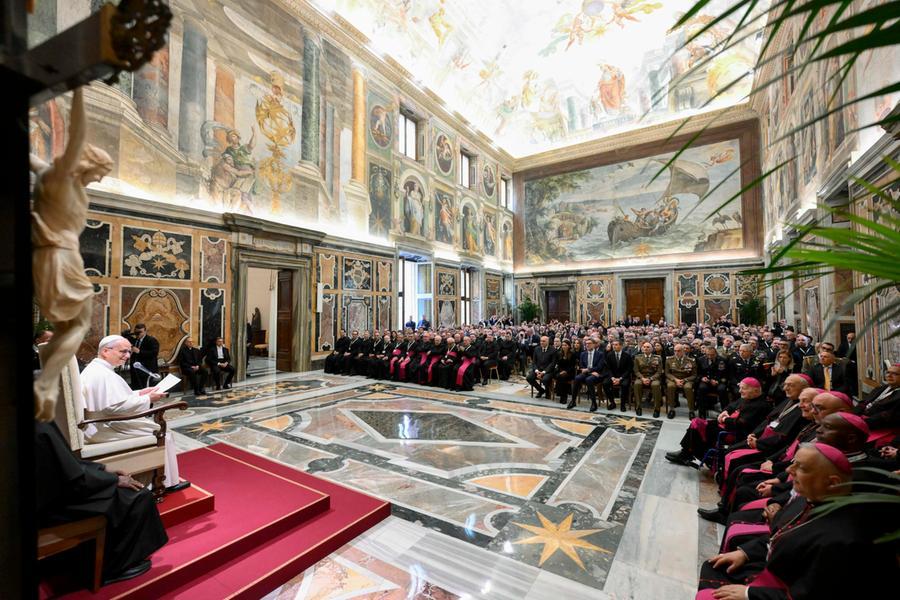




The Church is called to be “at the service of dialogue between peoples”, also through the work of military chaplains. Pope Leo XIV remembered this when he met the priests who spiritually accompany the men and women of the armed forces in the Vatican.
Their service, explained the Pontiff, «often takes place in silence, in places of peace and in places of conflictin military grounds and in operational contexts, in chapels and field tents”. It is precisely in these contexts that the pastoral care of the Church is manifested: “through the testimony of life, the announcement of the Gospel, the celebration of the Eucharist and the Sacraments, patient listening and spiritual accompaniment”.
For the Pope, the chaplain who works among the military also carries out a precious function on a human and social level: “he is at the service of dialogue between peoples, cultures and religions, bearing witness to a Church that becomes an instrument of unity”. His spiritual action thus contributes “to the promotion of the common good and social peace”, the fruit – he recalled – of patient daily work made up of training, justice and charity.
In his speech Leo XIV then reflected on the identity of the Christian soldier. “The mission of the Christian soldier consists in defending the weak, protecting peaceful coexistence, intervening in disasters, operating in international missions to safeguard peace and restore order,” he said.
For this reason, the Pontiff added, “all this cannot be reduced to a mere profession: it is a vocation, a response to a call that challenges conscience”. The soldier’s identity, he explained, is “forged by generosity, spirit of service, high aspirations and deep feelings”, but these values need a spiritual foundation.
Hence the invitation to be guided by the Gospel also in military life: “It is necessary to inspire the codes, norms and missions of military life with the lifeblood of the Gospel so that, in the service of security and peace, the common good of peoples is always in first place”.
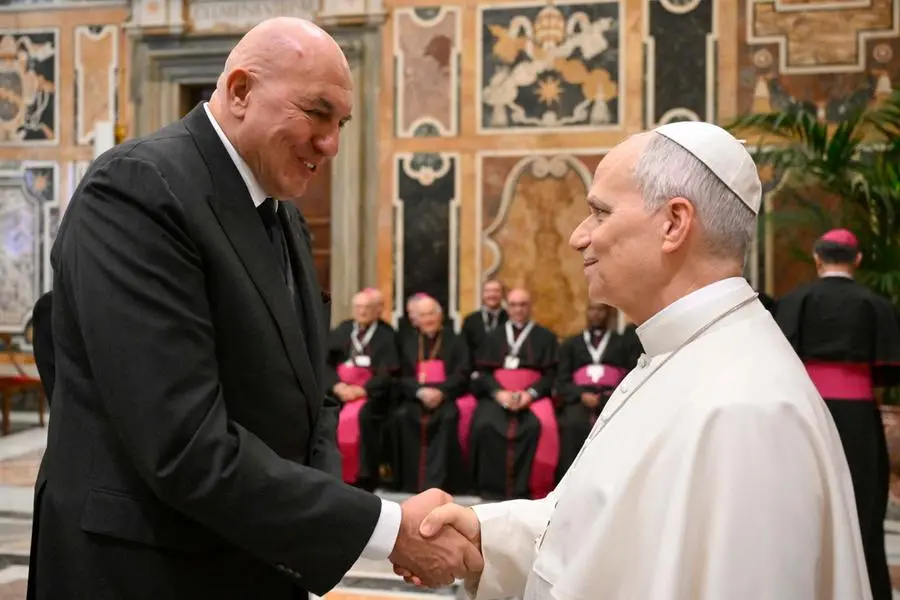
Finally, the Pope called attention to a fragility of contemporary society. “We live in a society that risks losing the sense of memory,” he observed. If on the one hand today there is a great ability to transmit information, on the other the difficulty in internalizing it is growing: «Memory is often “externalized” and available, but not always appropriated and activated».
For the Church, however, memory has a deeper meaning: «not the accumulation of data, but a constant appeal to responsibility; not nostalgia, but a root that generates prophecy.” A heritage to be safeguarded also for those who are called to serve the peace and security of communities.