




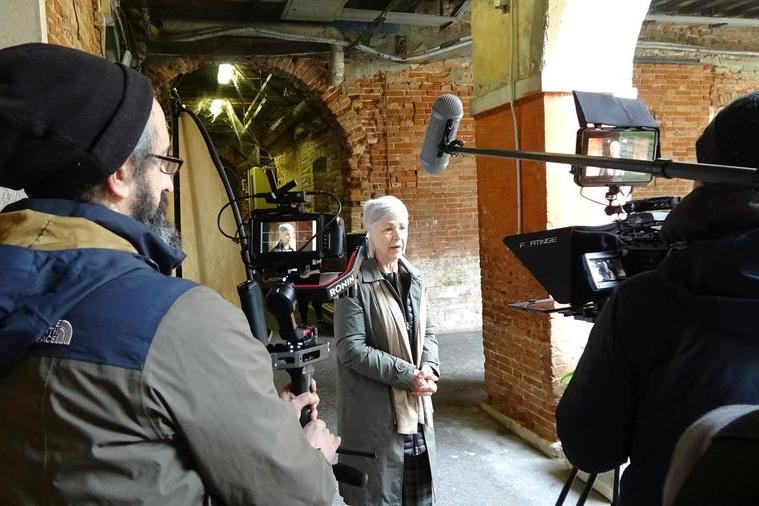
«A centrifuge with a soul». This is how prison tells Rosa Galantino, for having entered freely only to shoot the documentary, The Butterflies of Giudeccawhich will be screened on May 5th in Rome at the Nuovo Cinema Aquila, at 6.30pm on the occasion of the Carcere e futuro event, organized by Women in Film, Television & Media Italia with Pigneto film Festival.
«You understand upon entering that the imagination is not enough: only from within can you understand what it means to live in a place where freedom is lacking, where space is narrowed and time is dilated. We too felt a bit of claustrophobia, in the fact of not being able to speak directly to the inmates, of having to act through the prison police officers, who inside the prison are forced to call each other colleague and have no name, in not being able to take a step without asking permission”.
«We – the plural is not majestatis but the result of the directing collaboration with Luigi Ceccarelli -, tried to tell without dramatizing and without sugarcoating, a reality like that of the Giudecca which is particular and in its own way is not separated from the city. We discovered it while filming another documentary on city gardens. In Venice, they told us: “You can’t miss seeing the Giudecca vegetable garden: every week people from the city come in front of it to buy what is grown “inside”. Entering the garden we discovered a world: the tailoring, the laundry, we said to ourselves we have to tell about it, also because outside there is a distorted imagination: we think of the uniforms, of the prison stereotypes imported from American films. It’s very different. We perceive that it is an unstable environment, always in precarious conditions. balance: all it takes is a rejected request, a recent fight, a passing shadow for the mood to suddenly change.”
After all, prison is always a story of compressed and forced coexistence: «At the beginning they study you, they try to understand what you want, who you are, there is distrust, you understand that they have accepted you when the barrier of physical contact breaks down when they accept and return a hug. We tried to enter with great discretion. When we went to screen the finished documentary at the Giudecca, some seemed involved, others impenetrable. One of the latest arrivals, who wasn’t there yet when we filmed, approached me with all the desperation she had at that moment and said: “Do you know that they gave me 27 years?”. I knew nothing about them, I hadn’t asked any questions. He didn’t know me. He repeated to me: “You realize: 27 years! I’m going crazy, I’m going crazy.” I didn’t know what to do, I took her hands and said: “But don’t you want to stay and watch the film for a while? Maybe you’ll find some things in it that can help you.” She lowered her head and then sat down in one of the last rows, but it wasn’t until the end.”
Antonella, who has finished serving her sentence, will be present at the screening on May 5 in Rome: «I am very happy that she is there, while I feel great disturbance at the thought that in February Rosaria took her own life, who in the documentary is seen in the Holy See Pavilion open to visitors in the prison, on the occasion of the Biennialwith the inmates who acted as guides to the exhibition: With my eyes».

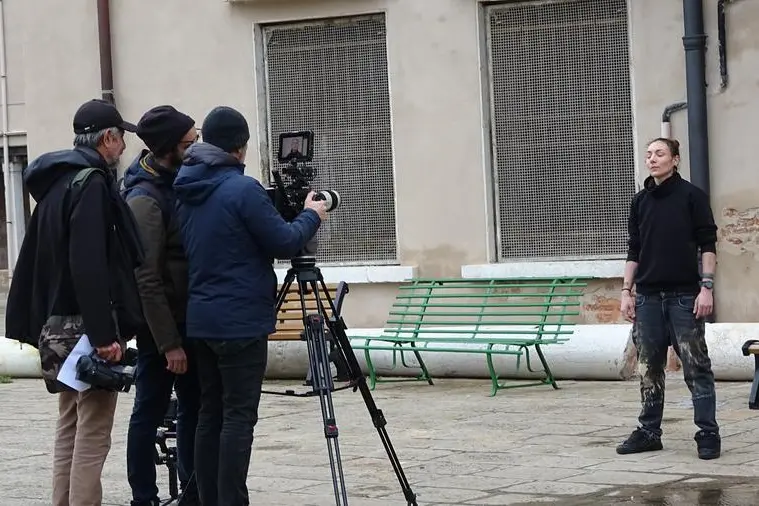
The narrative voice of the documentary is that of Ottavia Piccolowho, Venetian by adoption, tied to the city, never lacked civic commitment in her theatre: «I knew a little about the stories», she says today, «the directors had told me a little about who the people who in the prison environment were called, with an expression that seems terrible to me, were the “restricted”. But I saw little while we were filming, in the end I had a perspective similar to that of the spectator: one thing that I find right is that we don’t know the crime for which people are in prison.”
Afterwards, the actress says: «I looked into the workplace: the laundry, the tailor’s shop, and I can say that I saw people closed in on themselves, even the apparently more self-confident ones actually revealed little of their true feelings. It is an environment that I approach with great respect. When Pope Francis visited in 2024, I had visited the Biennale pavilion where the inmates were guides, and there I felt infinite tenderness, because you saw these people in a role that they would never have thought they could fill. The curators were very good at instilling confidence in them. Prison interrogates you even when you are free. They are the moments when you think: “But these people would be here if their life had started from a different point, if they had had the possibility to choose. And then you say to yourself: “What about me? But what do I know about my life, what could happen to me, what accident could happen to me that could make me end up in a place like this?” I asked myself, I wondered a lot about myself afterwards. And it made me think of the speech by Pope Francis who said to the prisoners: “Let’s not forget that we all have mistakes to be forgiven for and wounds to heal.” This is why I think it is important to continue to spread this documentary.”
The last scene is emblematic, we understand that when we leave the real danger is that outside there is emptiness to welcome us, not an alternative that only work and perhaps a knowledge of the hands can create to start again. Those who have a network are saved, the others who knows.