





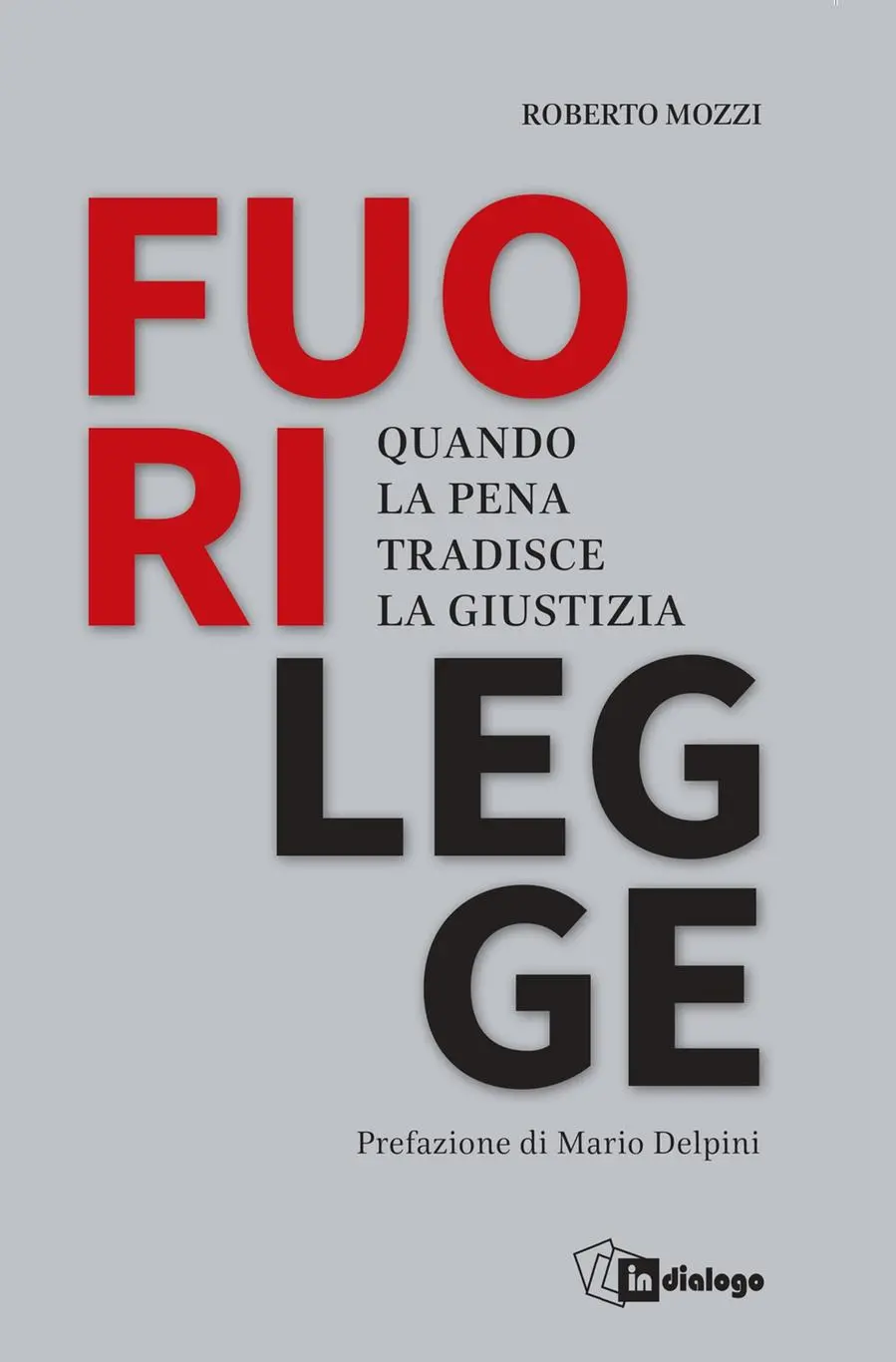
A punch in the stomach, or rather in the conscience. The volume of Roberto Mozzi, Outlawed. When punishment betrays justice (In Dialogue) puts the reader face to face with a reality that we often pretend not to see or towards which we feel fear, if not indifference: that of systematic violation of the dignity and human rights of male and female prisoners imprisoned in Italian penitentiaries.
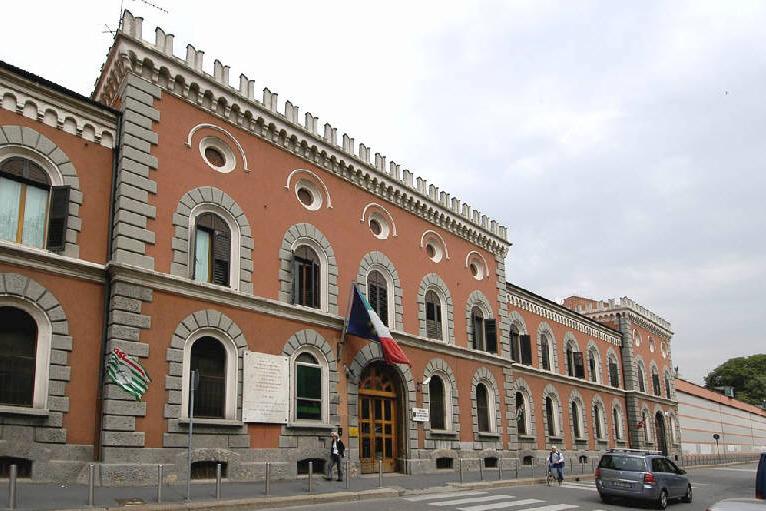
A situation far from that constitutional criterion of re-education with a view to social reintegration, which should be the basis for the deprivation of liberty of those who have committed one or more crimes. «It may seem like a book that denounces failures and contradictions between the constitutional dictate, the regulations and daily practice. But in reality it is the story of a failure», observes the Ambrosian archbishop in the preface Mario Delpiniwho points out: «The San Vittore prison is in the center of Milan. It can therefore be said that in the center of Milan there is an immense, unbearable, incomprehensible dump of pain.” The contribution of Valeria Verdolinipresident of the Lombard branch of the Antigone association, in the afterword: prison «does not only collect society’s waste, but produces them, organizes them and finally returns them».

«I wrote because those in prison have no voice. It is not a book of denunciation, because the facts reported are known to almost all the operators, volunteers and managers of the institute, but, like everything related to prison, they often remain confined behind the walls”, underlines the 53-year-old author, a former priest, for over a decade chaplain in the Milanese prison of San Vittore “Francesco Di Cataldo”, from March 2014 to August 2024. The proceeds from the sale of the book will be allocated to organizations that welcome ex-prisoners or people who find themselves in an alternative situation: the social cooperative La Valle di Ezechiele, the third sector organization Kayros and the Arché Foundation which accompanies vulnerable families towards autonomy.

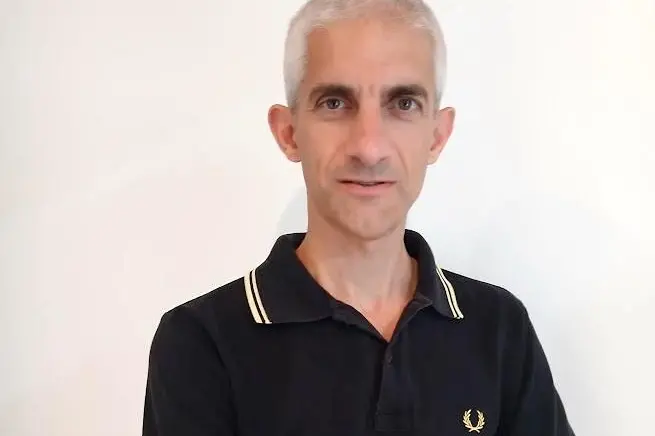
What have you learned from your experience as a chaplain? What did he reveal to you, compared to what you thought before entering prison?
«Initially I approached it with occasional experiences together with the young people of the parish. I have learned to never judge: prisoners have almost always received some form of harm before becoming prisoners, even if this does not take away personal responsibility. Furthermore, I acquired a different social perspective: in prison there is a part of society that I did not know, if not by hearsay, submerged spaces in which people live on the margins; some end up in prison and then return again to those margins from which they came. A situation that questions those who were born and lived in a different context. Third aspect: the concrete value of the Constitution, which we take for granted; when it is missing, you realize how important it is. In prison I saw constitutional values disappear in daily practices, in experiences and actions, sometimes even in administrative acts. Mainly, the rights to health, to work, to re-education and not to punishment.”
What is your relationship with prison now? Are you a volunteer or are you involved in other ways?
«At this moment my commitment is to give a voice to those who live in prison, make use of my experiences, inform and make the outside understand what is happening inside, of which the concrete perception of degradation is missing: the cultural and political prejudice on this issue is still strong. I am in epistolary contact with some prisoners, I speak to various prison workers, I meet ex-prisoners who come out and ask to see me. I would also like to help the Church to read this pastoral area with an increasingly evangelical gaze: close to the prisoners, it is numerically among the non-state institutions most present in prison. However – in addition to the spiritual closeness, which is the specific feature that distinguishes it, and the welfare aspect – there is a part that it could implement: the denunciation of violated rights, the defense of trampled people and the promotion of the constitutional rights that distinguish the social doctrine of the Church, in which the dignity of the person comes first. Generally speaking, I still see a lot of shyness and fear on the part of priests, religious, lay people and associations in this regard, perhaps due to the fear of losing the right to be in prison. In the Gospel, Jesus teaches us to be on the side of the least and to share their suffering, never to remain silent.”
In your opinion, what are the prejudices regarding prisoners, also fueled by media pillorying?
«Media trials do not help the people concerned: neither the victims of crimes, nor the perpetrators, nor the judges. They have the consequences of polarizing public opinion, projecting one’s own idea of evil onto these scapegoats who are not in reality the people described by the media hype. It is not correct information that accumulates, but confusing and contradictory rumors. Often the cliché is that there are criminals in prison, but it does not tell the truth about the inmate population: criminals are those who have oriented their whole life towards evil towards others, a small minority of those in cells. Where there are above all those who have violated the law coming from marginal areas of life; their greatest desire is to try to give meaning to a life full of pain received and committed, from which real questions arise. Another cliché: to have security you need severe penalties. An assumption denied by facts, statistics and studies regarding penitentiary law and its application. If failure to respect the law occurs for social and not moral causes, it is obvious that punishment does not remove them, but distances those who are marginal even further from respecting the laws. Public safety is achieved if the prisoner is treated, not if he is punished.”
You speak of systematic violation of human rights in prison.
«The most visible violation is overcrowding: at the end of April it reached 140% nationwide, in San Vittore it reached 210%. It doesn’t just mean little space, but compression of the services available: health care, psychological assistance, educational attention (already scarce due to the small number of educators), right to telephone, free time, work, with an associated amount of exponential negativity. The compressed space corresponds to the dilated time: from 2022 those in medium security regime spend 20 hours a day in cells, if all goes well. The most serious violation? The goal of re-education is enjoyed by only a fraction of prisoners and the punitive treatment suffered by detained people with mental illnesses. The cruelest violation? The degrading treatment suffered by people at risk of suicide, who end up in high-risk “smooth” cells, the dirtiest places I have seen.”
Do you think that the necessary training for those who work in penitentiaries is lacking?
«Individual volunteers and chaplains generally lack training with basic legal notions to work in the penal field: good will is not enough to understand what happens to prisoners in their legal case, you need to know the functioning of the prison well and know when the regulations are violated. Furthermore, there is a lack of specific training on the human rights of detained people, a delicate and difficult matter. The Penitentiary Police are asked to have expertise that they cannot have with seriously psychiatric patients, as many as 12% of the inmate population which in San Vittore is close to 40%: the prison is not equipped to manage them. We would need nurses, educators, cultural mediators, psychiatrists and specialized personnel, as has been done for drug addicts. Instead, the right to mental health vanishes.”