





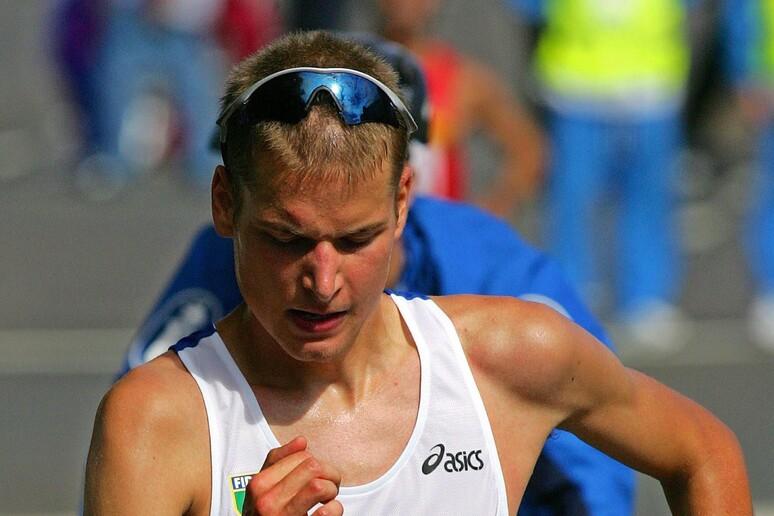
There is a scene that is worth more than any ranking. Alex Schwazer, forty-one years old carried on his shoulders as if carrying a heavy backpack, enters the race in the lead. Not in a queue, not with the caution of someone who has yet to understand if their legs are responding. In the lead, together with the best, with that wide and powerful gait that those who remember Italian sport know well. It’s March 8th, Alessandria, Italian Half Marathon Walking Championships. There are over two hundred and fifty athletes on the track, but everyone’s eyes, the public, the judges, his colleagues competing, are on him. As always, after all. As if in spite of himself.
For fourteen kilometers, Schwazer keeps pace with Riccardo Orsoni and Gianluca Picchiottino, the two who will ultimately compete for the title. He keeps them, follows them, at times pressures them. There is a moment, around the fifteenth kilometre, in which he even decides to accelerate, to raise the pace in an attempt to break away from them. It’s an ancient gesture, of a champion: champions, someone said, only think about winning. The penalty comes almost immediately after the third warning from the judges for ‘suspension’, i.e. for a technical irregularity in the marching gesture. Three minutes still, while the others go. Three minutes which in the competitive sense of the word are an eternity. Schwazer discounts them, sets off again, travels another kilometre. Then it stops.
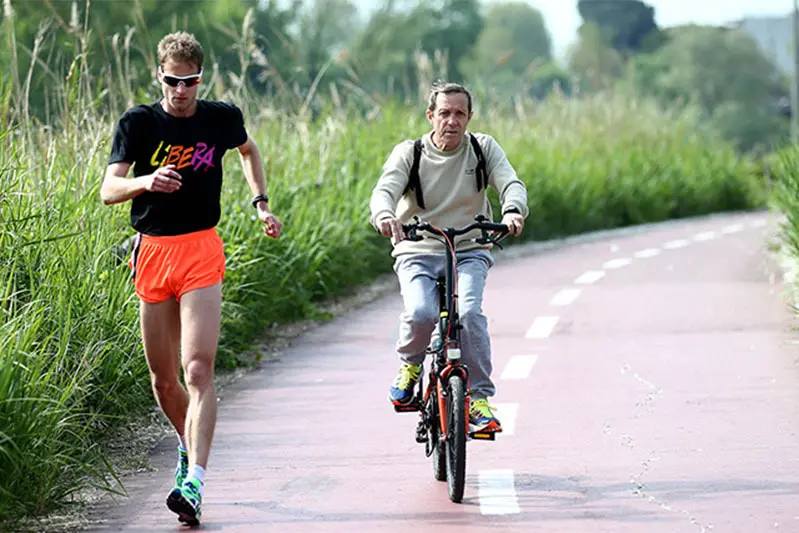
He doesn’t say anything at the end of the race. To those who ask him if he will continue he responds with “I don’t know” which is perhaps the most honest thing that can be said after such a day. Instead, Sandro Donati speaks, the coach, the man who remained by his side when almost everyone had left: “He came to win, but it’s not enough to be strong. You have to respect the technical standards. He was a bit over the top in his walking. He hasn’t competed at a high level for ten years.” And then, with that lucid and affectionate summary of those who know their athlete well: “Champions are like that, they only think about winning.”
It is worth stopping on this last sentence. Champions only think about winning. Schwazer, at forty-one years old, after an eight-year disqualification, after everything that happened to him, went to Alessandria with only one thing in mind: staying in front. Do not participate. Don’t survive the distance. WIN. There is something moving and Brescian-esque epic in this, something that Gianni Brera would have immediately recognized as the authentic symbol of the true athlete: not the smart one, not the calculating one, but the one who knows how to do nothing but go.
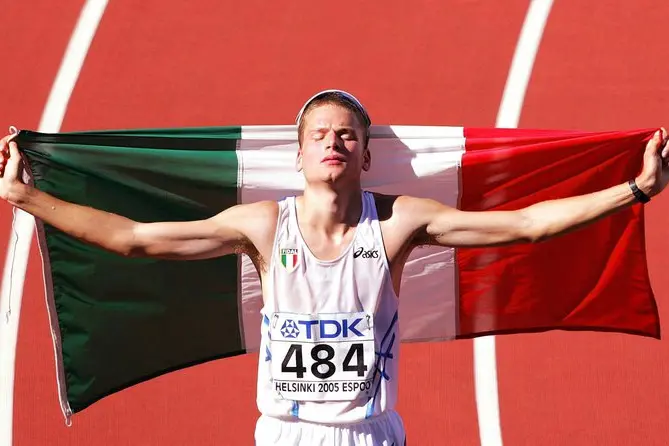
To understand the weight of this Sunday, we need to go back. We need to go back to Beijing, 2008, fifty kilometers under a sky that seemed like lead. Schwazer was twenty-three years old, he came from Calice, in Val Senales, he grew up among mountains and silence. It had a pace that ate up the asphalt and an engine that seemed to never end. He won the Olympic gold in the fifty kilometer race walk with a clear lead, with that sort of sovereignty that champions have when things go the way they should go. Italy celebrated him as champions are celebrated: lots of noise for a few weeks, then silence.
The real silence arrives in 2012, before London. Positive for doping. Three-year ban. Schwazer admits it, apologizes, cries on television. You can judge this in a thousand ways, but there is one thing that no one can take away from him: he told the truth. He paid. And then he got up again. He started training again, he found Donati again, he found himself. In 2016 he seemed ready for Rio de Janeiro, for another Olympics, for that redemption that sport sometimes grants to those who know how to wait for it.
Then comes the second blow. February 2016, a few months after leaving for Brazil: a new doping control, a new positivity. Anabolic steroids, a huge amount, incompatible with any sports logic. He swears he is innocent. Almost no one believes it. The disqualification this time is eight years. Rio is over. His career, for all intents and purposes, seemed over.
But the truth is a stubborn thing. The Court of Bolzano, at the end of a long and painful investigation, ascertains what Schwazer had always claimed: the blood sample had been tampered with. Someone, within that system that was supposed to protect the cleanliness of sport, had done exactly the opposite. The acquittal sentence contains the clearest formula that exists in criminal law: “for not having committed the crime”. Not a quibble, not a prescription. Innocence, established by a judge, in black and white.
In this battle, alongside Schwazer and Donati, there was also Don Luigi Ciotti with Libera. This is not a negligible detail. Don Ciotti is someone who has dedicated his life to being on the side of those who have no voice, to practicing legality as an act of faith and civil responsibility. His presence in this story says something that goes beyond sport: it says that justice, when sought with obstinacy and with clean hands, ultimately has a chance of finding its way. Not always. Not right away. But in the end.
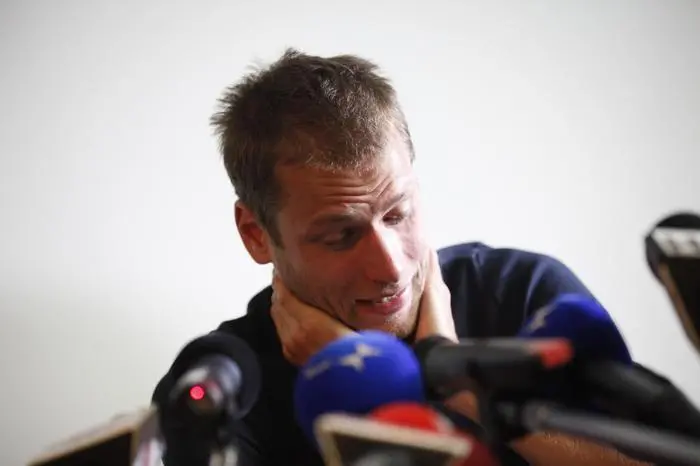
Schwazer had confided that he would return to racing “solely for Hubert Rabensteier”, his best friend, who suddenly passed away a few days before the race at just fifty-six years old. There is something ancient and profoundly human in this: running, marching, to honor those who are no longer here. The Greeks did it in their funeral games. Schwazer does it in Alessandria, on March 8, 2026, with the judges watching him and the people cheering him on on the side of the road.
The new Italian champion Orsoni, the one who won in the end, said something nice: “It was a thrill to compete with him. For me it was a great stimulus.” It’s not rhetoric. It is spontaneous recognition that certain presences change the air around them, raise the level, remind those who are young and strong that sport is also memory, also history, even the scars they carry.
Schwazer didn’t win. He didn’t finish the race. He took three technical penalties for an athletic gesture that he hasn’t practiced at the highest level for ten years. Donati said he probably could have finished on the podium if he had slowed down a bit. He didn’t slow down. He pushed, he looked for victory, he went beyond the technical limits of the discipline. It’s the way it’s done. It’s the way it probably can’t stop being done.
We don’t know if he will return to racing. He himself doesn’t knowor so he said. But we know that last Sunday, in Alessandria, a forty-one year old man who they had tried to destroy, with rigged doping, with stolen years, with the silence of those who should have defended him, returned to doing the only thing he really knows how to do. And he did it from the front, with his head held high, thinking only of winning. Like the champions. As, deep down, it always has been.