






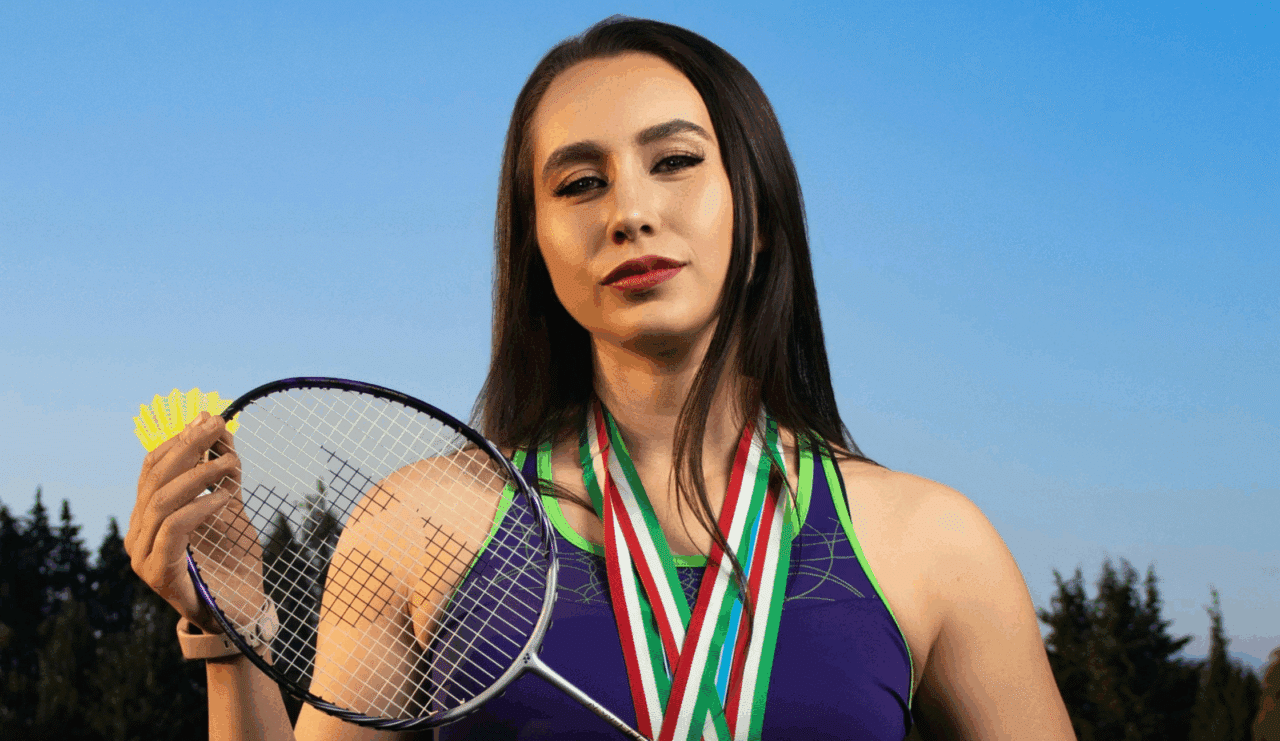
We talk about sport for health, for stress, for the body. But rarely for what it does to your professional posture: the way you stand, speak, negotiate. And yet this is where the effects are most lasting.
It’s not just about fitness
You may have already experienced this moment. A period where you run regularly, or start swimming again, or go to your yoga class twice a week. And at some point you realize that something has changed, not just in your body.
You get up with more momentum. You are more decisive in your decisions. You feel less destabilized when a meeting goes wrong. You dare more.
This is not a coincidence. It is biology, psychology, and a transfer mechanism that research is beginning to well document: what you learn in sport, you bring back to the office.
What happens in the brain (in simple)
Regular physical exercise is first and foremost a matter of brain chemistry. When you move: brisk walking, swimming, running… your brain releases dopamine, serotonin, endorphins. The famous “ well-being neurotransmitters“. But that’s just the surface.
More profoundly, exercise stimulates the production of BDNF: the “ brain-derived neurotrophic factor“, a protein that promotes brain plasticity. That is to say the brain’s ability to create new neuronal connections. Concretely? You memorize better, you concentrate longer, you think more clearly under pressure.
The Brain Institute confirms this: regular physical exercise improves cognitive abilities. Attention, memory, decision-making, at all ages. And according to a study relayed by the Harvard Business Review, People who practice regular physical activity are more productive and have better morale than their less active colleagues.
It is no coincidence that many managers, entrepreneurs and women in positions of responsibility cite sport as a central habit in their daily lives. This is not discipline for discipline’s sake. It’s a competitive advantage.
Benefits you don’t see on a scale
The confidence that is built session after session
Sport regularly presents you with a challenge: run 500 meters more, hold a position, reach a milestone. And you get there. Or you don’t make it, and you come back, and you make it.
This challenge-success mechanism, repeated week after week, builds something solid: the belief that you can do difficult things. That you are capable of surpassing yourself. This conviction does not stay in the locker room. It is transferred in the way you enter a meeting room, the way you speak without apologizing, the way you set your conditions during a negotiation.
This is what researchers call self-efficacy : the feeling of personal effectiveness. And sport is one of the best vectors.
Tolerance for discomfort
Hold on to a difficult effort, accept muscle pain, continue when the urge to stop is there. Sports train your nervous system to remain functional under pressure. Don’t panic. To continue to think clearly when it’s not comfortable.
In meetings, in presentations, in tense negotiations, this ability is precious. And it cannot be acquired from a book.
Stress management
Sport is not just a let off steam“. It is a physiological regulator. It reduces cortisol levels (the stress hormone), improves sleep quality, and creates a daily window where your brain processes and sorts accumulated tension.
According to a study from the University of Bristol, Employees who engage in regular physical activity report increased concentration, better time management and lower stress levels. These are not anecdotal effects. These are variables that change the quality of your work on a daily basis.
Creativity, the surprise benefit
Have you ever found yourself solving a problem during a walk or run? This is not accidental. Science backs it up: physical exercise, especially aerobic activities, improves divergent thinking. That is to say the ability to explore unconventional avenues, to see unexpected connections.
In other words: moving unlocks ideas that the screen does not produce.
And for women in particular?
There is something particularly strong about the connection between sport and professional confidence for women, and for good reason.
We have often learned to take up as little space as possible. Not to speak too loudly, not to take up too much space, and to wait until someone gives us the floor. Sport, especially practiced in a collective or competitive setting, relearns the opposite: to occupy space, to push one’s limits, to exist physically without apologizing.
The INJEP also notes in its 2024 barometer that the gap in sports practice between women and men is gradually reducing, women are practicing more than in 2018. And that young women engage in sport above all to surpass themselves rather than to win. A posture that nurtures exactly the type of confidence we’re talking about here.
Where to start, or start again?
No need for a competition program. The effect on the brain and confidence occurs from a practice regular and moderate, about 30 minutes of cardiovascular activity, three times a week. Regularity matters much more than intensity.
Some ideas depending on the profiles:
- Are you short on time? Brisk walking is one of the activities best documented for cognitive effects. 30 minutes before work or during lunch break, that’s right.
- Do you need to disconnect? Sports that require total attention (climbing, tennis, martial arts) are particularly effective for “ clear cache ” mental.
- Do you also want an effect on social posture? Team or group sports (group lessons, team sports) add a dimension of confidence to interactions that transfers well to a professional context.
- Do you find it difficult to hold on over time? Look for a setting: a scheduled class, a training partner, a public engagement. Social constraint is the most effective tool of regularity there is.
Sport is not a luxury for ambitious women. It’s also not a box to check off the list of good habits. It is a performance tool: cognitive, emotional, relational… that research has documented for years and that too few people perceive for what it really is.
What’s built on a treadmill or in a dance hall doesn’t stay there. It walks through the office door with you. And sometimes, that’s when it makes the most difference.