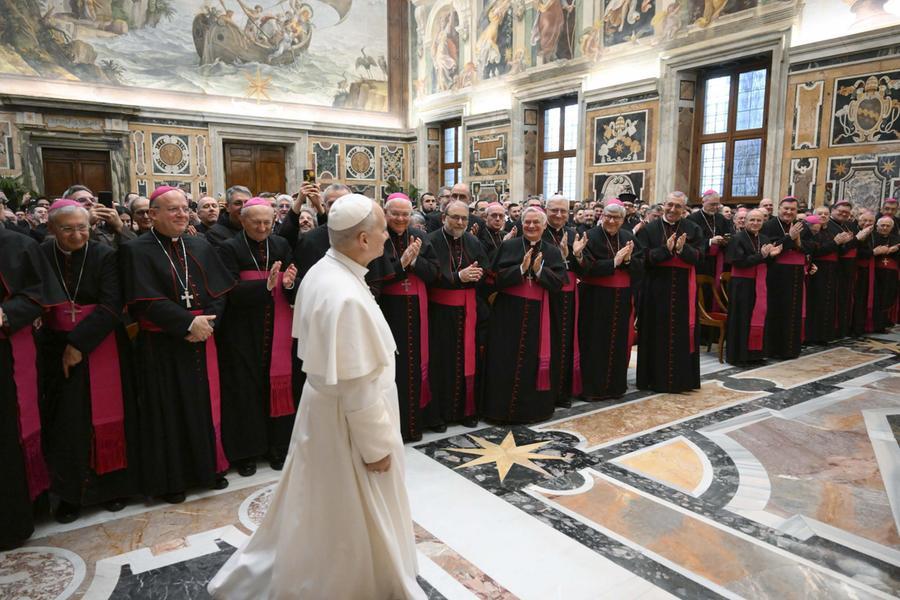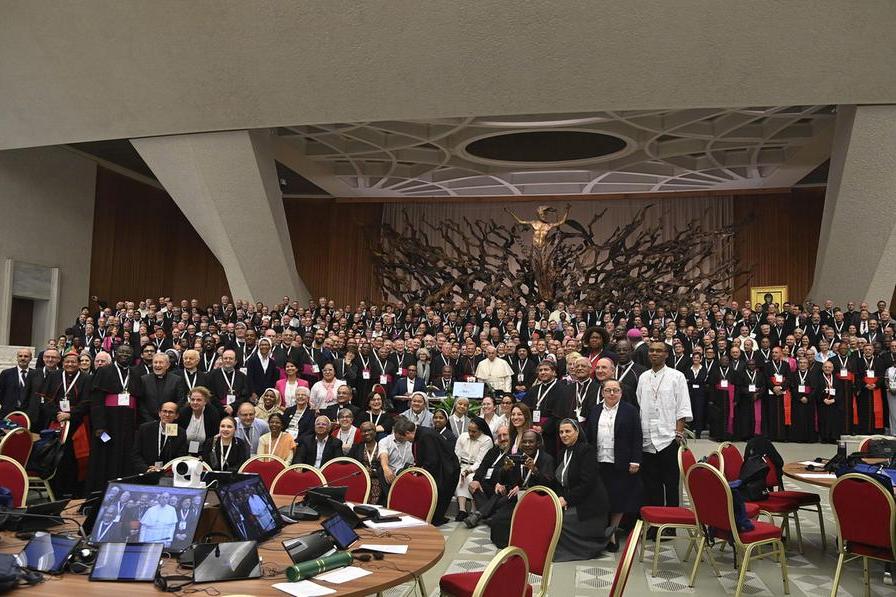






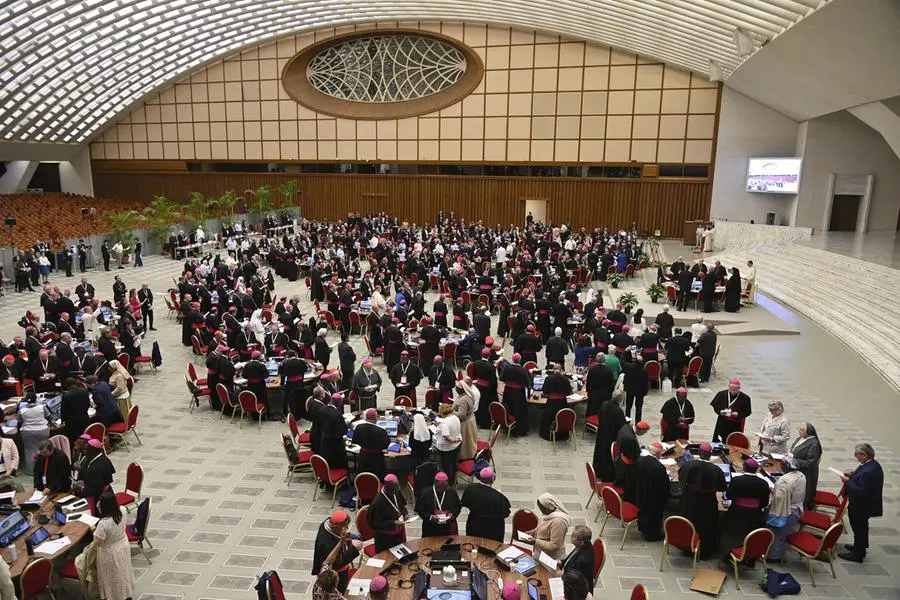
Two of the ten Study Groups established by Pope Francis during the Synod on synodality delivered a Leo XIV their final reports. It’s about the Group 3dedicated to The mission in the digital environmentand of Group 4called to reflect on Revision of the Ratio Fundamentalis Institutionis Sacerdotalis in a missionary synodal perspective.
The documents, the result of a long journey of listening, research and discussion with Episcopal Conferences, Catholic Universities, experts and pastoral workers from all continents, will be progressively published by the General Secretariat of the Synod “in a spirit of transparency”, as ordered by the Pope. The next publication is scheduled for March 10th. With the delivery of the Final Reports, the two Groups conclude the mandate received and are considered dissolved.
The interim reports had already been presented on 17 November. The final delivery, initially scheduled for June 2025, was postponed due to the death of Pope Francis, the election of Leo XIV and the need for additional time to deepen the work. The new Pontiff has granted the extension asking that the Reports be delivered to him “to the extent possible” as quickly as possible.
The cardinal Mario Grech, general secretary of the Synod, underlined how, in addition to the value of the contents, these texts bear witness to «an authentic exercise of listening, reflection and shared discernment» between Dicasteries and ecclesial realities: «It is synodality put into practice, not a simple bureaucratic collaboration».
The mission of the Church in the digital environment
Group 3 faced one of the most urgent challenges that emerged during the synod assembly: how to live the mission of the Church in a culture increasingly shaped by digital. The work began with a broad international consultation which involved pastoral workers, communicators, experts and ecclesial entities from all continents.
The final report analyzes the main challenges and formulates operational recommendations which concern the integration of the digital mission into the ordinary structures of the Church, the deepening of the notion of territorial jurisdiction in the light of online communities and the training of pastors and pastoral workers in digital culture. The proposals are divided into three levels – Holy See, Episcopal Conferences and dioceses – and are accompanied by a methodological section that illustrates the path taken and the realities consulted. The objective is to help the Church not to experience digital as a simple tool, but as an environment to be inhabited with missionary awareness.
Priestly training: no new Ratio, but an application in a synodal key
The approach of Group 4 is different, called to review the Ratio Fundamentalis Institutionis Sacerdotalisthe 2016 document that regulates the training of priests. After careful evaluation, the Group deemed that the Ratio remains valid in its fundamental principles. We therefore did not proceed with a revision of the text, but with the drafting of a Proposal for an orientation document for its implementation in a missionary synodal perspective. The text is divided into a preamble and two parts: in the first some are indicated «conversions» necessary in training for the priesthood – relational, missionary, communion, service and an authentically synodal style – while in the second these orientations are translated into concrete operational guidelines. Among the most significant indications emerges the proposal of an alternation between staying in the seminary and periods of life in parish communities or in other ecclesial environments, together with the promotion of training experiences shared with lay people, consecrated persons and ordained ministers starting from the preparatory stage. The inclusion of trained and competent women as co-responsible at all levels of training, including in training teams, and the acquisition of specific skills for co-responsibility and community discernment is also suggested. These are guidelines that aim to train priests capable of living the ministry in a Church increasingly marked by communion and shared mission.
From the work of the Groups to the decisions of the Pope
Starting from the final reports, while awaiting those of the other Groups, Leo These proposals will be presented to the Pope, who will evaluate them and be able to approve them, thus translating the contents that emerged into orientations, decisions and processes within a «synodal dynamism».
As Cardinal Grech recalled, the Final Reports do not represent a point of arrival, but “working documents”, a starting point. However, they contain precious indications from which local Churches and various ecclesial realities can already draw inspiration. It is the style of synodality: a journey that does not stop, in which each stage is already generative of new responsibilities and new opportunities for the mission of the Church.